What kind of horror do I write?

This is a question I received the other day on Twitter.  It isn’t a frivolous question, I suppose. About a third of my titles are classified as horror, after all.

Perhaps I should begin by clarifying what kind of horror I don’t write.

I don’t do excessive gore/violence.

I have never been interested in horror fiction that fetishizes violence and cruelty for the mere sake of wallowing in such things. (If that’s your goal, then why not just watch one of those ISIS beheading videos?)

This means that graphic depictions of torture (for example) don’t appear in my books. Cannibalism is pretty much out, too. (Gross.)

I’m old enough to remember the capture of Jeffrey Dahmer in 1991. Suffice it to say that I am not interested in exploring the most extreme possibilities of human depravity in fiction. Again, what’s the point?

Are you into “splatterpunk”? You probably won’t like my books. Do us both a favor, and read something else.

I don’t like horror tales with unlikable characters.

Likewise, I don’t care for horror stories that simply involve horrible things happening to horrible people.

You’ve certainly seen horror movies that involve the following scenario (or something like it): A group of obnoxious, unlikable people enter a house, and they’re killed off one by one.

But the thing is…you don’t care! The protagonists were all awful people, anyway. (Maybe you were even rooting for the monster.)

I don’t do comedy-horror.

Do you like the Zombieland movies? My horror fiction probably isn’t for you.

I love comedy films—Airplane, Blazing Saddles, etc. Cheers from the 1980s can still make me laugh.

But horror is serious business. There can be moments of levity amid the darkness. There are many of these in some of Stephen King’s novels. (Cujo and The Stand stand out in this regard.) But when the monsters come out, it’s all business. Monsters are serious.

***

So what kind of horror do I write, then?

My influences are Stephen King, Peter Straub, and the campfire ghost stories of my youth.

I have always been fascinated by urban legends. I am endlessly interested in the dark house at the end of the lane, the one that all the kids say is haunted.

A good horror story should involve characters that you care about. If you don’t care about the characters, then you won’t care if the monster gets them. 

A good horror story should involve redemption. The evil is defeated in the end. Or some crucial lesson is learned. Or the human condition is in some way illuminated.

Redemption is a key element of most of the horror stories that we love best. The salvation of Mina Harker at the end of Dracula. The closing scene of The Stand, in which Frannie Goldsmith and Stu Redman wonder aloud if people ever really learn from their mistakes. The last scene in The Dead Zone, in which the shade of Johnny Smith assures Sarah that nothing is ever really lost, nothing that can’t be found.

Note that redemption doesn’t necessarily mean a happy ending. But there has to have been a point to it all.

***

I like ghosts, monsters, things that go bump in the dark. My sainted grandmother was a direct descendant of immigrants from County Cork, Ireland. And every Irishman (even a diluted, generations-removed Irishman like me) loves a good ghost tale.

Let me give you some examples. Here are a few of my horror novels, to date:

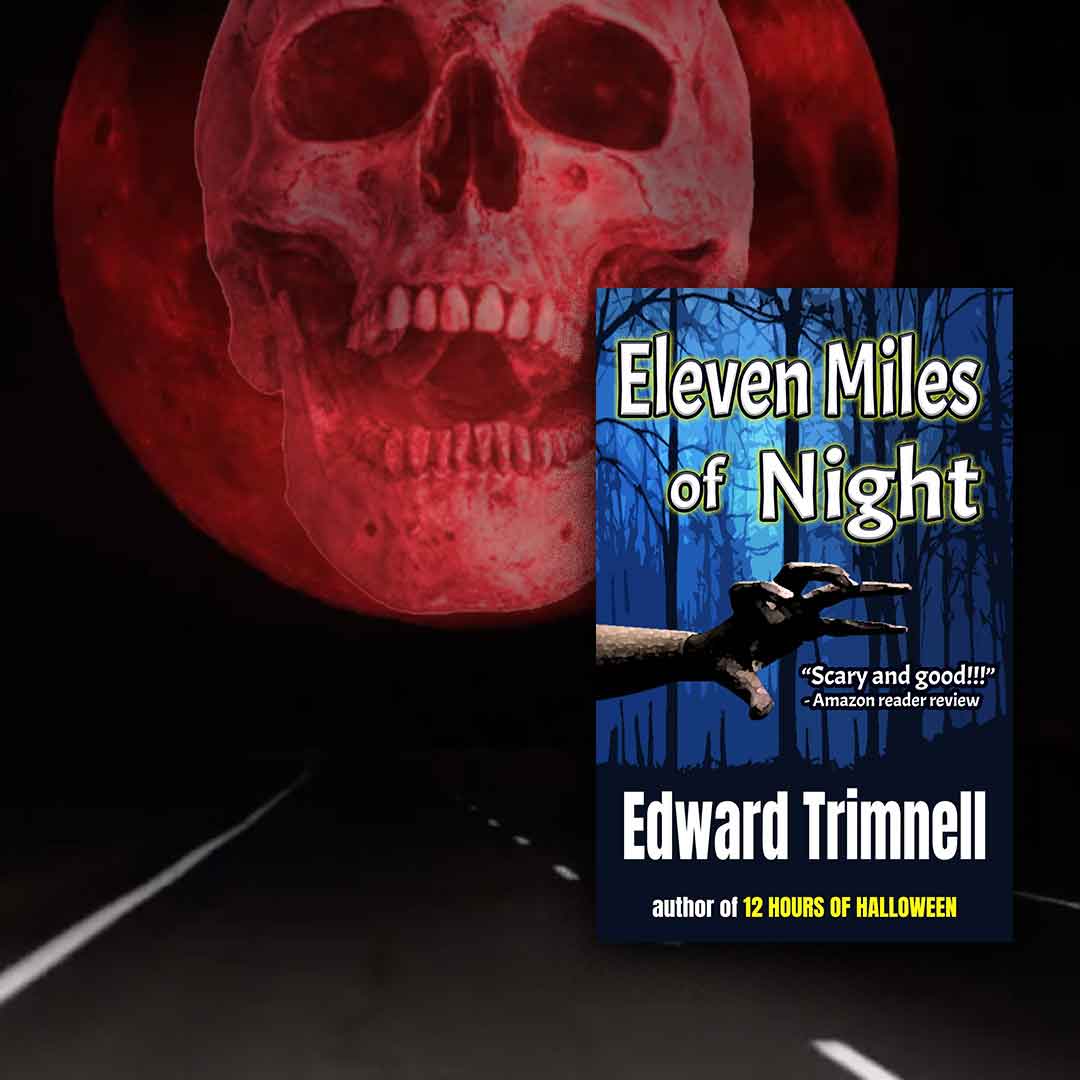
Eleven Miles of Night

A college filmmaker takes a walk down a notoriously haunted road, in order earn a $2,000 fee for documenting the phenomena he sees.

This novel contains ghosts, demonic beings, and a long-dead witch who inhabits a covered bridge. Oh, yeah—and hellhounds!

View Eleven Miles of Night on Amazon
12 Hours of Halloween

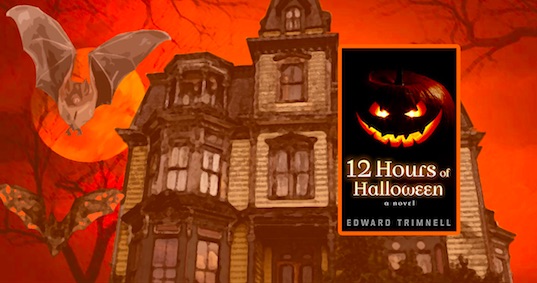
On Halloween night, 1980, three adolescent friends go out for “one last Halloween”. But they have been cursed by an entity known as “the ghost boy”. As a result, their familiar neighborhood is transformed into a supernatural landscape filled with vampires, wayward spirits, and trees with minds of their own.

View 12 Hours of Halloween on Amazon.
Revolutionary Ghosts

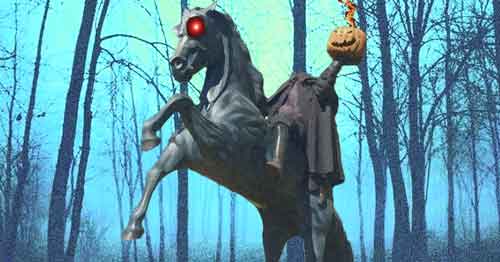
In the summer of 1976, an Ohio teenager named Steve Wagner discovers that the Headless Horseman has returned to terrorize twentieth-century America. The Horseman has brought other ghosts back with him, including the once beautiful (but now hideous) Marie Trumbull, an executed Loyalist.

View Revolutionary Ghosts on Amazon

I have others; but these are the three you might check out first. They are usually enrolled in Kindle Unlimited, which means you can read them for free if you subscribe to that service.

‘Risky Business’: an entertaining film that would never get made today

I was just turning 15 when Risky Business—the movie that launched Tom Cruise’s acting career—hit the theaters in August 1983. I was too young to get into an R-rated movie without an adult; and this wasn’t a film that either of my parents would have been interested in seeing with me.

I neglected to see Risky Business for more than 40 years, partly because I was put off by the much-played clip of Tom Cruise dancing in his underwear. Call me homophobic if you’d like; but that isn’t the way to get me to see a movie. And there were just so many other movies to see.

I finally got around to watching Risky Business a few days ago. (Better late than never!) The movie was quite well done for a film that was originally conceived as a throwaway flick for Reagan-era young adults. (Moreover, despite the ubiquity of that clip with Tom Cruise in his underwear, that scene is a minuscule portion of the 95-minute movie.) Continue reading “‘Risky Business’: an entertaining film that would never get made today”

The comparative joys of old (1980s) movies

I have been watching some old movies from the 1980s recently. Some have been movies that I saw, but have long since forgotten. Others are iconic films of that era that I never got around to seeing when they were current.

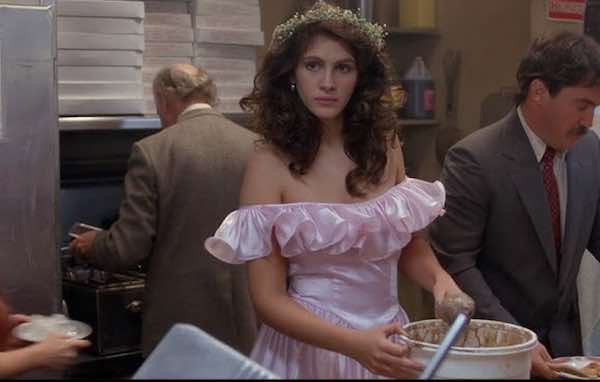
For example, I recently wrote a post about Mystic Pizza (1988). Last night I watched Risky Business (1983). I will have a post about Risky Business soon.

A scene from Mystic Pizza (1988)

One thing I’ve noticed is that many films created in 1980-something as disposable teen comedies were actually pretty good. In 1985, did anyone imagine that people in 2025 would still be talking about The Breakfast Club? Fast Times at Ridgemont High (1982) has been recognized by the American Film Institute for its merits.

Another thing I’ve noticed is the diversity in movies from that bygone era. In 1985, an original movie, properly executed, could make a lot of people rich. But the economics of the 21st-century box office encourage conservatism and a tiresome emphasis on franchise films. Continue reading “The comparative joys of old (1980s) movies”

Bonner Fellers, ‘Emperor’, and postwar reckoning in Japan

On September 2, 1945, Japan surrendered unconditionally, effectively ending World War II. The American postwar occupation of Japan began shortly thereafter.

Japanese forces committed many atrocities during World War II. Their victims included subjugated Asian populations, as well as Allied prisoners of war. The postwar era would bring a reckoning. Among the first tasks of the US occupation authorities was to round up Japanese officials who were guilty of war crimes.

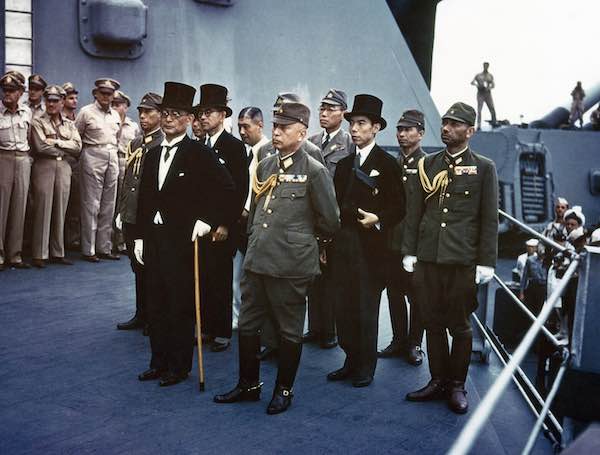
Japanese officials aboard the USS Missouri on September 2 1945 for the surrender ceremony

Adjacent to this was determining the culpability of Emperor Hirohito. Hirohito’s future status was a sensitive topic.

The Allies did not demand Hirohito’s overthrow and imprisonment as an explicit condition of surrender, which prevented Japan from continuing the fight until the last man. But Hirohito’s long-term continuation on the Chrysanthemum Throne was not a foregone conclusion, either. That would depend on whether or not the American occupation authorities would try him as a war criminal.

In a worst-case scenario, Hirohito would hang, and the Japanese would stage a general insurrection against the US occupation. A bad outcome for everyone. Therefore, the options had to be weighed carefully, and it would all begin with an investigation.

This is the subject of the 2012 movie Emperor. Continue reading “Bonner Fellers, ‘Emperor’, and postwar reckoning in Japan”

Horror in Kindle Unlimited

Kindle Unlimited is Amazon’s main subscription ebook reading program. Kindle Unlimited gives you virtually unlimited (hence the name) reading privileges to a wide variety of titles, for a low monthly fee.

Not every title listed on Amazon is enrolled in Kindle Unlimited. Literary fiction from the big New York publishing houses generally is not included. You likely won’t find the latest Jonathan Franzen novel in Kindle Unlimited anytime in the near future.

Kindle Unlimited is heavy on genre fiction. This means: romance, space opera, LitRPG, fantasy, and horror.

I have a fair number of horror titles in Kindle Unlimited. I write supernatural horror, in the tradition of Peter Straub, H.P. Lovecraft, Bentley Little and E.F. Benson.

And yes (I know this sounds a bit pretentious) Stephen King. I have achieved barely a gazillionth fraction of King’s commercial success. But his formula of character-based, fast-moving horror is always on my mind when I sit down to write a horror tale.

What kind of horror don’t I write? If you want splatterpunk, or “extreme” horror (aka “torture porn”), then you should skip my books and stories. I have no interest in writing horror fiction that is endlessly grim and/or sadistic. My horror fiction is more akin to the campfire ghost story.

Below are the horror titles that I presently have enrolled in Amazon’s Kindle Unlimited program. This means that you can read them for free if you’re a Kindle Unlimited subscriber.

To view one of these titles on Amazon, simply click on the image of any book, or any hyperlink below.

(Don’t have a Kindle Unlimited membership? Click here.)

Eleven Miles of Night

A college student takes a walk down the most haunted road in rural Ohio for a cash prize. This is a “haunted road” story, basically a tale of being stuck on a cursed country road at night. Ghosts, evil spirits, and hellhounds abound. Also, an evil witch that inhabits a covered bridge.

View Eleven Miles of Night on Amazon!

12 Hours of Halloween

A coming-of-age story set on Halloween night, 1980. This is a tale of supernatural events in the American suburb. A classic horror tale for Generation X.

View 12 Hours of Halloween on Amazon!

Revolutionary Ghosts

The year is 1976, and the Headless Horseman rides again. This coming-of-age horror thriller is sure to please readers who appreciate character-based supernatural fiction with lots of twists and turns.

The basic idea is: the ghosts of American history coming back to haunt Middle America in 1976, the year of the American Bicentennial. (And yes, I’m old enough to remember the Bicentennial, although I was rather young at the time.)

View Revolutionary Ghosts on Amazon!

Luk Thep

In early 2016, I read an article in The Economist about the luk thep “spirit dolls” of Thailand.

Manufactured and sold in Thailand, these are factory-made dolls with a unique sales point: each doll is supposedly infused with the spirit of a young child that passed prematurely.

The luk thep are intended to bring comfort to their owners. (They are marketed to childless women.) To me, though, the whole idea sounded rather macabre.

And I couldn’t help thinking: what if one of the dolls was infused with a child spirit that wasn’t very nice? What if that same doll ended up in the possession of an American woman who happened to visit Thailand on a business trip? Luk Thep is a fast-paced ghost tale that spans two continents.

View Luk Thep on Amazon!

The Rockland Horror saga

Spanning a nearly 140-year period from 1882 to 2020, The Rockland Horror is a series about dark events at a cursed house in rural Indiana.

View The Rockland Horror series on Amazon!

Wait! One last thing…

Looking for horror stories you can read online for free?

While I recommend Kindle Unlimited for fans of horror fiction and ebooks, I should also point out that I have a number of horror stories you can read online here for FREE.

From classic ghost tales to creature features, you’ll find a considerable range. Check them out!

World War II historical fiction series now available in an omnibus edition

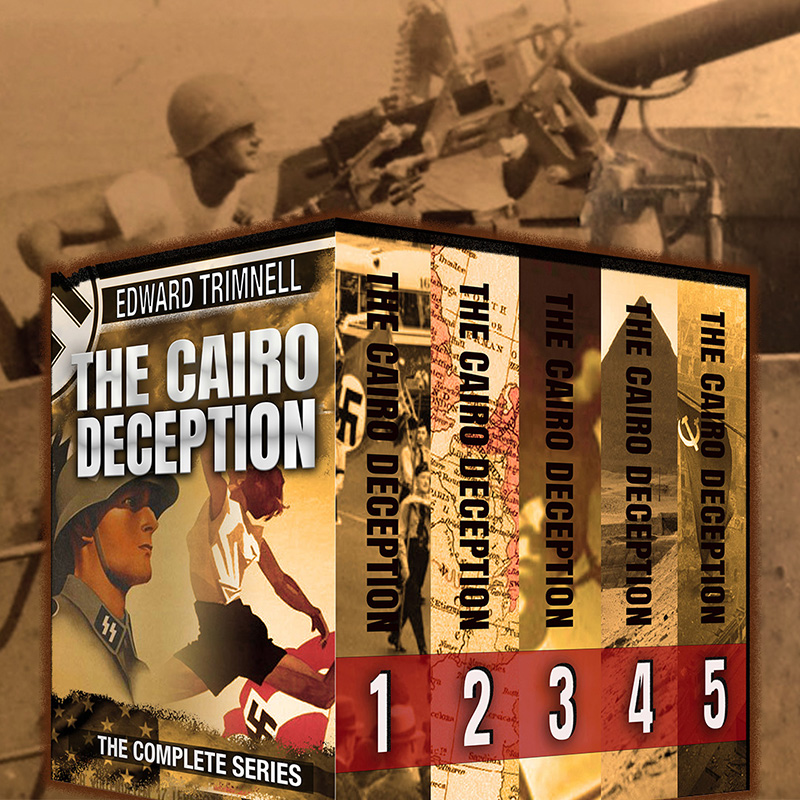
THE CAIRO DECEPTION OMNIBUS BOXSET 

**Spies, lies, and the race for the atom bomb!**

In 1938, the planners in Nazi Germany know that war is coming. They are eager to acquire the atom bomb.

They are working against Allied governments, operating both in Germany and abroad. (And not all of the Reich’s accomplices are German nationals.)

A group of ordinary Americans and Germans are forced to choose sides. Their choices will lead them into a web of betrayal, murder, and espionage.

Their paths meet in Cairo, Egypt, where the Reich is hunting a fugitive atomic physicist. 

The main characters:

Betty Lehman is a 19-year-old girl from Dutch Falls, Pennsylvania. Her family is active in the German-American Bund. Betty has been recruited to betray her country in the service of the Reich.

Rudolf Schenk is an undercover agent of the German Gestapo. He wants to do his duty. But can he abandon his last shred of conscience?

Jack McCallum is an American treasure hunter in Cairo. He falls for two women: one who is working undercover for the Third Reich, one who is fleeing the Gestapo.

Heinrich Vogel is a physicist who fled Germany for Egypt. He and his young adult daughter, Ingrid, face a daily game of cat-and-mouse with the Gestapo. His goal: to reach Britain or America before the Gestapo reaches him and his daughter!

View THE CAIRO DECEPTION BOXSET on Amazon!

Note: The individual books will still be available on the series page!

‘Texas’ by James Michener (mini-review)

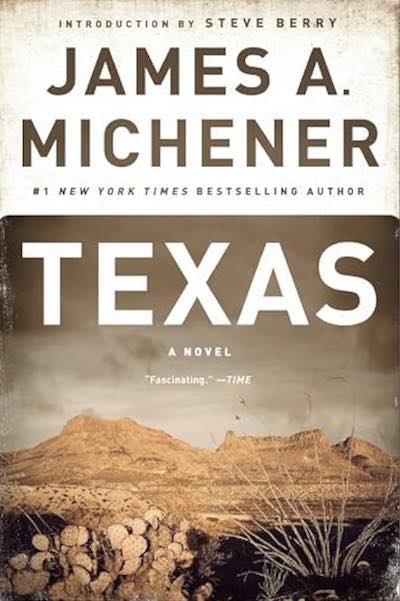
I have just finished reading Texas (1985) by James Michener.

James Michener (1907-1997) specialized in vast historical novels, usually centered upon the history of a particular place.

For example, Hawaii (1959) covered the history of Hawaii. Alaska (1988) covered the history of our 49th state.

His books are long and vast in scope. A thousand pages is a typical length. Michener wrote novels that today’s short attention-spanned, Internet-addled American finds daunting. But he was quite popular during his heyday, the 1950s through the 1980s.

Because of the historical scopes involved, Michener’s novels span many generations, with wide casts of characters. His books are less novels, in the conventional sense, than collections of interconnected novellas. If James Michener were alive today, and publishing on Amazon Kindle, he would almost certainly be publishing his long books as series of novellas. But that wasn’t what the brick-and-mortar-centric book retailing industry of the 20th century wanted. And so James Michener’s long tales were delivered as doorstop-sized novels.

Texas follows the usual Michener formula. There are storylines from the Spanish colonial period, the obligatory story about the Alamo (of course), and characters from more recent times.

I have sometimes found James Michener to be a bit too didactic. (In the historical fiction blockbuster space, I much prefer Edward Rutherfurd and John Jakes.) A novel based in historical events is fine; but if I want to read an actual history, I’ll turn to nonfiction. But in Texas, Michener emphasizes story and mostly avoids the dreaded info-dump.

I am not even going to attempt a plot summary of Texas. There is simply too much to describe. Any plot summary I might write would run on for five thousand words, the length of a long essay or a middling short story.

Suffice it to say: Texas contains many plots and characters related to the history of Texas. It’s also a very entertaining book, if you aren’t daunted by the 1096-page length.

-ET

Kansas (the band) documentary

I discovered the music of Kansas in the early 1980s, as I was entering high school. By that time, Kansas already had eight studio albums, including the new one at the time, Vinyl Confessions. I eventually purchased their entire back catalog.

I knew immediately that Kansas’s music was “different”. Whereas Van Halen was singing about beer and women, the typical Kansas song dealt with spiritual and philosophical themes.

Some Kansas songs are so intellectual that I didn’t connect the dots until years later.  For example: “Journey from Mariabronn” on the band’s 1974 debut album, takes its inspiration from Narcissus and Goldmund, a 1930 Herman Hesse novel set in medieval Germany.

I happened to read this novel just a few years ago, when I was already well into my fifties. I had a classic “ah-hah” moment when I made the connection between the Hesse novel and the Kansas song—which I’d enjoyed in partial ignorance for all those years.

Kansas songs are full of Easter eggs like that.

The above documentary covers Kansas from its foundation, through the height of the band’s commercial and critical success in the late 1970s.

In the 1980s, Kansas suffered a decline, as the group’s members disagreed on their creative direction. (I’ve written a post about that here.)

All musical acts have their ups and downs, though, and none stays at the top of the heap forever. Kansas remains one of my favorite bands, more than 40 years after I first discovered them.

-ET

The Best Short Stories 2024: The O. Henry Prize Winners (quick review)

I’ve been reading more short stories of late. I find that I often enjoy them more than novels. A good short story contains no fluff, no filler. Short stories, moreover, are well-suited to this era of cell phones and short attention spans.

Short stories used to be almost as popular as novels, back when Americans read middlebrow, general interest magazines. (F. Scott Fitzgerald earned most of his income from short story sales.)

But that was in the distant past. For as long as anyone can remember, every fiction writer has dreamed of being a bestselling novelist. Publishers have been wary of short fiction collections, unless every story in the collection was authored by Stephen King.

I recently picked up The Best Short Stories 2024: The O. Henry Prize Winners, edited by Amor Towles and Jenny Minton Quigley. I bought the audiobook edition, so I listened to these stories as I mowed my lawn and did my bench press sets in the gym.

This collection contains a strong mix of stories. This isn’t to say that every story is a gem. As is always the case with multi-author anthologies, the reader’s mileage may vary. There were a few stories in this collection that left me cold. But most of them are good, and a handful of the stories are very good.

My favorites were:

“Hiding Spot” by Caroline Kim

“The Paper Artist” by E. K. Ota

“The Dark” by Jess Walter

Recommended reading…especially if you’ve been waiting for the right time to jump back into short-story reading.

-ET

View on Amazon: The Best Short Stories 2024: The O. Henry Prize Winners

Fast Times at Ridgemont High + 43 years

Fast Times at Ridgemont High, that quintessential teen movie of the first half of the 1980s, hit the theaters 43 years ago today, on August 13, 1982.

On that date I had just turned fourteen. I did not see Fast Times in the cinema. (I could not even drive yet.) I did catch the movie a few months later, on cable. By that time, it had become a must-see movie for anyone among the teenage set.

I liked the movie then, and not just because of the iconic scene in which Phoebe Cates emerges from the pool. Even at that age, I could tell that Fast Times at Ridgemont High was a thoughtful teen movie, as oxymoronic as that sounds.

The movie does contain explicit sex scenes, especially by today’s less tolerant cinematic standards. Fast Times originally received an X rating. The film was reedited to receive an R rating. Primarily because of the sex, all of the “teens” in this film were already adult actors by the time production began. (Jennifer Jason Leigh was almost twenty years old when she portrayed the 15-year-old Stacy Hamilton.)

And yes, that Phoebe Cates pool scene was unnecessary and tawdry, much as it delighted the 14-year-old version of me.

But underneath all the raunch and bawdy comedy, there is a message about hubris-driven teenage risk-taking, and the consequences that result. I would go so far as to call Fast Times at Ridgemont High a teensploitation film with a conservative message.

I watched this movie for a second time a few years ago. I was an adult in my fifties. The 1980s and high school were long behind me.

I thought the movie was even better the second time around.

I’m not the only one who believes that Fast Times at Ridgemont High stands the test of time. In 2005, the National Film Preservation Board recognized the movie as “culturally and historically significant”. This is one time when I agree with the consensus view.

-ET

**View Fast Times at Ridgemont High on Amazon

867-5309, and a lesson in the value of skepticism 

The early 1980s gave us a famous song named after a phone number: “867-5309”. Even if you do not remember the early 1980s, you are probably familiar with the song.

The song was alternatively known as “Jenny”. Often the song was identified with both names: 867-5309/Jenny.

In the song, a male narrator describes his obsession with a woman named “Jenny”, whose phone number (867-5309) was written on a wall, presumably in a men’s room. (That was a common prank back in the 1970s and early 1980s—writing random women’s names and phone numbers on the walls of men’s rooms. Don’t ask me why.)

Tommy Tutone is the name of the musical act that performed 867-5309.

Tommy Tutone is not a single artist, but a California-based group. The original lineup of Tommy Tutone was formed in 1978. The band still exists today. Tommy Tutone released six studio albums between 1980 and 2019. But the band owes most of its name recognition to 867-5309.

867-5309/Jenny was released on November 16, 1981. By the end of the following year, everyone with an FM radio had heard it.

867-5309 was, and remains, a cultural phenomenon. Not everyone was pleased about the song’s fame, however. After the song became popular, homeowners who happened to have been assigned the number began receiving prank phone calls. Many changed their numbers. Some even unplugged their phones in desperation.

Still others went out of their way to acquire the suddenly famous seven digits. Now that the initial fervor over the song has long since died down, this is the more common trend. It would probably be difficult—if not impossible—for you to obtain 867-5309 as your personal phone number. But your odds will increase in less populated areas, and as the time between the heyday of the song and the present year continues to grow.

In late 1981, I was in the eighth grade in Cincinnati, Ohio. One morning—it must have been a few weeks before the Christmas holidays—I heard a girl in my homeroom say my name. When I turned around, she had a smile on her face. I sensed good things ahead. Continue reading “867-5309, and a lesson in the value of skepticism “

That 1970’s vibe: ‘Revolutionary Ghosts’

REVOLUTIONARY GHOSTS is a coming-of-age supernatural horror novel set near Cincinnati, Ohio in 1976.

But the novel is based on Washington Irving’s 1820 short story, “The Legend of Sleepy Hollow”.

Revolutionary Ghosts came from the question: “What would have happened, had the Headless Horseman of Washington Irving’s tale invaded 20th-century America in 1976?

In the above video, I describe the series of associations that went into the story, some going back all the way to my childhood. (I was 8 years old in 1976!)

-ET

View REVOLUTIONARY GHOSTS on Amazon!

“Don’t Stop Believin’”: a song with multiple lives 

I was in the 8th grade in 1981-2, when Escape, Journey’s seventh studio album, was the latest thing.

Escape is one of the few rock albums with no duds. Every song is good—if you like Journey’s style of music.

But the best song on the album, perhaps, is “Don’t Stop Believin’”. It is a great song because it is simultaneously specific and universal.

We wonder about the small town girl, and the city boy “born and raised in South Detroit.” What compelled each of them to take “the midnight train going anywhere”?

And at the same time, the song is vague enough that we can each apply it to our individual stories. “Whoa, the movie never ends. It goes on and on and on and on.” My movie has gone on for 44 years since I first heard this song, and counting.

For years, this song instantly took me back to the 1981-2 school year, and the adolescent I was at that time. The song can still do that.

But then a few years ago, I watched The Sopranos from start to finish. (I was about a decade behind everyone else in doing this…the story of my life.) Then, for a long time, I would see the final, iconic scene of The Sopranos when I heard, “Don’t Stop Believin’”.

Most recently, I have discovered First to Eleven’s interpretation of the song. (First to Eleven is a very talented cover band based in Erie, Pennsylvania.)

None of the members of First to Eleven was even born when I heard “Don’t Stop Believin’” for the first time, back in 1981. (They are all very young.) And yet, their music video, and lead vocalist Audra Miller’s performance, put yet another spin on the song for me.

And some people worry—or hope—that AI will replace serious musicians? They base this on the fact (for example) that AI can now reassemble good music into mediocre music. (See my recent post about The Velvet Sundown.)

AI will never be good for anything but mediocrity. Only a human imagination could have come up with “Don’t Stop Believin’” almost half a century ago. And it took human imagination to come up with all these reimaginings of the song since then.

-ET

Runner’s high is real; I’ve known this for 40+ years

This week the Cincinnati area is under an oppressive heat wave, so I went for a morning run today, instead of delaying until the afternoon.

It was nevertheless about 80 degrees Fahrenheit and muggy. Bad air quality. Not ideal weather for running.

I pushed through, though, and completed my miles. (This morning, I did a light run of only 3 miles.)

Afterward, I was suffused with feelings of euphoria: a sense of centeredness and relaxation. My thoughts were crystal-clear and focused.

I was peacefully floating.

This is, I believe, the feeling that many recreational drug users search for.

I know a young woman, almost thirty years my junior, who begins each morning by smoking marijuana. She claims that the marijuana helps her anxiety.

I have told her many times: “Quit smoking weed, like a total f—cking moron, and start running.” (She is in perfect health, and there is nothing to stop her.)

Runner’s high is real. There are others who can better explain the science behind it: running’s effects on the hippocampus and whatnot. I can give you 40+ years of experiential testimony. Running makes you feel good, like no recreational drug or intoxicant can.

And unlike recreational drugs, running is also good for you.

-ET