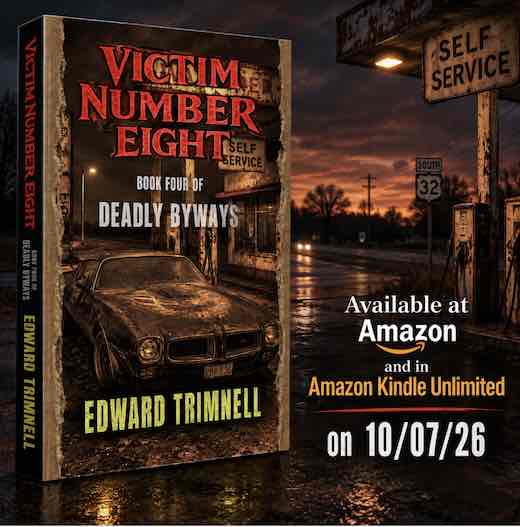
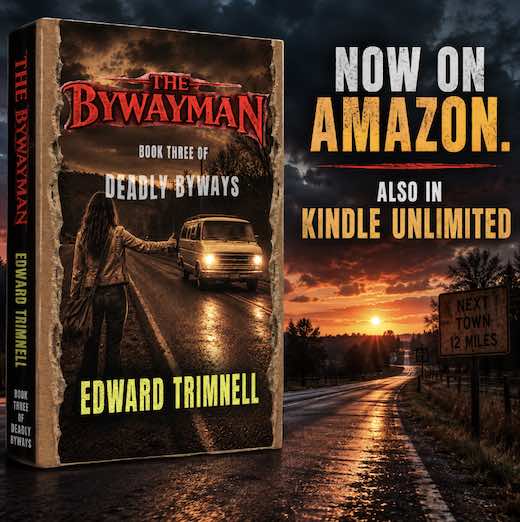
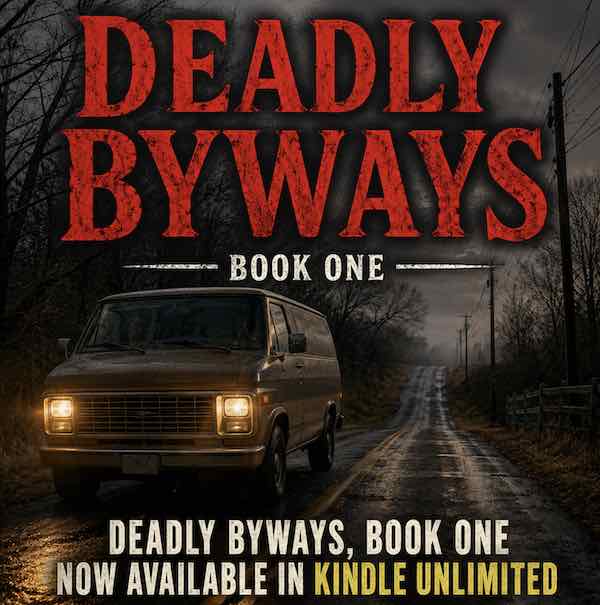
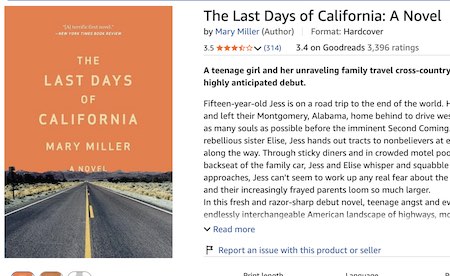
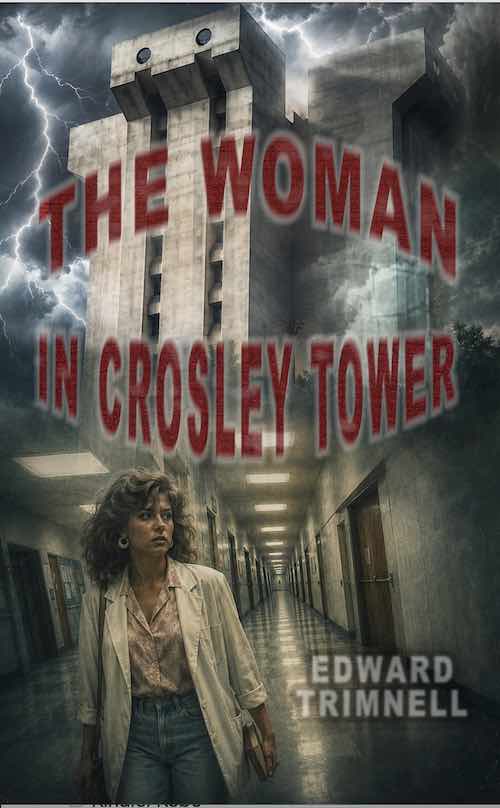
A married woman in the suburbs develops a sudden and inexplicable interest in graveyard photography. Her husband wonders what’s going on with her.
But what secrets is her husband hiding?
Such is the setup of Involuntary Deeds, my new supernatural/psychological horror novella. The novella is set in Clermont County, Ohio, about twenty miles east of Cincinnati.
Involuntary Deeds is presently available on Amazon. It will be rolled out to the other major retailers (Kobo, Barnes & Noble, Google Play, and Apple Books) in the coming weeks.
Amazon description:
Some crimes don’t stay buried.
Pam Vance never cared about cemeteries—until the day she couldn’t stay away from them.
What begins as a strange new hobby quickly turns into something else. An obsession. A need to photograph graves she’s never seen before… places she feels drawn to.
Her husband, Robert, knows something is wrong.
Then the warnings begin.
The ghost of a Revolutionary War soldier appears to Robert with a message he can’t ignore: stay away.
But Pam won’t stop.
Because one grave is calling to her—that of a sixteen-year-old girl who died in 1991. A death long forgotten.
But not by Robert.
As the past closes in, a truth buried for decades begins to surface—pulling the living and the dead toward a confrontation that can no longer be avoided.
‘Involuntary Deeds’ is a novella for fans of classic ghost stories in the tradition of Peter Straub, Shirley Jackson, M.R. James, and E.F. Benson.
Throughout the world, people who make Internet inquiries about Kuwa6226 meet violent deaths.
In online forums and chatrooms, people are warned not to mention the mysterious entity.
But who, or what, is Kuwa6226? A supernatural force? A cult? A global conspiracy?
Most people say that it’s better not to ask…and Kuwa6226’s reign of terror goes unchallenged.
***
Then two unlikely sleuths, from opposite sides of the world, unite.
Minoru Watase is a corporate IT employee in Japan. Julie Lawrence is a college student in the American Pacific Northwest.
Julie and Minoru have each lost a friend to Kuwa6226. Together, they are determined to discover Kuwa6226’s true identity and eliminate the menace.
Their search will take them from the streets of Tokyo to an American college town in Washington State. When they finally come face-to-face with Kuwa6226, Julie and Minoru will be unprepared for the revelation…and the ruthlessness of their adversary!
Kuwa 6226 is a horror-mystery with endless twists and turns!
David Van Dyke Stewart is waxing pessimistic about the state of indie publishing. In his view, indie publishing is so threatened by AI slop and genre slop that it is no longer worth doing anymore.
He announces in the video below that he intends to “step away” from indie publishing. He’s even flirting with the idea of unpublishing some of his existing novels, because he does not want to be associated with some of the ridiculous excesses that we now see in indie publishing.
A part of me fully sympathizes. As I’ve written previously, I can hardly stand to enter indie writing groups on Facebook anymore. 90% of the authors participating in such spaces are now writing shifter romances, reverse harem—and similarly ridiculous books adorned with man chests. Then there are the dogs and cats solving mysteries, the witch cozies, etc. It is possible for one to feel ridiculous by association.
As for AI…yes, that is a problem of an entirely different magnitude.
And yet…I remain optimistic, if not in the short run, then at least in the long run.
Why? Because I’ve seen this movie before. I remember almost twenty years ago, how everyone was predicting that the entire internet would be taken down—not by AI, but by content farms.
For those of you who don’t remember (or who are a little fuzzy) on the history, content farms were junk sites that were hastily written to maximize clicks in Google search results, and thereby maximize AdSense income. For a few years they represented a real threat to the integrity of the internet.
But the content farms eventually went the way of the pterodactyl. Google changed its algorithm. Search engine users became more discriminating, and learned to recognize query results that led to content farms. The economic incentive for the content farms went away.
That’s what I expect to happen with AI slop (and—to some degree—genre slop). How long can it remain profitable to turn out template-driven trashy romance novels, for instance? Even for the voracious porn/romance readership?
And once you throw AI into the mix, the race to the unprofitable bottom is inevitable. I look for the genre slop writers, and the AI slop producers, to eventually be driven out by their own excesses.
One irony here is that AI slop and genre slop have a mutually destructive, symbiotic relationship. Template-driven, repetitive genre novels are the easiest to produce with various AI programs.
What does concern me is that before it all goes away, it will completely undermine the Kindle Unlimited ecosystem. This is a real threat in the short- to mid-term.
But I don’t look for AI and genre slop to take down indie publishing as an industry. As long as the internet has existed, there have been both outright scammers and individuals who seek to maximize profit by turning out low-effort, repetitive content. That problem is not going to go away. One bag of tricks will simply be replaced by another.
The rest of us will soldier on. As for David Van Dyke Stewart, I hope that he soldiers on, too. I haven’t read any of his novels; but I have watched some of his YouTube content. He strikes me as a thoughtful fellow.
Way back in 1973, a French writer named Jean Raspail penned a dystopian novel called. Le Camp des Saints, or The Camp of the Saints in English.
The Camp of the Saints presented an overwhelmingly negative view of mass immigration. The thesis of the novel was that Western societies are being destroyed from without by mass immigration, and from within by those who are sympathetic toward the waves of immigrants from the developing world.
Whether you agree with that argument or not, it is not exactly an original idea. Perhaps it was in 1973. It is certainly not an original idea in 2026.
Jean Raspail’s more than 50-year-old novel had long ago passed into obscurity, at least within the English-speaking world. Then a group of busybodies on Reddit learned of the book’s existence, and decided that here, alas, was an opportunity to engage in some performative outrage.
Members of the subreddit r/bannedbooks worked themselves into a lather, then pooled their efforts to get the book temporarily removed from the virtual shelves at Amazon. (Demonstrating the lack of self-awareness that is typical of such folks, they failed to see the ironic connection between the name of their subreddit, and the fact that they were actively seeking a book ban. But I digress.)
The Amazon book removal was quickly overturned, of course. But the controversy generated interest in a book that no one would have heard of otherwise. As a result, The Camp of the Saints skyrocketed to best-seller status at Amazon, finally peaking at #6.
If we didn’t know better, we might suggest that this was a false-flag publicity stunt, perpetrated by the original publishers of The Camp of the Saints. But we do know better, because we’ve seen this before.
The 2010s were the high point of the “social justice book mob”. This is how it worked in those days: A member of the so-called “book community”, who was active on social media, would find a passage, theme, or character in a novel that could be broadly interpreted as “racist”.
They would then make some posts on social media decrying the evils of the book, and stir up an online mob. The online mob would do the rest.
Such mobs were particularly common in YA fantasy literature. Notable mob targets from a little less than a decade ago include: The Black Witch by Laurie Forest and Blood Heir by Amélie Wen Zhao.
Sometimes these mobs did real damage. Amélie Wen Zhao was so traumatized by the outcry against Blood Heir that she briefly delayed the publication of the book.
But patience with the social justice book mobs eventually ran thin for two reasons. The first was that, like most mobs, they overplayed their hand. Chinese American author Amélie Wen Zhao was no one’s idea of a white supremacist. The claims against her and her book were so ridiculous that almost no one could take them seriously.
Secondly, there was the “unintentional false flag” effect. Cancel mobs have repeatedly proven themselves effective at promoting the books, films, and artists that are their targets. The recent success of The Camp of the Saints is the most recent case in point.
I’m in my 50s. I haven’t read much YA fiction for many, many years. The last time I was in that market, Nancy Drew and The Hardy Boys were cutting edge. I heard about The Black Witch and Blood Heir, though—because the online morality patrol was loudly denouncing these books in public.
This works both ways, of course. Almost thirty years ago, I heard about Heather Has Two Mommiesbecause conservatives were kvetching about a children’s book that portrayed LGBTQ families and parents in an approving manner.
None of the above is meant to imply that we shouldn’t debate controversial social issues. We should, however, not get too worked up about the impact of “message art”. This is true for you, too, regardless of where you stand on the political continuum.
Novels and films with political messages are most impactful early on, when no one has yet named the issue in public, often out of public reticence about a topic. Heather Has Two Mommies might have been able to make that claim when it was first published in 1989. Today, however, a book or film describing LGBTQ individuals in hagiographic terms is so commonplace that we merely shrug and move on. Likewise, it has been virtually impossible to write an original novel or screenplay about race in America for at least 30 years. The topic has literally been done to death.
Beyond the earliest stages, message films and novels usually devolve into repetitions of well-worn talking points. In this way, most message art is derivative, just like most political speech.
Outrage over such materials now also follows a predictable pattern, as the recent bestseller status of The Camp of the Saints demonstrates. Here is the takeaway: if you don’t like what a particular book or movie is saying (or seems to be saying), your best course of action is to ignore it. In this era of online cancel mobs and counter-cancel mobs, all your efforts to censor a work of art will be in vain. You will only contribute to its popularity, which may have been a long shot otherwise.
In the video below, Kevin Tumlinson discusses his new direct sales strategy.
Just a few years ago, direct sales was regarded as a highly experimental, almost whimsical course. As recently as 2020 or so, conventional wisdom held that there was only one bookstore an indie author really needed.
Times have changed. All of the major booksellers (as well as distributor Draft2Digital) are taking measures to combat AI slop. Legitimate authors sometimes get caught up in these sweeps. Throughout 2026, there have been reports of arbitrary KDP account closures.
The point here is not to declare that any one retailer has nefarious intentions. Rather, the environment has changed. Building an author business on one platform is no longer the safe and sensible strategy that it seemed only a few years ago.
Increasingly, authors will need to rely on distributed ecosystems, which will embody various elements of discovery, marketing, and distribution.
The exact combination will vary for each author. For example, I regularly write here on my blog, so I have no desire to duplicate what I do here on Substack.Other writers don’t want to do any kind of editorializing about anything, since giving one’s opinion about anything of substance invites backlash and social media mobs. Some writers will want to keep all their opinions to themselves. To each his own.
Likewise, Kevin’s storefront, while impressive, is more of a project than I would want to take on at this time. But I’m definitely expanding my presence beyond a single retailer and Kindle Unlimited. Twenty twenty-six is not 2016, or even 2021. We should not pretend otherwise.
It is not quite summer, if you want to get technical about it. Summer will not officially begin until Sunday, June 21, 2026.
We are still in April. The schools won’t let out for another six weeks.
But the mercury here in southern Ohio will hit 85 degrees today. That’s close enough for me.
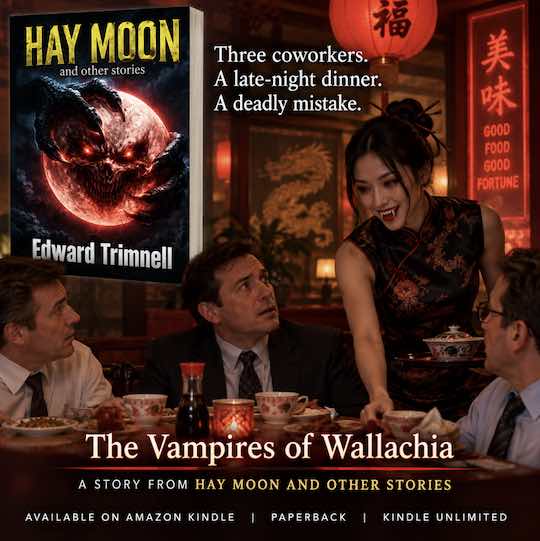
The above is one of my early short stories, “The Wasp”. I wrote it back in 2009, and it was first published in my short story collection, HAY MOON AND OTHER STORIES.
This is very much a summertime story. It’s also based my lifetime loathing of wasps. I can handle spiders, snakes, and other creepy-crawlers (to a point, anyway). I love honeybees.
But I absolutely despise wasps.
As the old German proverbs goes, “God made the bee, but the devil made the wasp.”
My maternal grandfather, born in 1921, grew up in rural Adams County, Ohio. He told me so much about that time and place, that I sometimes feel as if I lived it all myself.
“Hay Moon” is a short story set in rural Ohio in the summer of 1932. My grandfather never told me a story like this, filled with supernatural forces and the undead. But his real-life accounts of his childhood years helped me add a realistic flavor to the tale, if I say so myself.
You can listen to the story here, or on my YouTube channel (where you’ll find lots of additional audio content).
Revolutionary Ghosts is my 2019 novel based on a premise that mixes supernatural horror and history:
Suppose that the Headless Horseman of Washington Irving’s “The Legend of Sleepy Hollow” were to return to terrorize modern-day America.
But not 21st-century, present-day America. (The current century has enough real horrors without make-believe, thank you very much.)
Most of Revolutionary Ghosts is set in 1976, the year of the American Bicentennial. This is historical horror with a cool ‘70s vibe.
The original 2019 cover was, however, badly in need of a refresh. This is the new cover:
You can find Revolutionary Ghosts on Amazon. The book is coming out of Kindle Unlimited on April 1. Shortly after that, you’ll be able to get it on Apple Books, Kobo, Google, and B&N. Library distribution will also be rolled out. So you can read it that way if your local library has an arrangement with OverDrive.
The year is 1988. Anything can happen, but nothing is guaranteed!
Get ready for a coming-of-age story that will remind you of your favorite teen/young adult movies from the 1980s.
As the year 1988 begins, Paul Nelson is nineteen going on twenty. Paul is an economics major at the University of Cincinnati. He has big plans to go to work at a major bank after graduation.
But Paul’s life is not without problems. His first serious girlfriend has dumped him, and his best friend Scott gets all the female attention, seemingly without trying.
Paul meets a witty young woman who seems to be his perfect match. But then he unexpectedly falls for an older woman who has secrets and an unknown agenda.
Paul’s life spins out of control. He’s also incurred the unwanted attention of the Cincinnati Police Department, criminal elements, and a military man who detests him on sight.
Filled with a wide range of memorable characters and a generous dollop of 80s nostalgia, ‘No Sure Thing’ is a fun and fast-paced tale from a bygone but fondly remembered era.
TERMINATION MAN is the story of Craig Walker, a management consultant who specializes in “removing” problem employees through entrapment and techniques of “social engineering”.
TERMINATION MAN is fiction, but it is based on my experience in the automotive industry. The novel’s premise also has a basis in HR practices.
“Managing out” is a common corporate HR practice. When an employee is “managed out”, her situation is made so unpleasant or unsustainable that she will effectively fire herself, and voluntarily resign. This saves the company hassle and expense on multiple levels.
TERMINATION MAN is an embellishment of the managing out practice, of course. But the principle exists, and all HR professionals are familiar with it.
Another thing to remember: corporate HR is not your friend. Corporate HR does not represent you. Corporate HR represents your employer, the company.
This doesn’t mean that corporate HR reps are automatically sinister, venal, etc. (Most are not.) But you should never forget who pays their salaries. (Hint: not you.)
Jason Kelley is a college student who agrees to take a walk down the most paranormally active road in Ohio. His mission: to document the phenomena he encounters on the cursed stretch of rural highway.
Along the way he encounters hellhounds, malevolent spirits, and trees that come to life.
If you like traditional supernatural horror tales, you’ll love ELEVEN MILES OF NIGHT. Available on Amazon now.
The year is 1938. Betty Lehmann is an undercover German spy. Can anyone stop her? Find out in THE CAIRO DECEPTION, a 5-book, World War II historical fiction series.
You’re twelve years old, and trick-or-treating with your two best friends.
You know what they say about the Shipley House. Something very bad happened there in 1959.
For more than twenty years, the Shipley house has stood vacant. No one can live there for long.
You’ve been warned not to enter.
But it’s Halloween, after all. How can you resist?
You try the front door. You’re surprised to find that the Shipley house is unlocked. Almost as if the house has been waiting for you.
You go inside, and walk down the hallway toward the bedroom at the end of the corridor.
Be careful: what you find in that room may drive you mad. And you may discover things about yourself that you don’t want to know.
***
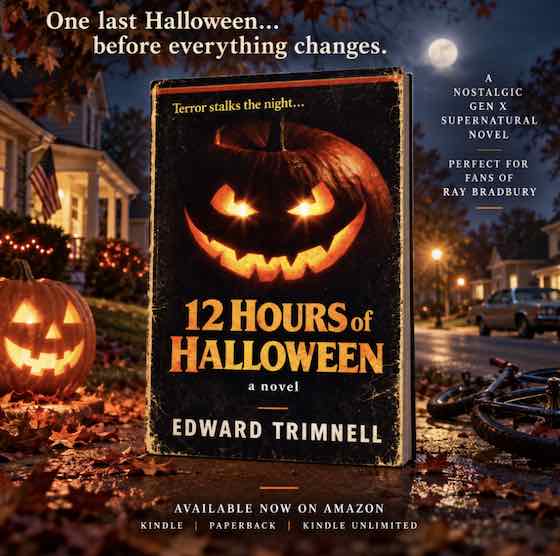
The Shipley house is featured in one of the chapters of 12 HOURS OF HALLOWEEN, a Gen X coming-of-age supernatural horror tale set on Halloween night, 1980.
Three young friends decide to go out for “one last Halloween before they enter their teenage years. But this will be a Halloween like no other.
12 HOURS OF HALLOWEEN is available on Amazon, and you can read it for free in Kindle Unlimited.
In the Bicentennial summer of 1976, the Headless Horseman returns from history (and the grave!) to terrorize modern-day America. Can one Ohio teenager stop the carnage?
Get the Kindle boxset for half-price, now through the morning of October 31st!
Horror in the American heartland!
Here’s an excerpt from Book 2 (Chapter 1)
August 1882
Ellen Briggs, née Ellen Sanders, was in her own house, and she was absolutely terrified.
Of course, this was not really her house, was it? It was her marital residence, where she now effectively lived in a state of captivity.
Not to mention…absolute terror.
She had married Theodore Briggs—railroad tycoon, necromancer, and murderer—only a few months ago.
In the early days of the marriage, Briggs had warned her: Stay out of unfamiliar rooms. Although the house was not old, it was home to many old secrets, Briggs had explained.
But she had forgotten his warning, in light of all that had happened since then…
Today Ellen had been wandering through the first floor of the massive house. Since her escape attempt earlier in the summer, Briggs seldom allowed her leave. But she could not sit still within these walls. If she remained in one place, she would go completely mad.
So today she had gone wandering, even though she had known better.
That was how she came across the undead child…
The door to the room containing the undead child was located adjacent to the first-floor ballroom. Ellen had opened the door, not realizing that the room connected to the basement via one of the home’s labyrinthine internal tunnels.
She reckoned that only later—after it was too late.
It was in the basement that her husband kept his worst secrets. Bodies were buried in the basement—and they didn’t always stay buried. Sometimes, they found their way to other parts of the house…
Nevertheless, this miscellaneous room had seemed harmless enough when she had first entered it. Heavy draperies were drawn on both of the room’s high windows, but some late afternoon sunlight filtered through.
The room seemed made for casual exploration. Various works of art had been stored within it. Paintings bound in frames, but not yet hung, stood stacked against all four walls.
Throughout the floor, in a random arrangement, were various statues: of nymphs, cherubs, and Greek deities. There was one life-size replica of the Venus de Milo. There were waist-high vases, and teak dividers carved in what looked like Turkish patterns.
The fortunes of Ellen’s husband were vast. He had no doubt purchased most of these items in bulk from a broker, with the intention of placing them around the house at a later date.
That work might have been left to Juba, the maidservant whom her husband had ordered killed, for her part in Ellen’s escape attempt. That same escape attempt had also resulted in her husband murdering Wilbur Craine, her former beau and would-be rescuer.
As she made her way through the cluttered room, Ellen endeavored to push those thoughts from her mind. She couldn’t think about Juba now. And certainly not about Wilbur.
She was kneeling down on the hardwood floor, admiring one of the paintings leant against the wall, when she heard something shift from a corner of the room.
Ellen immediately looked away from the landscape painting, toward the movement. She stood up. Something had stirred behind the teak screen in the room’s far corner, near one of the windows.
The teak screen was suspended above the floor on a set of wooden legs. In the gap between the screen and the floor, Ellen could see two small feet, clad in simple leather shoes. The shoes were caked with dried mud.
The feet moved toward the edge of the screen, but not in proper steps. One foot dragged behind the other.
A small figure stepped out from behind the screen. It was short, between four and five feet tall. The very sight of it was absolutely terrifying.