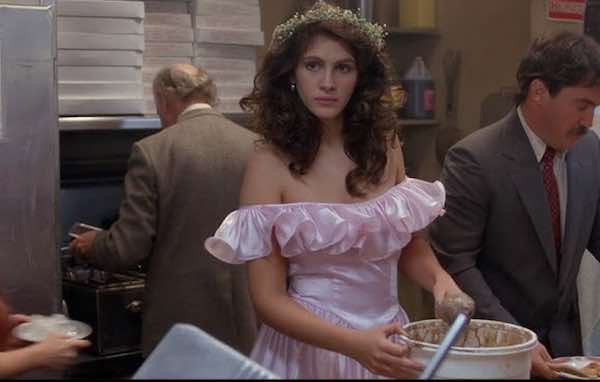

‘Commando’: the ultimate 80s action movie?

I’m not sure how 40 years went by without me seeing Commando (1985). But I finally caught it last night with my YouTube Premium subscription.

Commando stars Arnold Schwarzenegger as a retired military operative, who is called into action when a group of international bad guys take his daughter hostage.

It’s a very basic plot, with a lot left to assumption, or the viewer’s imagination. This is pure 80s escapism, and the film suffers somewhat from the production values of that era.

On the plus side, there are no boring moments in the 90 minutes that it will take you to watch Commando. The movie is a lot of fun, in the same way that the A-Team and Magnum P.I. were fun in the 1980s.

There is no romantic subplot in Commando. Rae Dawn Chong, however, provides a solid performance as Schwarzenegger’s sidekick (and, at one point in the movie, his pilot). The 12-year-old Alyssa Milano, who was decades away from becoming annoying and political, appears as Schwarzenegger’s daughter.

-ET

**Save on Amazon: Commando (Director’s Cut) DVD

Gen X and Merlin Olsen

The X feed Super 70s Sports has the following to say about the late Merlin Olsen (1940 – 2010):

“I miss Merlin Olsen. A true renaissance man who could kick your ass, eloquently break down exactly how he did it, then send you a thoughtful bouquet of flowers as a gesture of goodwill.”

I don’t disagree with the sentiment, but most Gen Xers don’t remember Merlin Olsen as a professional football player. Olsen played his last game in the NFL in 1976. This Gen Xer was an 8-year-old third-grader then.

Most of us do, however, remember Merlin Olsen in his post-NFL acting career. Olsen portrayed Jonathan Garvey on Little House on the Prairie from 1977 to 1981. In this secondary role, he was the “male buddy” figure for Michael Landon’s starring role.

My childhood household had one television, and my mom loved Little House. So we of course tuned in every week. I didn’t love this show quite as much as my mom did, but I didn’t exactly hate it, either. It was pleasant enough television for that pre-cable era, when most TV shows were written to the broadest audience possible. Little House on the Prairie was written and billed as wholesome family fare, with all that label implies, both for better and for worse.

I recall watching Olsen on Little House on the Prairie for several years, perhaps, before my father mentioned, apropos of nothing, that Merlin Olsen had previously been a professional football player.

My research tells me that he had quite a career in that capacity. But I, like most Gen Xers, will always think of him as Jonathan Garvey.

-ET

**Save on Amazon: Little House On The Prairie Season 1 Deluxe Remastered Edition [DVD]

‘Back to the Future’ +40, and why Disney rejected the film

This past week marked the 40-year anniversary of the release of Back to the Future on July 3, 1985.

I saw the movie when it was new. I enjoyed it; but I never thought that this was a film that would be remembered four decades later.

But hey, I was 17 years old in the summer of 1985. What did I know?

1985 theatrical release poster

One of the forgotten facts about the movie is that Disney originally rejected it. The dealbreaker was the subplot in which Marty McFly’s mother becomes infatuated with him during his time in 1955. Disney execs didn’t like the incestuous plot twist.

And it struck me as a little strange at the time. Never mind that this is not the sort of scenario that anyone is likely to encounter in real life.

Whether Disney was right to reject the film or not in the 1980s, herein lies a measure of how much Disney—and the movie business—has changed since then. As we all know, Disney is more than happy to let its freak flag fly nowadays.

-ET

View Back to the Future on Amazon

Should AC/DC retire?

Now let’s turn our attention to something really important: the future of the rock band AC/DC.

I’ve been a fan of AC/DC since the early 1980s, when Back in Black was the latest thing. AC/DC isn’t my favorite band. (That honor goes to Rush.) But AC/DC is definitely among my top ten.

The members of AC/DC, just like the rest of us, are getting older. Angus Young, the group’s iconic guitarist, is now 70. Lead vocalist Brian Johnson is now 77.

I’ve seen several articles in the press of late, claiming that AC/DC has been giving lackluster live shows, and that the band is overdue for retirement.

Perhaps. But I’ve also seen several video clips of recent AC/DC concerts.

No, it isn’t 1981 anymore. (And oh, how I wish that it were, for any number of reasons.) But AC/DC still gives a pretty solid live performance, by my estimation.

-ET

Angel: scandalous action films of the 1980s

The 1980s have acquired a reputation for being hopelessly conservative, fuddy-duddy times. On the contrary, many of the movies, songs, and jokes that were commonplace back then wouldn’t pass muster in today’s environment.

Consider Exhibit A: the Angel series of thriller films. The tagline of the initial 1984 movie was:

“High school honor student by day, Hollywood hooker by night.”

The movie starred Donna Wilkes (then in her twenties) as the 15-year-old Molly Stewart, a prep school honor student who, for whatever reason, moonlights as a sex worker each night. And of course, she solves a crime or two along the way, as well!

Now, I’m not saying this is a laudable film concept. But people barely batted an eye at it in the 1980s. If such a film were released today, social conservatives on the right would go ballistic. (Jesse Watters and the rest of the Fox News crew would have a field day.) On the dour, humorous left, meanwhile, there would be wailing and shrieking about “exploitation”.

To be sure, there was an element of exploitation in the movie. (This is why a twenty-something actress was cast in the lead role.) But in the 1980s, most folks seemed capable of realizing that a movie was just a movie.

I was fifteen when Angel came out. I never saw the movie, but it was heavily advertised. Many people did see the film, apparently. There were two sequels: Avenging Angel (1985) and Angel III: the Final Chapter (1988).

-ET

Get Angel (1984) on Amazon

Rediscovering F. Scott Fitzgerald

In the fall of 1984, I was a junior in high school. I had a passion for the novels and short stories of Stephen King.

My high school English teacher, not so much. He was a devotee of two twentieth-century writers: Ernest Hemingway and F. Scott Fitzgerald. So I read a lot of Hemingway and a lot of Fitzgerald that year.

I was 16 years old, and really two young for either writer. Hemingway and Fitzgerald wrote about adult concerns, and concerns of what was already a long-ago, bygone era. As a teenager of the Reagan-era American suburbs, I had little interest in the social conventions of the Jazz Age, or the moody ramblings of World War I veterans.

As an adult, I’ve developed a new appreciation for both writers.

I’ve recently begun digging into The Short Stories of F. Scott Fitzgerald: A New Collection. This collection, edited by Matthew J. Bruccoli, contains all the Fitzgerald short stories I remember as a junior in high school: “Winter Dreams”,  “A Diamond As Big As the Ritz”, “Babylon Revisited,” etc.—as well as many that my high school English teacher never assigned.

Fitzgerald wrote his short stories long. Not all of them can be read in a single sitting. Many of his short stories resemble compressed novels more than typical short stories, as they deal with events stretching out over many years, even decades.

Fitzgerald’s writing style is accessible to modern readers, but his subject matter is a hundred years removed from our time. It takes some effort to put oneself in the mindset of an adult living in 1925. (I am soon to turn 57 years old, and that is the era of my great-grandparents. The one great-grandparent I knew was born in 1895, one year before Fitzgerald.)

Still, there are some universal themes in Fitzgerald’s fiction. One of my favorite stories is the aforementioned “Winter Dreams”. This is the tale of a man who, between adolescence and early middle age, mistakenly projects all of his ideals onto a woman with whom he has a fleeting romantic relationship.

1922 magazine illustration for “Winter Dreams”

“Winter Dreams” is basically a story about the pedastalization of femininity. The theme is as relevant in 2025 as it was in 1922, when Fitzgerald wrote the story.

(Note: When I first read “Winter Dreams” in 1984, I “got” what Fitzgerald was trying to say. Some years would pass before I learned the real-life lesson.)

You might be hesitant to dive into a book of century-old stories. I would encourage you, though, to give Fitzgerald a try. Many of his tales, like The Great Gatsby and “The Curious Case of Benjamin Button”, have been adapted for film in the modern era.

There is a reason why Fitzgerald endures, when so many other writers have fallen by the wayside. Fitzgerald was a skilled and insightful storyteller.

-ET

Gen X memories: How and Why Wonder Books

So much was superior about the Gen X childhood. We had decent schools, conscientious teachers, no social media madness, no “AI” nonsense, and no smartphone obsessions.

We also had a thriving children’s book industry. And no—I’m not referring to Harry Potter. (Most Gen Xers were in our 30s when Harry Potter appeared.)

We had comics and storybooks, of course. But there were also plenty of children’s books that respected the intelligence of children. Many of these books were quite sophisticated by today’s standards, what might accurately be called “middlebrow”.

Among these was the How and Why Wonder Books series. Most of these were published in the early 1960s.

I owned this volume: The How and Why Wonder Book of The Moon.

Out of print! So no Amazon link!

This title, targeted at the casual juvenile reading market, went into considerable detail about the science of the moon and the history of lunar observation. Since this was published before the 1969 lunar landing, that event was not covered, but plenty else was.

In the 1960s and 1970s, it was still assumed that intelligent people would spend more time reading than staring at electronic screens. How and Why Wonder Books, though written for children in the 1960s, would be beyond the reading comprehension levels of many adults born after 1990. Make of that what you will.

-ET

1980: a shave with your Egg McMuffin?

This is a promotional ad that McDonald’s ran in 1980. Breakfast customers were given a free Bic razor with the purchase of any breakfast entree.

1980 McDonald’s print ad

I don’t specifically remember this promotion, and my guess is that it didn’t last long. This is also one that you’re unlikely to see repeated in the twenty-first century. Clearly the ad appeals to one specific gender. (And in 1980, no one disputed the notion that there were only two.) But as we all know, women eat pancakes, too. So what’s going on?

My mother worked outside the home in 1980; but that was the very beginning of the Boomer-led “working woman” trend of the 1980s. The McDonald’s marketing folks probably figured that men would comprise the main market for fast-food breakfasts, presumably on their way to work.

-ET

Sex appeal and cigarette ads: my 1970s/80s youth

During the 1970s and throughout most of the 1980s, it was common to see full-page cigarette ads in glossy magazines. Advertisements for cancer sticks had already been banned from television, but print ads were still legal, and considered fair game.

Camel ad, circa 1978 to 1983

Much has been said about the “Marlboro Man” over the years. But the Camel Dude (shown above) got a lot more female attention. I remember seeing variations of the above ad in a number of magazines that ended up in my hands during the late 1970s and early 1980s, including Field & Stream, which I read with some regularity.

We can assume that the Camel Dude got lucky on the day presented in the above ad. But one wonders: is he still alive? Perhaps not, with that smoking habit of his.

I was a pre-adolescent and adolescent in those days; and I may have been slightly influenced by the marketing message. A “great-tasting blend of Turkish and domestic tobaccos”, and hot women on the beach? Count me in, said the adolescent version of me.

Speaking of which: I haven’t smoked cigarettes at all as an adult; but I did smoke them on occasion when I was 12 to 13 years old. Another thing about the 1970s/80s: cigarette vending machines were everywhere, and underage people had no difficulty accessing them.

I certainly tried Camels. The hot blonde, as I recall, was not included.

-ET

MTV and Indiana small towns

I am a resident of Cincinnati, Ohio, and a frequent visitor to Indiana. My father grew up in Indiana. I have many childhood memories of family holiday gatherings in Lawrenceburg and nearby rural Switzerland County.

More recently, I took a trip with my dad to Madison, Indiana. Some of the photos from that trip can be found in an earlier post on this blog.

I have always considered myself an “honorary” Hoosier (the nickname of a person from Indiana), because of my familial ties, and also because of my affection for the state.

Family reunion in Switzerland County, Indiana, 1987.

But there are famous Hoosiers, too.  John Cougar Mellencamp was born in 1951 in Seymour, Indiana, and he grew up there. Mellencamp, now in his seventies, is a proud son of Indiana. He has long incorporated small-town Indiana into his musical brand.

Mellencamp was one of the most popular solo artists of my teenage years. He was also a frequent presence on MTV. (This was back when MTV actually played music videos, as every Gen Xer will remind you.)

Many of Mellencamp’s songs and MTV videos incorporated small-town themes. Whenever possible, he inserted an Indiana-related Easter egg or two. I have become aware of some of these only decades later.

Consider, for example, the MTV video for “Hurts So Good”. This song hit number 2 on the Billboard Hot 100 in 1982. In the summer and fall of that year, it was hard to turn on FM radio without hearing “Hurts So Good” within the hour.

The “Hurts So Good” MTV video was also popular on MTV. Little did I know, back then, that this video was filmed in the small town of Medora, Indiana. Medora is close to Seymour, where John Cougar Mellencamp grew up, and about ninety minutes from Lawrenceburg, where my father grew up.

The lesson here, for me, is that great art—and great artists—can come from anywhere. John Cougar Mellencamp would not have been the songwriter and musician he became, had he spent his formative years in Los Angeles or New York.

Many people grow up in small town or rural environments and do not find art, of course. But it is a mistake to assume that every denizen of LA is working on a screenplay, or that every NYC resident is an aspiring novelist.

-ET

The 1974 Super Outbreak and me

In early April of 1974, I was but a wee lad in kindergarten. My dad worked in sales. My mother and I sometimes accompanied him on business trips.

And so it was that on April 3, 1974, my father, my mother, and I traveled to Louisville, Kentucky—just in time for that city’s historic 1974 F4 tornado, which was part of the equally historic “super outbreak” of that year.

Why was it called a “super outbreak”? Between April 3 and 4, at least 149 tornados were documented across 13 states. Over three hundred people lost their lives. It was a big news story, for anyone alive and sentient then.

My parents and I were staying in a one-story motel not far from the Louisville F4 tornado when it hit. I was not yet six years old, and so I had only the vaguest idea that something bad was happening. But I realized that all was not well.

For one thing, my parents were visibly alarmed. When you’re a young kid and your parents are nervous, that probably means that you should be concerned, too.

I remember the high winds and the freight train sound of the tornado. I did not see the tornado itself, but I certainly saw its aftermath. Louisville looked like a war zone. On our drive home to Cincinnati the next morning, I recall seeing a swing set thrown into the middle of the highway by the tornado. I particularly remember that.

So far as lasting traumas go, there were some minor ones. For a number of months, I had recurring dreams about a giant lifting off the roof of our house. And to this day, I don’t like violent spring and summer storms. I learned at an early age how quickly such storms can turn deadly.

-ET

5150 is 39 years old

It is difficult to believe that 5150, Van Halen’s seventh studio album, is now 39 years old. But this is indeed the case. 5150 was released on March 24, 1986. Has that much time really passed? I’m afraid so.

I can still remember when “Dreams” and “Why Can’t This Be Love” were new songs on FM radio. I immediately liked what I heard; and I became one of the thousands of people—mostly teenagers—who purchased the album in its early days. (More than 6 million copies of the album have been sold since then.)

This was the 1980s, and so we bought all of our music in record stores at the mall, of course. The album cover featured a muscle man holding up a metallic sphere, Atlas-like. This struck me as both interesting and strange, but I shrugged and went with it. (I was an avid reader of Muscle & Fitness in those days.)

The big news about this album was that Van Halen had a new lead singer. David Lee Roth was out, Sammy Hagar was in.

Sammy Hagar already had a following of his own as a solo artist. So this was rather like a merger between two companies with established brands. I was already a fan of Hagar, so I was predisposed to like the new, changed Van Halen.

Speaking of which: I had been a very lukewarm fan of Van Halen until then. Like everyone, I appreciated Eddie Van Halen’s unique guitar skills. But the Van Halen songs of the David Lee Roth era were banal in the extreme, even by the standards of a high school kid. The Roth-era songs were all about girls and parties, or they were about nothing at all.

I also suspected, even back then, that David Lee Roth was something of an egotistical jackass. These suspicions were confirmed for me decades later, when I read Runnin’ with the Devil: A Backstage Pass to the Wild Times, Loud Rock, and the Down and Dirty Truth Behind the Making of Van Halen. Written by former band manager Noel Monk, Runnin’ with the Devil describes Roth’s self-indulgent, often vindictive behavior in detail. I didn’t know any of these details then; but I was glad to see Sammy Hagar replace the compulsively peacocking Roth. 

5150 was a different kind of Van Halen album. The songs on this album had a mystic, almost aspirational quality. And yet—5150 was still upbeat, fun, and accessible. It wasn’t one of those dreary, navel-gazing rock albums that people claim you have to smoke weed in order to appreciate.

Van Halen would never be its old self again. The new trend—of better songwriting—would peak over the next two VH albums: OU812 (1988) and For Unlawful Carnal Knowledge (1991).

Should Sammy Hagar be credited for these changes? Given the magnitude and the timing of the shift, it is difficult to conclude otherwise.

“Love Walks In”, the second song on Side 2 of the album, is one of 5150’s most interesting pieces. The song’s lyrics suggest time travel, fate, reincarnation….who knows?

Some years after 5150 was released, Sammy Hagar stated that “Love Walks In” was written about communication with extraterrestrial aliens. I took a very different meaning from the song at the time—which I’ll spare the reader. And I still do. But that is one of the hallmarks of successful art: each person can walk away from it with a slightly different interpretation. For decades now, millions of people have regarded the Beatles’ “Let It Be”, as a Catholic ballad about the Virgin Mary. Paul McCartney actually wrote the song about his deceased mother, who was also named Mary.

5150 is one of those albums that, for me, will always represent a specific time and place. The spring of 1986 is long gone. I will turn 57 this year, and I don’t try to pretend that I’m still a senior in high school…not even when I listen to my favorite music from that bygone era.

I still have my own interpretation of “Love Walks In”, though. And I still enjoy listening to this almost 40-year-old album. Its songs never get old. If only the same could be said for this particular listener.

-ET

**Get 5150 on CD or vinyl at Amazon

‘The Empire Strikes Back’ comic magazine: 1980

In the spring of 1980, I was eleven years old going on twelve. I was a huge Star Wars fan, part of the original generation that discovered the movies as kids.

Like many kids of that era, I couldn’t get enough of the Star Wars story. Seeing the movies in the cinema wasn’t enough. 

And for that we had Star Wars comics. Marvel put out a big Star Wars edition for the first film in 1977: more or less a retelling of the movie in graphic form, and simplified a little for young readers.

My parents bought me the comic version of the first film in 1977, and I read it from cover-to-cover, many times over. When the comic for The Empire Strikes Back came out in 1980, my parents gave me that, too. I also read this one many times, even though I’d seen the movie!

Thinking about all the hours of pleasure I (and so many other Gen X kids) derived from a single comic book makes me long for simpler times, of course.  We did not have as many entertainment options in those days. The Internet was still almost 20 years in the future. Video games, still crude, were only beginning to become a thing.

But there is also something to be said for the unprecedented creative impact and economic power of the Star Wars story in the late 1970s and early 1980s.

The glory had faded a little by the time Return of the Jedi, the third movie, came out in 1983. But between the release of the first and second movies, 1977 – 1980, Star Wars was a cultural colossus. To put it in contemporary terms: combine Taylor Swift with the Super Bowl, and then multiply that by a factor of five.

Looking at that comic, I feel something else, too; and this one is personal. I feel fortunate that I had two parents who loved me, and provided me with more than the basics of food and shelter. As I’ve noted before, I was very blessed in my formative years. I have little to complain about.

-ET

When ‘TV Guide’ was essential

In those days before a zillion cable channels (let alone the Internet), there was TV Guide.

Launched in 1953, these little weekly magazines would be familiar to anyone from the Baby Boom generation or Generation X. (Some of the older Millennials may have dim early childhood memories of TV Guide, too.)

Each issue of TV Guide contained a listing of the week’s programming, of course. There were also articles in the front of the magazine that were sometimes worth reading. (If you were interested in television and Hollywood happenings, that was.)

The covers, moreover, were often minor works of art. Like this one from 1986, which depicts the cast of Cheers, one of the most popular shows of the 1980s.

TV Guide was always on my mother’s shopping list. It was on everyone’s shopping list. Why? Because without this publication, you would have a hard time knowing what programs were on, on which channels, and at what times.

The magazine was cheaply priced. (The 60¢ May 10, 1986 issue shown above would equate to only about $1.70 in today’s dollars.) But TV Guide was nevertheless essential.

With a shelf life of only one week, these weren’t magazines that anyone saved for posterity. Sometimes, though, one of them would end up beneath a sofa or behind a recliner, only to turn up months later.

TV Guide still exists as a going concern, but it’s a shadow of its former self. The TV Guide website probably gets some traffic, but the stripped-down, printed version of the magazine is no longer the weekly grocery-cart essential it once was. Not in this era of cable, Hulu, Netflix and YouTube. I could not find a copy of TV Guide at my local Walmart, Meijer, or Kroger. The publication now seems to rely on a shrunken, hardcore base of snail-mail subscribers.

Yes, another casualty of our digital age of hyper-abundance. TV Guide’s original mission has become not just obsolete—but impossible, even if someone wanted to attempt it.

Network and cable listings are only a small part of the viewing options nowadays. On-demand is where the real action is…not just on Netflix and Hulu, but on the endless sea of variety that is YouTube. On-demand viewings, loosely organized by search engines, defy the bounds of itemized printed lists.

It would not be incorrect to say that the original TV Guide is a relic of pre-Internet times; but this description would be insufficiently precise. The old TV Guide is a relic of a time when the scope of available programming for a single week was small enough that it could be completely curated, listed, and described in a single publication.

Needless to say, those days are gone; and—barring some cataclysmic change that restarts everything from scratch—those days are gone forever.

-ET

The bygone, venerable 8-track

Members of my generation lived to see plenty of changes in the ways popular music is consumed. We were born in the golden age of the vinyl album. As adults, many of us are learning to cope with streaming music services.

Throughout most of the 1980s, the audio cassette tape was the most popular means of buying music and listening to it. When I see nostalgic Facebook posts about physical music media from the 1980s, the cassette tape is most often the subject.

But there was another musical format that was already dying out as the 1980s began, but which was actually quite good, by the standards of the time. I’m talking about the venerable 8-track tape.

The 8-track was a plastic cartridge that had dimensions of 5.25 x 4 x 0.8 inches. Like the audio cassette, the 8-track contained a magnetic tape. But unlike the audio cassette, the 8-track was much less prone to kinking and tangling.

The 8-track was actually 1960s technology. The 8-track took off in the middle of that decade, when auto manufacturers began offering 8-track players as factory-installed options in new vehicles. Throughout the 1970s, 8-track players were popular options on new cars. 8-tracks were further popularized by subscription music services like Columbia House.

Columbia House magazine ad from the 1970s

I purchased my first home stereo system for my bedroom in 1982, with money I had saved from my grass-cutting job. I bought it at Sears, which was one of the best places to buy mid-level home audio equipment at that time. The stereo included an AM/FM radio, a turntable for vinyl records, a cassette deck, and an 8-track player

I quickly discovered that I liked the 8-track format the best, because of its relatively compact size and ease of use. That spring I bought 8-track versions of Foreigner 4, Styx’s Paradise Theater, and the Eagles Live album. All of these produced good sound (again, by the standards of that era), and none of them ever jammed or tangled. I was convinced that I had found my musical format.

It has often been my destiny to jump on a trend just as it is nearing its end. Little did I know that my beloved 8-track was already in steep decline.

8-track sales in the USA peaked in 1978, and began falling after that. The culprit was the slightly more compact, but far more error-prone audio cassette. This was the format that all the retailers were suddenly pushing. By the early 1980s, cassette players were also replacing 8-track players in cars.

I would like to say that I yielded to the march of technological progress, but this wouldn’t be truly accurate. The audio cassette, invented in 1963, was slightly older technology than the 8-track.

I did, however, yield to the march of commercial trends, simply because I had no choice. Nineteen-eighty-three was the year that retailers began phasing out 8-tracks in stores. You could still purchase them from subscription services, but they were disappearing from the shelves of mall record stores and general merchandisers like K-Mart. By early 1984, the venerable 8-track had completely vanished.

In recent years, there has been a movement to resurrect the vinyl record. I’ve noticed no similar trend aimed at bringing back the 8-track. At this point, in the early- to mid-2020s, I may be the only person left on the planet who still fondly remembers this bygone musical medium.

-ET