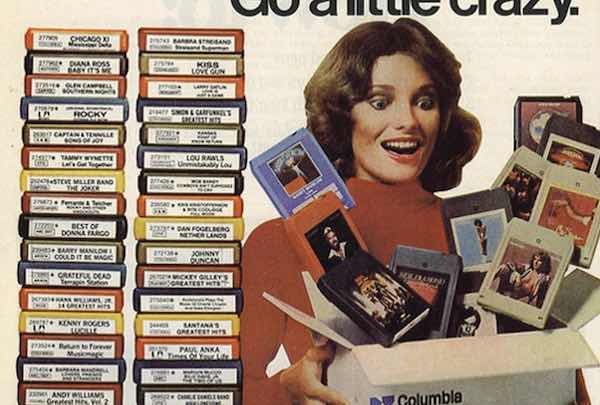
There really was something special about growing up in an era when video games were not old hat, but something brand-new and on the cutting edge of the technology of that time.
I suppose I like my 21st-century iPhone and my MacBook as much as the next person, but they are tools for me, not objects of indulgence. I don’t think I’ve ever enjoyed anything quite as much as that first Atari console I received for Christmas in 1981.
Did I have a favorite game? Of course I did. Space Invaders, hands down. Missile Command came in a close second, though.
Amadeus, the biographical drama about the life of Wolfgang Amadeus Mozart, was one of the most critically acclaimed movies of the mid-1980s. Starring F. Murray Abraham, Tom Hulce, and Elizabeth Berridge, Amadeus brought the famed 18th-century composer and his times to life.
Amadeus remains one of my favorite movies of all time. But when I saw it for the first time, as a teenager in the 1980s, I was inspired: I had a sudden desire to learn more about classical music, or at least about Mozart.
This was more than a little out of character for me at the time. As a teenager, my musical tastes ran the gamut from Journey to Iron Maiden, usually settling on Rush and Def Leppard.
So I read a Mozart biography. I was already an avid reader, after all. Then it came time to listen to the actual music. That’s when my inspiration fell flat.
I found that Mozart the man was a lot more interesting than his music. At least to my then 17-year-old ears. Nothing would dethrone rock music, with its more accessible themes and pounding rhythms.
Almost 40 years later, I still prefer rock music. In fact, I still mostly prefer the rock music I listened to in the 1980s.
Recently, however, I took another dive into classical music.
Classical music, like popular, contemporary music, is a mixed bag. Some of it is turgid and simply too dense for modern ears. Some pieces, though, are well worth listening to, even if they were composed in another era.
Barber’s “Adagio for Strings” is one such piece. For the longest time, I mistakenly assumed that this arrangement was written for the 1986 Vietnam War movie, Platoon, in which it is prominently figured.
I was wrong about that. “Adagio for Strings” was composed in 1938, long before either Platoon or the Vietnam War.
“Adagio for Strings” is practically dripping with pathos. It is the perfect song to listen to when you are coping with sadness or tragedy. This music simultaneously amplifies your grief and gives it catharsis. You feel both better and worse after listening.
“Adagio for Strings” was broadcast over the radio in the USA upon the death of President Franklin D. Roosevelt in 1945. It was played at the funeral of Albert Einstein ten years later. The composition was one of JFK’s favorites; and it was played at his funeral, too, in 1963.
Most of the time, though, you’ll be in the mood for something more uplifting. That will mean digging into the oeuvre of one or more of the classical composers.
While the best-known composers (Mozart, Bach, Beethoven, etc.) all have their merits, I am going to steer you toward Czech composer Antonin Dvorak (1841-1904) instead.
Dvorak was born almost a century after Mozart and Beethoven, and longer than that after Bach. To my philistine ear, Dvorak’s music sounds more modern, while still falling within the realm of the classical.
Antonin Dvorak
I would recommend starting with Symphony Number 9, Aus der Neuen Welt (“From the New World”). This is arguably Dvorak’s most accessible work, and my personal favorite at present. Symphony Number 9 contains a lot of moods. It takes you up and down, and round again.
This is not the story of an older adult turning away from the pop culture of his youth for more sophisticated fare. Far from it. Dvorak is not going to replace Def Leppard on my personal playlist. Bach and Mozart have not supplanted Rush and AC/DC.
But time has made me more musically open-minded. Almost 40 years after I was inspired by the movie Amadeus, I have, at long last, developed a genuine appreciation for classical music.
But that is a qualified appreciation, for an art form that I still prefer in measured doses.
Led Zeppelin formed in 1968, the year I was born, and disbanded in 1980, when I was twelve.
I was therefore too young to become a Led Zeppelin fan while the band was still a going concern. But Led Zeppelin was still enormously popular when I discovered rock music as a teenager in the early to mid-1980s. Lead singer Robert Plant, moreover, was then launching a solo career, and making use of the new medium of MTV.
Most of my musical interests lie in the past. I admittedly lack the patience to sort through the chaotic indie music scene on the Internet, and I shake my head disdainfully at the overhyped mediocrity of Taylor Swift. When I listen to music, I listen to the old stuff: Rush, Def Leppard, Led Zeppelin, and a handful of others.
Led Zeppelin is very close to the top of my list. I listen to Led Zeppelin differently than I did in the old days, though. The lyrics of “Stairway to Heaven” sound less profound to me at 55 than they did when I was 15. I now appreciate Led Zeppelin when they’re doing what they did best: raucous, bluesy rock-n-roll that had only a hint of deeper meaning: “Black Dog”, “Whole Lotta Love”, “Kashmir”, etc.
And of course, reading remains my first passion. I’m still waiting for an in-depth, definitive biography of Canadian rock band Rush. (I suspect that someone, somewhere is working on that, following the 2020 passing of Rush’s chief lyricist and drummer, Neil Peart.) But a well-researched and highly readable biography of Led Zeppelin already exists: Bob Spitz’s Led Zeppelin: The Biography.
At 688 pages and approximately 238,000 words, this is no biography for the casual reader. But if you really want to understand Led Zeppelin, its music, and the band’s cultural impact, you simply can’t beat this volume. I highly recommend it for the serious fan.
Kansas was one of my favorite bands while growing up. But this was always something of a minority viewpoint. Sadly, Kansas is a band that never reached its full potential.
Kansas, like the Canadian rock trio Rush, always had an intellectual, progressive streak. Kansas always wanted to make rock music “something more”.
Here’s an example: the band’s debut, self-titled album contains a song called “Journey from Mariabronn.”
What the heck is Mariabronn, you ask? That’s a reference to German-Swiss author Herman Hesse’s 1930 novel, Narcissus and Goldmund.
Highbrow, yes. But a little too highbrow for popular music. Even in the artistically indulgent 1970s. How many 16-year-olds—either then or now—are conversant in mid-twentieth-century German classic literature?
Leftoverture contains the spiritual rock anthem “Carry On Wayward Son”. This song brought the band mainstream success. This is also the Kansas song that non-devotees are most likely to recognize.
On Point of Know Return you’ll find “Dust in the Wind”, another Kansas song that still gets a fair amount of airplay.
That was about it, as far as commercial success went for Kansas. Although the band soldiered on for years (a version of Kansas continues as a going concern today), the group was fading out by the mid-1980s.
Kansas’s songs are well-thought-out, often to the point of being abstruse. In short, most of the group’s music isn’t immediately accessible to the casual listener. And that’s a fatal flaw in rock music, where the competition is fierce, and audience attention spans are notoriously short.
Kansas was also riven by an internal philosophical dispute. Founding member and chief songwriter Kerry Livegren became a born-again Christian in 1979. He often infused Kansas’s lyrics with quasi-Christian themes. These were seldom preachy or bombastic, but their spiritual import was hard to miss.
The other members of the band weren’t on board with this new direction. Many of Kansas’s albums during the 1980s (Drastic Measures (1983), comes to mind here) contain songs that aren’t really enough of one thing or another. It wasn’t explicitly Christian music, but it wasn’t mainstream rock—or even progressive rock—either.
The last Kansas album I bought was Power (1986). Kerry Livegren had left the band by this time, and the remaining members cobbled together an album that was imitative of the commercial rock music that was popular at that time.
Power contained a few worthwhile songs. But by this time Kansas had simply become too unpredictable as a musical entity—even for fans like myself.
Kansas had a good run in the 1970s, but the band ultimately floundered because its members couldn’t agree on what the band was supposed to represent musically and artistically.
Kansas was never going to be Foreigner or Journey, let alone a Led Zeppelin. All the group’s movements in those mainstream directions were awkward stumbles.
Christian rock was a thing in the 1980s and beyond. (The Christian rock group Stryper, founded in 1983, still has a fan base.) But Kansas never fully cultivated that market, because at least half of the band’s members were uncomfortable with the “Christian rock” label.
So Kansas was ultimately a lot of half-hearted missteps in many competing directions. But not enough of any one thing.
What’s the lesson here? Creator, know thyself. That advice applies not only to rock bands, but to anyone trying to stand out in a marketplace filled with “me-too” offerings.
The period between the two world wars was the golden age of the pulp fiction magazines. This was a time before television, or (of course) the Internet. Entertainment options were limited. (Heck, they barely had radio in those days.) Many people therefore turned to magazines that specialized in quickly written and fast-paced stories of romance, western adventure, crime, science fiction, or horror.
What happened to pulp fiction? The pulp magazines weren’t the victims of television, as is commonly thought. They were the casualties, rather, of the cheaply printed paperback. Modern paperback books were first introduced in 1935, but they really caught on during and shortly after World War II. The paperback completely changed the publishing and bookselling landscape, much as Amazon would about sixty years later.
Some of the original pulp content is still with us, of course. Horror fans who adore H.P. Lovecraft may not know that favorites like “At the Mountains of Madness”, “Dagon” —and most other Lovecraft stories—were originally published in Weird Tales, a pulp magazine founded in 1922. (Note: Weird Tales technically still exists, though its format has undergone some modifications; the magazine has a site on the Internet.)
I’ve read and reread Lovecraft’s oeuvreas much as I care to. So when I was recently in a mood to do some reading off the beaten path, I decided to indulge in a bit of vintage pulp crime fiction.
Or actually, quite a lot of vintage pulp crime fiction. The Black Lizard Big Book of Pulps contains forty-seven stories and two complete novels. Writers represented in this collection include well-known names like Raymond Chandler (1888-1959) and Dashiell Hammett (1894-1961). There are also plenty of stories by writers who are long forgotten.
I’m a longtime fan of pulp TV, in fact. During the 1980s, I regularly tuned in to action television shows like The A-Team, Knight Rider, Airwolf, and the original MacGyver. These shows were all escapist television, with plots that roared out of the gate like a 1981 DeLorean or a 1987 Toyota Supra.
My favorite was The A-Team. An episode of The A-Team kept you on the edge of your seat. Each episode ended with a blazing gunfight, in which no one was usually killed or seriously injured. The A-Team made absolutely no attempt to provide any sort of messaging on social, political, or philosophical issues. The other aforementioned 80s-era pulp TV shows were done in a similar vein.
Most of these shows did not age well. For nostalgia’s sake, I recently tuned in to a few old episodes of The A-Team and the original MacGyver. In the MacGyver episode, the eponymous hero found himself in the Soviet Union, where everyone conveniently spoke English. The Russians even spoke English with each other. I managed to sit through about twenty minutes of this. Life is too short.
The same might be said of the stories in The Black Lizard Big Book of Pulps. You can detect the literary and storytelling skills at work; but you can also tell that you’re reading fiction produced in a different era, when expectations were very different. My 1980s pulp TV shows did not have to compete with Netflix. The writers whose work is collected in The Black Lizard Big Book of Pulps did not have to compete with Michael Connelly or Lee Child.
The stories in The Black Lizard Big Book of Pulps are interesting as artifacts of the pulp era, in the same way that a Ford Model T is an interesting artifact of automobile technology in the 1920s. But as entertainment for present-day audiences? Keep in mind that some of these stories are more than eighty years old. You had might as well ask me if I would like to use a Model T for my daily commuting needs.
I suspect that this massive tome (more than one thousand pages in print) is so massive for a reason. The editors knew that the phrase “your mileage may vary” would be very applicable here.
What about their usefulness for writers? Those of us who write fiction are always thinking of a story in market analysis terms, after all.
I wouldn’t recommend that any twenty-first century writer try to imitate the style of these stories, exactly. At least a quarter of these tales contain plot holes that you could drive a Model T through; and almost all of them contain hackneyed dialogue. (“He’s on the square!” “The place looked swell.”)
And oh, the eyebrows that will be raised among the finger-wagging social justice crowd. While these stories aren’t intentionally sexist, they are the product of a different time, when ideas about men and women were different. They overflow with gendered terminology that would make any writer the target of an online pitchfork mob today (“honey,” “doll”, “sugar”, “dame”, etc.).
The female characters in these crime stories are mostly props. But then, so are most of the men. These stories are all about plot, plot, plot.
And that is where this book may be instructive for writers who have found themselves too immersed in navel-gazing literary fiction. The writer who suspects he is spending too much time on flowery descriptions and internal monologue may learn something valuable here: how to get to the point, or to the plot. The pulp-era writers were certainly good at that, despite their other shortcomings.
To be clear about the title of this post: no, I do not have firsthand childhood memories of World War II. I was born in 1968, twenty-three years after the war ended. By the time I became aware of names like Pearl Harbor, Hitler, and Hirohito, the war was at least thirty years in the past.
My grandfather, however (pictured above) was a WWII combat veteran. He served in the Atlantic in the US Navy. His experiences were roughly similar to those depicted in the 2020 Tom Hanks movie, Greyhound.
From a very young age, I was captivated by history. And what better way to learn about history, than by listening to the stories of a relative who actually took part in it?
My grandfather regaled me with his accounts of Egypt, Russia, the United Kingdom, and Syria. He also told me stories about fighting the German U-boats and Messerschmidts.
My grandfather was, in many ways, my first “action hero”. His experiences, though, were very common among men of that generation, who have been called (for good reason) the Greatest Generation.
I don’t remember a thing about World War II. But some of my fondest childhood memories involve listening, with rapt attention, while my grandfather told me about it. He has been gone for decades now, but I still miss him, and I miss his stories. He gave me an enduring interest in World War II, and it isn’t surprising that the war should show up in some of my stories.
Krampus, Dickens, and what I saw on Christmas Eve, 1976
Merry Christmas, everyone!
Yes, I know this has been a lousy year. It’s almost over, though.
Christmas is generally a festive holiday, but there are some macabre Christmas traditions, too. And they didn’t necessarily begin with this very macabre year of 2020.
Consider, for example, the Dickens tale, A Christmas Carol. This is one of my holiday favorites. Who can forget the Ghost of Christmas Yet to Come, which reminds us of the Grim Reaper? Or, for that matter, Marley’s ghost?
Krampus and St. Nicholas
In some parts of Europe, Christmas includes the Krampus, a horned creature that incorporates both Christian and pre-Christian (pagan) traditions. In Germanic folklore, the Krampus works in conjunction with St. Nicholas, rewarding children who have been good, and punishing those who have been bad.
Let me tell you about something that happened to me on Christmas Eve many years ago…in 1976.
I was at my grandparents’ house in the suburbs of Cincinnati, Ohio. The family had just had our Christmas Eve dinner—Grandma’s turkey, stuffing, and mashed potatoes. (My grandmother also used to prepare a festive gelatin salad made with raspberry Jell-O, diced nuts, sliced carrots, and Cool Whip. (I realize that might not sound very tasty, but it was.))
Anyway, I had just left the table for a call of nature. This took me to a hallway in another part of the house.
There in the semidarkness of the hallway, I saw the shadow of a small, gnomish creature. It was right there, within lunging distance of me, cast on the wall.
I was startled—though not necessarily in mortal terror. Being eight years old in 1976, I ran back into the dining room, and told the adults.
There was something in the hall!
They accompanied me back to the hallway where I’d seen the unusual shadow. Needless to say, it was gone.
But there had been something there. I know there was.
My grandparents lived in that house for the rest of their lives. I was close to my grandparents, and visited them often, well into my adult years.
I never saw anything there resembling that gnome shadow figure again. Nor did I ever see any other other strange phenomena in the house.
But I know that something made a brief visit there on Christmas Eve, 1976.
A bad elf, maybe? I don’t know. But like I said, I saw something.
Today I turn 52 years old. I am not making a big deal of the day in my real life, because well, when you’re this old, what’s another birthday but a step closer to the grave? (We’ll get to that matter shortly.)
Due to a misspelling on my Ohio driver’s license, I recently had to order a copy of my official birth certificate from the State of Wisconsin. My Certificate of Live Birth lists my parents’ ages as 22. It is difficult for me to imagine either of them as twenty-two today. For that matter, it’s not so easy to imagine myself as twenty-two.
Not that I have much to complain about, mind you. During my teen years, I developed a habit of moderate diet and daily exercise, and I’ve stuck with it. I’m not going to say that I feel like a 19-year-old. I don’t. But I don’t feel much different than I did when I was in my thirties. That’s something.
Of course, I’m also at that age where seemingly healthy men drop dead, out of the blue, from heart attacks. I’ve known several 50-something men who did just that. Once you reach the half-century mark, you really could go at any time.
Fifty is a special milestone in that regard, perhaps. But every birthday much beyond 40 carries with it a realization: You’re on the downhill run now. You’ve reached and surpassed the halfway point. There is more time in the rearview mirror than there is in the windshield.
This means being more deliberate about the choices you make, about how you spend your time. I have a good autobiographical memory. I remember being very young, under the age of 21. I can even remember my years from ten to fifteen with surprisingly clarity.
In those days, I often looked at adulthood as some distant, golden point on the far horizon. Now I wouldn’t mind being 10 again. (But I would want to be 10 in my own times, in my own life. I wouldn’t want to be someone else—and certainly not a random 10-year-old in 2020.)
I realize that it’s vaguely possible that fifty-two years from now, I could be seeing out the last of my days at the age of 104. Frankly, I hope not. As I note elsewhere in this blog, I’m a man of the last century, not this one. I’ll cope with the twenty-first century as I must; but I have no desire to live beyond its midway point.
Every human life has its limit. This is a universal that the atheist and the believer must both come to terms with. Likewise, every person (in my way of thinking, anyway) has their times. Just as I have no desire to be alive one hundred years ago, I have no desire to be alive one hundred years from now.
On this point, I’ve been fairly consistent over the years. I’m a nostalgic, not a futurist. The idea of making it into the record books for my longevity has never been a prospect that much appealed to me. I would rather make the most of a reasonably long—though reasonably limited—span of time.
My coming-of-age supernatural thriller, Revolutionary Ghosts, is set in 1976. The tale’s hero, an Ohio teenager named Steve Wagner, has a summer job at McDonald’s.