AI slop and genre slop: the most pessimistic view possible, and reasons for optimism

David Van Dyke Stewart is waxing pessimistic about the state of indie publishing. In his view, indie publishing is so threatened by AI slop and genre slop that it is no longer worth doing anymore.

He announces in the video below that he intends to “step away” from indie publishing. He’s even flirting with the idea of unpublishing some of his existing novels, because he does not want to be associated with some of the ridiculous excesses that we now see in indie publishing.

A part of me fully sympathizes. As I’ve written previously, I can hardly stand to enter indie writing groups on Facebook anymore. 90% of the authors participating in such spaces are now writing shifter romances, reverse harem—and similarly ridiculous books adorned with man chests. Then there are the dogs and cats solving mysteries, the witch cozies, etc. It is possible for one to feel ridiculous by association.

As for AI…yes, that is a problem of an entirely different magnitude.

And yet…I remain optimistic, if not in the short run, then at least in the long run.

Why? Because I’ve seen this movie before. I remember almost twenty years ago, how everyone was predicting that the entire internet would be taken down—not by AI, but by content farms.

For those of you who don’t remember (or who are a little fuzzy) on the history, content farms were junk sites that were hastily written to maximize clicks in Google search results, and thereby maximize AdSense income. For a few years they represented a real threat to the integrity of the internet.

But the content farms eventually went the way of the pterodactyl. Google changed its algorithm. Search engine users became more discriminating, and learned to recognize query results that led to content farms. The economic incentive for the content farms went away.

That’s what I expect to happen with AI slop (and—to some degree—genre slop). How long can it remain profitable to turn out template-driven trashy romance novels, for instance? Even for the voracious porn/romance readership?

And once you throw AI into the mix, the race to the unprofitable bottom is inevitable. I look for the genre slop writers, and the AI slop producers, to eventually be driven out by their own excesses.

One irony here is that AI slop and genre slop have a mutually destructive, symbiotic relationship. Template-driven, repetitive genre novels are the easiest to produce with various AI programs.

What does concern me is that before it all goes away, it will completely undermine the Kindle Unlimited ecosystem. This is a real threat in the short- to mid-term.

But I don’t look for AI and genre slop to take down indie publishing as an industry. As long as the internet has existed, there have been both outright scammers and individuals who seek to maximize profit by turning out low-effort, repetitive content. That problem is not going to go away. One bag of tricks will simply be replaced by another.

The rest of us will soldier on. As for David Van Dyke Stewart, I hope that he soldiers on, too. I haven’t read any of his novels; but I have watched some of his YouTube content. He strikes me as a thoughtful fellow. 

-ET

The smut factor: why I’ve more or less abandoned online writers’ groups

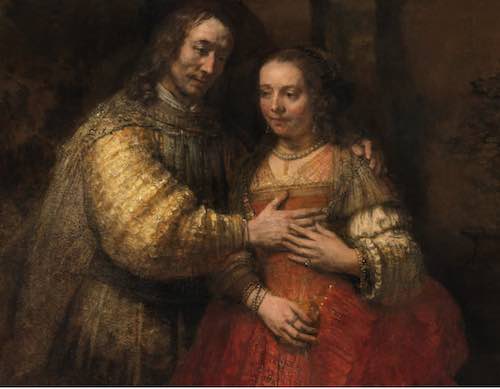
The Jewish Bride, by Rembrandt

One of you asked me the other day which online writers’ group I recommend. Many of these groups exist on Facebook.

Ten years ago I would have been able to heartily recommend several of them.

Today, there are none that are very useful to me. Here’s the problem.

Over the last five years, the online writers’ groups have become inundated with writers of “spicy” (i.e., sexually explicit) romance and outright erotica (i.e., even more sexually explicit material).

Now let me be clear here. I am no prude. Oh…far, far from it. I am quite sure that some of my off-hours activities would shock and/or offend the prudish among you.

But there is a limit to how much I enjoy talking about sex, writing about sex, and creating stories around it. My tolerance for that sort of thing is fairly limited.

I don’t like sex stories for the same reason I don’t like pornographic videos: watching other people have sex is a bit like watching other people eat.

Similarly, talking about sex is like talking about eating. I eat lunch every day. But I don’t wish to spend more time discussing my lunch than I spend actually eating it. I have a similar approach to matters of the bedroom. Some of these writers and their readers need to spend less time with their noses in books, and more time with living, breathing people. (Nothing cures a chronic preoccupation with sex like a little of the real thing.)

From a business perspective, the marketing of romance/erotica has much more to do with the marketing of OnlyFans or other pornographic material than it does with traditional book marketing. A person who picks up a Michael Connelly novel is not responding to the same motivations as a person who watches pornographic videos, or who reads pornographic stories.

No ill will for all the “spicy” romance and erotica writers out there, mind you. But they’ve made the online writing space more or less useless for everyone else, with their sheer numbers.

-ET

Draft 2 Digital, AI slop, and the evil necessity of publishing fees

Draft 2 Digital is a company that provides indie authors and small publishers with a single interface for “wide” distribution of ebooks to a host of online retailers. The company has historically taken a small percentage of sales revenues in exchange for its services.

But in recent years, AI slop has invaded and overwhelmed the publishing world. There is now an entire online ecosystem of low-content and junk content churned out by AI writing tools. This “book spam” is clogging up online bookstores and retailers with content that no one is ever going to buy in any meaningful quantity. And with AI tools, the book spammers can do this at scale.

To make matters worse, there is also now an ecosystem of YouTube and TikTok hucksters, teaching others how to “make millions!” with these techniques. This is like the content farm problem of the 00s, but exponentially larger.

Draft2Digital has addressed the problem in a number of ways. Some time ago, the company announced that it will no longer handle nonfiction titles covering topics that are low-hanging fruit for spammers (exercise, cryptocurrency, diet, and various New Age subject matter).

D2D also announced that it will begin charging a $20 set-up fee for new accounts, along with a $12 per year account maintenance fee for any publishers who earn less than $100 per year.

In other words, less than $8.33 per month.

Needless to say, there are people kvetching about this on the Internet. As for me, I am 100% in favor of it.

This is not because I want to see more fees for their own sake. But rather because something needs to be done about the sheer volume of online garbage.

And when I use terms like “online garbage”, I’m not talking about stories and books that don’t suit my taste. Hey, if someone has labored over their billionaire, reverse-harem cowboy hockey player romance novel, and they want to publish that, let them go for it. (Although to be perfectly honest, I would prefer that they didn’t. The romance genres have become as trashy as Pornhub in recent years. But I digress.)

I’m talking, rather, about the low-content and extremely low-effort books produced, often with AI tools, for the sole purpose of manipulating bookstore algorithms and exploiting subscription services like Kindle Unlimited. No one benefits from the presence of that—including the authors of billionaire, reverse-harem cowboy hockey player romance novels.

A modest per-book monthly or annual nuisance fee would prune the sheer volume of junk that is accumulating on online bookstores. (Listen to Mal Cooper’s video below.)

I know the nature of the internet. There are people out there who believe that anything on the Internet should always be free, no matter what it is, and no matter what costs are associated with it, simply because it’s on the Internet. That’s an argument that goes back at least 25 years, to the original debates over file-sharing and NAPSTER.

But AI slop threatens to undermine, if not destroy, indie publishing. Online retailers and distributors will never have the manpower to meticulously vet every title. In lieu of that, per-title maintenance fees may be a necessary evil for combating AI slop.

-ET

1980s college fiction: new cover reveal

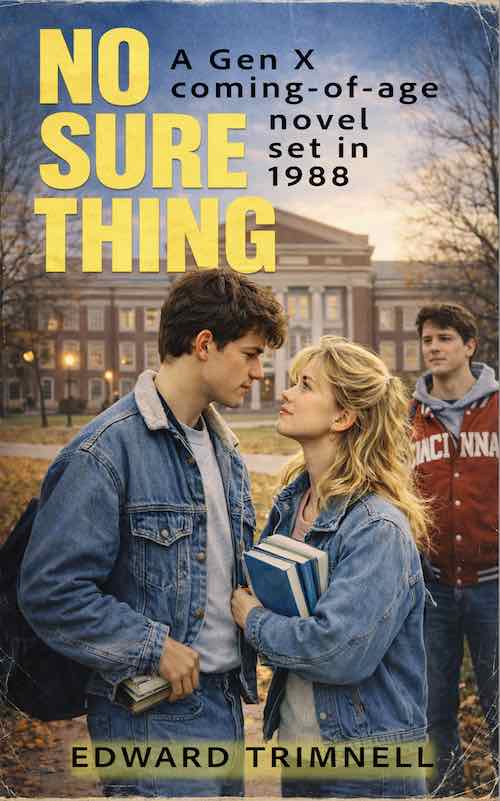
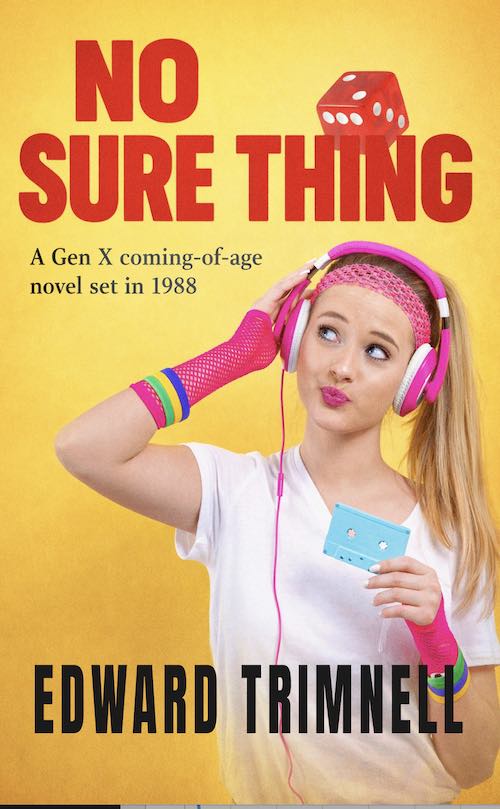
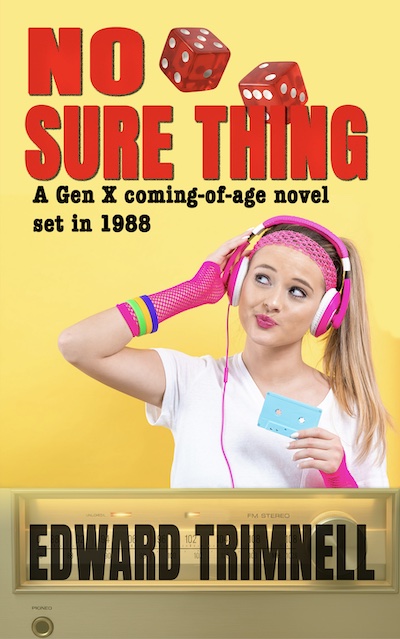
NO SURE THING has a new cover. The setting is a modified image of the University of Cincinnati campus, which I attended in the late 1980s.

Who should read NO SURE THING? You’ll enjoy this book if you fondly remember teen and young adult movies of the 80s. The book is based on a number of ideas I’ve been kicking around for years, but it really crystalized when I rewatched Risky Business, the 1983 film that made Tom Cruise a household name.

NO SURE THING is available at Amazon, Google Play, Kobo, Barnes & Noble, and Apple Books.

-ET

Read about the 1980s on Amazon, Kobo, Barnes & Noble, and Google Play

NO SURE THING: A GEN X COMING-OF-AGE NOVEL SET IN 1988 now available on: Barnes & Noble, Kobo, Google Play, and Apple Books
 
I pulled the book out of Kindle Unlimited (which comes with an Amazon exclusivity agreement) earlier this month.
 
Why the change? Two reasons.
 
1.) I’ve been getting some requests from readers who prefer to buy books on Apple, Kobo, Google Play, and Barnes & Noble.
 
2.) Kindle Unlimited is great for a certain kind of reader and a certain kind of author. But since its inception 12 years ago, Kindle Unlimited has become an increasingly specialized venue. KU is now dominated by niche romance titles, as well as a few niche fantasy subgenres (LitRPG). These are not my wheelhouse. So it increasingly makes sense for my books to be “wide”.
 
NO SURE THING: A GEN X COMING-OF-AGE NOVEL SET IN 1988 is for fans of 1980s teen and young adult movies.
 
Set on the campus of the University of Cincinnati in 1988, NO SURE THING will bring back memories from a bygone decade.
 
-ET

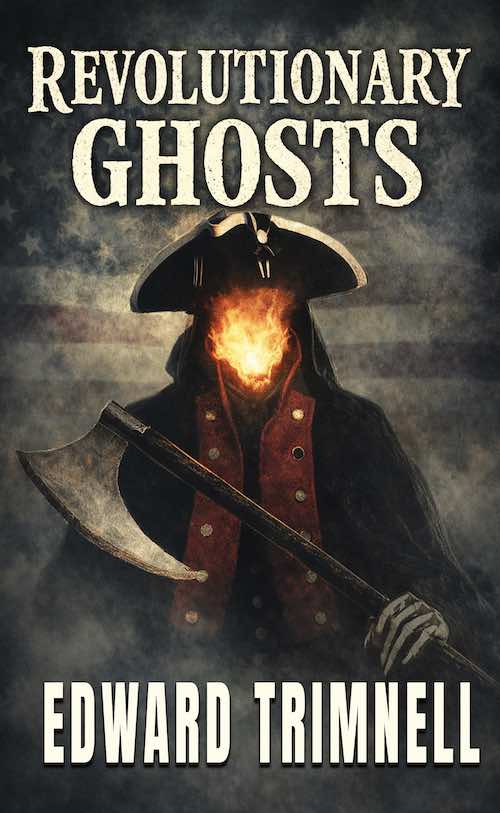
New Cover for REVOLUTIONARY GHOSTS!

Revolutionary Ghosts is my 2019 novel based on a premise that mixes supernatural horror and history:

Suppose that the Headless Horseman of Washington Irving’s “The Legend of Sleepy Hollow” were to return to terrorize modern-day America.

But not 21st-century, present-day America. (The current century has enough real horrors without make-believe, thank you very much.)

Most of Revolutionary Ghosts is set in 1976, the year of the American Bicentennial. This is historical horror with a cool ‘70s vibe.

The original 2019 cover was, however, badly in need of a refresh. This is the new cover:

You can find Revolutionary Ghosts on Amazon. The book is coming out of Kindle Unlimited on April 1. Shortly after that, you’ll be able to get it on Apple Books, Kobo, Google, and B&N. Library distribution will also be rolled out. So you can read it that way if your local library has an arrangement with OverDrive.

-ET

New release: ‘No Sure Thing’ for Gen X fans of the 1980s

The year is 1988. Anything can happen, but nothing is guaranteed!

Get ready for a coming-of-age story that will remind you of your favorite teen/young adult movies from the 1980s.

As the year 1988 begins, Paul Nelson is nineteen going on twenty. Paul is an economics major at the University of Cincinnati. He has big plans to go to work at a major bank after graduation.

But Paul’s life is not without problems. His first serious girlfriend has dumped him, and his best friend Scott gets all the female attention, seemingly without trying.

Paul meets a witty young woman who seems to be his perfect match. But then he unexpectedly falls for an older woman who has secrets and an unknown agenda.

Paul’s life spins out of control. He’s also incurred the unwanted attention of the Cincinnati Police Department, criminal elements, and a military man who detests him on sight.

Filled with a wide range of memorable characters and a generous dollop of 80s nostalgia, ‘No Sure Thing’ is a fun and fast-paced tale from a bygone but fondly remembered era.

**View NO SURE THING on Amazon!**

October 31, 1980: ’12 Hours of Halloween’

A new piece of artwork for 12 Hours of Halloween. (This was made for the “A + content” section of the Amazon listing, so the book cover is deliberately excluded from the graphic.)

As suggested in the graphic, most of the action in 12 Hours of Halloween takes place on October 31, 1980.

This is a coming-of-age supernatural horror story, about three young friends who endure a 12-hour, supernatural curse on the first Halloween night of the 1980s.

What kind of horror?

I don’t do graphic violence, for the most part. (There is no explicit sex in my books, either.) Think: a spooky version of a Ray Bradbury story, with a few nods to some of the classic horror films from the 1980s.

12 Hours of Halloween is available in Amazon Kindle Unlimited, too.

-ET

Horror in Kindle Unlimited

Kindle Unlimited is Amazon’s main subscription ebook reading program. Kindle Unlimited gives you virtually unlimited (hence the name) reading privileges to a wide variety of titles, for a low monthly fee.

Not every title listed on Amazon is enrolled in Kindle Unlimited. Literary fiction from the big New York publishing houses generally is not included. You likely won’t find the latest Jonathan Franzen novel in Kindle Unlimited anytime in the near future.

Kindle Unlimited is heavy on genre fiction. This means: romance, space opera, LitRPG, fantasy, and horror.

I have a fair number of horror titles in Kindle Unlimited. I write supernatural horror, in the tradition of Peter Straub, H.P. Lovecraft, Bentley Little and E.F. Benson.

And yes (I know this sounds a bit pretentious) Stephen King. I have achieved barely a gazillionth fraction of King’s commercial success. But his formula of character-based, fast-moving horror is always on my mind when I sit down to write a horror tale.

What kind of horror don’t I write? If you want splatterpunk, or “extreme” horror (aka “torture porn”), then you should skip my books and stories. I have no interest in writing horror fiction that is endlessly grim and/or sadistic. My horror fiction is more akin to the campfire ghost story.

Below are the horror titles that I presently have enrolled in Amazon’s Kindle Unlimited program. This means that you can read them for free if you’re a Kindle Unlimited subscriber.

To view one of these titles on Amazon, simply click on the image of any book, or any hyperlink below.

(Don’t have a Kindle Unlimited membership? Click here.)

Eleven Miles of Night

A college student takes a walk down the most haunted road in rural Ohio for a cash prize. This is a “haunted road” story, basically a tale of being stuck on a cursed country road at night. Ghosts, evil spirits, and hellhounds abound. Also, an evil witch that inhabits a covered bridge.

View Eleven Miles of Night on Amazon!

12 Hours of Halloween

A coming-of-age story set on Halloween night, 1980. This is a tale of supernatural events in the American suburb. A classic horror tale for Generation X.

View 12 Hours of Halloween on Amazon!

Revolutionary Ghosts

The year is 1976, and the Headless Horseman rides again. This coming-of-age horror thriller is sure to please readers who appreciate character-based supernatural fiction with lots of twists and turns.

The basic idea is: the ghosts of American history coming back to haunt Middle America in 1976, the year of the American Bicentennial. (And yes, I’m old enough to remember the Bicentennial, although I was rather young at the time.)

View Revolutionary Ghosts on Amazon!

Luk Thep

In early 2016, I read an article in The Economist about the luk thep “spirit dolls” of Thailand.

Manufactured and sold in Thailand, these are factory-made dolls with a unique sales point: each doll is supposedly infused with the spirit of a young child that passed prematurely.

The luk thep are intended to bring comfort to their owners. (They are marketed to childless women.) To me, though, the whole idea sounded rather macabre.

And I couldn’t help thinking: what if one of the dolls was infused with a child spirit that wasn’t very nice? What if that same doll ended up in the possession of an American woman who happened to visit Thailand on a business trip? Luk Thep is a fast-paced ghost tale that spans two continents.

View Luk Thep on Amazon!

The Rockland Horror saga

Spanning a nearly 140-year period from 1882 to 2020, The Rockland Horror is a series about dark events at a cursed house in rural Indiana.

View The Rockland Horror series on Amazon!

Wait! One last thing…

Looking for horror stories you can read online for free?

While I recommend Kindle Unlimited for fans of horror fiction and ebooks, I should also point out that I have a number of horror stories you can read online here for FREE.

From classic ghost tales to creature features, you’ll find a considerable range. Check them out!

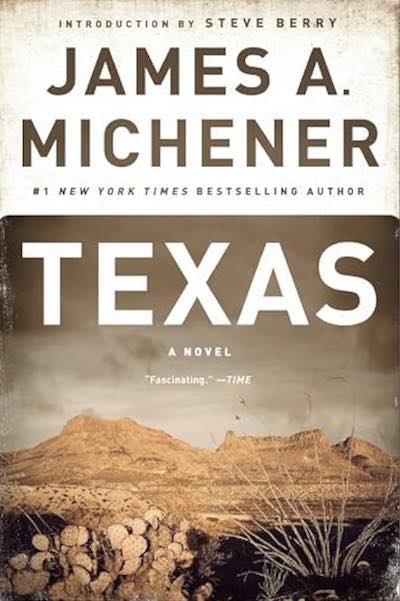
‘Texas’ by James Michener (mini-review)

I have just finished reading Texas (1985) by James Michener.

James Michener (1907-1997) specialized in vast historical novels, usually centered upon the history of a particular place.

For example, Hawaii (1959) covered the history of Hawaii. Alaska (1988) covered the history of our 49th state.

His books are long and vast in scope. A thousand pages is a typical length. Michener wrote novels that today’s short attention-spanned, Internet-addled American finds daunting. But he was quite popular during his heyday, the 1950s through the 1980s.

Because of the historical scopes involved, Michener’s novels span many generations, with wide casts of characters. His books are less novels, in the conventional sense, than collections of interconnected novellas. If James Michener were alive today, and publishing on Amazon Kindle, he would almost certainly be publishing his long books as series of novellas. But that wasn’t what the brick-and-mortar-centric book retailing industry of the 20th century wanted. And so James Michener’s long tales were delivered as doorstop-sized novels.

Texas follows the usual Michener formula. There are storylines from the Spanish colonial period, the obligatory story about the Alamo (of course), and characters from more recent times.

I have sometimes found James Michener to be a bit too didactic. (In the historical fiction blockbuster space, I much prefer Edward Rutherfurd and John Jakes.) A novel based in historical events is fine; but if I want to read an actual history, I’ll turn to nonfiction. But in Texas, Michener emphasizes story and mostly avoids the dreaded info-dump.

I am not even going to attempt a plot summary of Texas. There is simply too much to describe. Any plot summary I might write would run on for five thousand words, the length of a long essay or a middling short story.

Suffice it to say: Texas contains many plots and characters related to the history of Texas. It’s also a very entertaining book, if you aren’t daunted by the 1096-page length.

-ET

The Best Short Stories 2024: The O. Henry Prize Winners (quick review)

I’ve been reading more short stories of late. I find that I often enjoy them more than novels. A good short story contains no fluff, no filler. Short stories, moreover, are well-suited to this era of cell phones and short attention spans.

Short stories used to be almost as popular as novels, back when Americans read middlebrow, general interest magazines. (F. Scott Fitzgerald earned most of his income from short story sales.)

But that was in the distant past. For as long as anyone can remember, every fiction writer has dreamed of being a bestselling novelist. Publishers have been wary of short fiction collections, unless every story in the collection was authored by Stephen King.

I recently picked up The Best Short Stories 2024: The O. Henry Prize Winners, edited by Amor Towles and Jenny Minton Quigley. I bought the audiobook edition, so I listened to these stories as I mowed my lawn and did my bench press sets in the gym.

This collection contains a strong mix of stories. This isn’t to say that every story is a gem. As is always the case with multi-author anthologies, the reader’s mileage may vary. There were a few stories in this collection that left me cold. But most of them are good, and a handful of the stories are very good.

My favorites were:

“Hiding Spot” by Caroline Kim

“The Paper Artist” by E. K. Ota

“The Dark” by Jess Walter

Recommended reading…especially if you’ve been waiting for the right time to jump back into short-story reading.

-ET

View on Amazon: The Best Short Stories 2024: The O. Henry Prize Winners

That 1970’s vibe: ‘Revolutionary Ghosts’

REVOLUTIONARY GHOSTS is a coming-of-age supernatural horror novel set near Cincinnati, Ohio in 1976.

But the novel is based on Washington Irving’s 1820 short story, “The Legend of Sleepy Hollow”.

Revolutionary Ghosts came from the question: “What would have happened, had the Headless Horseman of Washington Irving’s tale invaded 20th-century America in 1976?

In the above video, I describe the series of associations that went into the story, some going back all the way to my childhood. (I was 8 years old in 1976!)

-ET

View REVOLUTIONARY GHOSTS on Amazon!

The book haul video in Japanese

The book haul video is a thing on the Japanese corners of YouTube, just as it is among English-language booktubers.

As in English, the Japanese book haul video (and the entire booktuber sector) is dominated by young women. No complaints here, except to point out that men of all ages, in all countries, should read more.

I have not been to Japan for more than a decade now. One thing I really miss about being in Japan is browsing bookstores, and looking for new books to read.

Even with the Internet, the acquisition of Japanese-language reading materials remains something of an ordeal in the United States. The US division of Amazon stocks relatively few Japanese-language titles. The demand simply isn’t there.

At the same time, US-based, independently owned mail-order Japanese bookstores have mostly gone out of business. This is yet another case of the Internet ruining a business model without providing an acceptable substitute.

I recall Sasuga Bookstore of Cambridge, Massachusetts with particular fondness. I purchased many books from them throughout the 1990s and early 00s. (Sasuga closed its doors for good in 2010. 残念でした.)

-ET 

The Black Lizard Big Book of Pulps

The period between the two world wars was the golden age of the pulp fiction magazines. This was a time before television, or (of course) the Internet. Entertainment options were limited. (Heck, they barely had radio in those days.) Many people therefore turned to magazines that specialized in quickly written and fast-paced stories of romance, western adventure, crime, science fiction, or horror.

What happened to pulp fiction? The pulp magazines weren’t the victims of television, as is commonly thought. They were the casualties, rather, of the cheaply printed paperback. Modern paperback books were first introduced in 1935, but they really caught on during and shortly after World War II. The paperback completely changed the publishing and bookselling landscape, much as Amazon would about sixty years later.

Some of the original pulp content is still with us, of course. Horror fans who adore H.P. Lovecraft may not know that favorites like “At the Mountains of Madness”, “Dagon” —and most other Lovecraft stories—were originally published in Weird Tales, a pulp magazine founded in 1922. (Note: Weird Tales technically still exists, though its format has undergone some modifications; the magazine has a site on the Internet.)

I’ve read and reread Lovecraft’s oeuvre  as much as I care to. So when I was recently in a mood to do some reading off the beaten path, I decided to indulge in a bit of vintage pulp crime fiction.

Or actually, quite a lot of vintage pulp crime fiction. The Black Lizard Big Book of Pulps contains forty-seven stories and two complete novels. Writers represented in this collection include well-known names like Raymond Chandler (1888-1959) and Dashiell Hammett (1894-1961). There are also plenty of stories by writers who are long forgotten.

Why read pulp fiction? Well, you probably already watch pulp television.

I’m a longtime fan of pulp TV, in fact. During the 1980s, I regularly tuned in to action television shows like The A-Team, Knight Rider, Airwolf, and the original MacGyver. These shows were all escapist television, with plots that roared out of the gate like a 1981 DeLorean or a 1987 Toyota Supra.

My favorite was The A-Team. An episode of The A-Team kept you on the edge of your seat. Each episode ended with a blazing gunfight, in which no one was usually killed or seriously injured. The A-Team made absolutely no attempt to provide any sort of messaging on social, political, or philosophical issues. The other aforementioned 80s-era pulp TV shows were done in a similar vein.

Most of these shows did not age well. For nostalgia’s sake, I recently tuned in to a few old episodes of The A-Team and the original MacGyver. In the MacGyver episode, the eponymous hero found himself in the Soviet Union, where everyone conveniently spoke English. The Russians even spoke English with each other. I managed to sit through about twenty minutes of this. Life is too short.

The same might be said of the stories in The Black Lizard Big Book of Pulps. You can detect the literary and storytelling skills at work; but you can also tell that you’re reading fiction produced in a different era, when expectations were very different. My 1980s pulp TV shows did not have to compete with Netflix. The writers whose work is collected in The Black Lizard Big Book of Pulps did not have to compete with Michael Connelly or Lee Child.

The stories in The Black Lizard Big Book of Pulps are interesting as artifacts of the pulp era, in the same way that a Ford Model T is an interesting artifact of automobile technology in the 1920s. But as entertainment for present-day audiences? Keep in mind that some of these stories are more than eighty years old. You had might as well ask me if I would like to use a Model T for my daily commuting needs.

I suspect that this massive tome (more than one thousand pages in print) is so massive for a reason. The editors knew that the phrase “your mileage may vary” would be very applicable here.

What about their usefulness for writers? Those of us who write fiction are always thinking of a story in market analysis terms, after all. 

I wouldn’t recommend that any twenty-first century writer try to imitate the style of these stories, exactly. At least a quarter of these tales contain plot holes that you could drive a Model T through; and almost all of them contain hackneyed dialogue. (“He’s on the square!” “The place looked swell.”)

And oh, the eyebrows that will be raised among the finger-wagging social justice crowd. While these stories aren’t intentionally sexist, they are the product of a different time, when ideas about men and women were different. They overflow with gendered terminology that would make any writer the target of an online pitchfork mob today (“honey,” “doll”, “sugar”, “dame”, etc.).

The female characters in these crime stories are mostly props. But then, so are most of the men. These stories are all about plot, plot, plot.

And that is where this book may be instructive for writers who have found themselves too immersed in navel-gazing literary fiction. The writer who suspects he is spending too much time on flowery descriptions and internal monologue may learn something valuable here: how to get to the point, or to the plot. The pulp-era writers were certainly good at that, despite their other shortcomings.

-ET

**View ‘The Black Lizard Big Book of Pulps: The Best Crime Stories from the Pulps During Their Golden Age–The ’20s, ’30s & ’40s’ on Amazon**


Start ‘The Rockland Horror’ series for FREE: November 1 through 5

I am working on BOOK 4 of THE ROCKLAND HORROR series. THE ROCKLAND HORROR is a multigenerational horror saga about a cursed house in Indiana.

BOOK 4 will be set in the immediate post-WWII era of 1945 to 1946. More information on that shortly.

BOOKs 1, 2, and 3 are already available on Amazon, and enrolled in Kindle Unlimited (for those of you who read through KU.)

BOOK 1 is FREE on Kindle for everyone from November 1 through 5, 2021. 

Keep in mind that Amazon manages the back end of all of this, and the exact hours at the tail end of the free run may vary, depending on your time zone. (So grab it early. Don’t wait until 11:58 p.m. on November 5.)

If you’re interested in trying out the series with a zero commitment, this is your chance.

If you’re interested in trying out Kindle Unlimited, check it out here.