Both The Eavesdropper and 12 Hours of Halloween will remain at $.99 (on Amazon Kindle) through Wednesday, March 3. Hopefully that will give everyone a chance to check them out!
Author: Edward Trimnell
New book: ‘1120 Dunham Drive’
I’ve launched a new series: Clint and Jennifer Huber Mysteries. These novels are classified in the “amateur sleuth’ category.
The first book in the series, 1120 Dunham Drive is out.
Amazon description:
Introducing Clint and Jennifer Huber: amateur sleuths who must investigate a very personal mystery—the web of obsession, betrayal, and violence surrounding their “dream house” at 1120 Dunham Drive.
The problems begin with a former owner who refuses to leave quietly, and strange disturbances during the middle of the night.
Oh, and there’s something sinister about a room in the basement.
1120 Dunham Drive is a suburban mystery/thriller that will keep you guessing to the last page.
***
Preview the book below!
Chapter 1
Summer, 2014
To thirty-four-year-old Jennifer Huber, the house at 1120 Dunham Drive seemed pretty close to perfect. If only, she would later think, there had been something wrong with it—something that would have sent her and her husband Clint running, never to return.
That wasn’t the way things worked out, though. On a sun-scorched Saturday afternoon in mid-July, the house at 1120 Dunham Drive drew the Hubers in.
Or at least the house drew Jennifer in. The seduction began in earnest in the realtor’s car, as Jennifer, Clint, and Tom Jarvis (the realtor) pulled into the driveway.
“It’s a Tudor!” Jennifer exclaimed.
“And what would that be?” Clint asked.
“This style of home,” Jennifer replied. “This is what they call a Tudor-style home.”
Jennifer had a fairly extensive knowledge of residential architecture, and she had studied the house’s spec sheet on the Internet the previous night. So she already knew that this would be a Tudor-style home. Her surprise had been feigned: It had simply been a gambit to prod Clint into showing some more enthusiasm about what they were doing today.
“You’ve got to admit, hon: It looks good from the road.”
“It’s a good-looking house,” Clint allowed.
Built in 1940, the house had a look that was simultaneously homey and classic: It had steeply pitched gables (a prerequisite of the neo-Tudor style), decorative half-timbering on the exterior walls, and brick inlays around the ground-floor windows.
“Let’s have a look-see,” Tom Jarvis said, turning off the engine of his Lexus and opening the front driver’s side door. Jennifer didn’t wait for either Jarvis or Clint. As soon as the vehicle was parked, she was out of the overly air-conditioned back seat and racing ahead of the two men.
“It looks like somebody really wants a house,” she heard Jarvis say conspiratorially to Clint.
Who wouldn’t want a new house? Jennifer thought. That’s the sort of thing we work for, after all.
That thought reminded her of the job she hated and the secret that kept her bound there. She pushed these thoughts away. Today was a happy occasion. She wasn’t going to think about her job at Ohio Excel Logistics. Not on a Saturday afternoon like this.
“Check this out,” Jennifer said, pulling her husband Clint by the hand. “Japanese maples.”
The front garden did indeed have three Japanese maples, plus several small pine trees, and a whole lot of ivy. It was the sort of landscaping that took years to develop—either that, or a whole lot of money.
“Connor would like the yard,” Jennifer observed as Tom Jarvis bent down and retrieved the key from the lockbox on the front door.
“He probably would,” Clint replied.
“And best of all, it’s in the Mydale school district.”
Their son, Connor, was going to be a first-grader in a mere two months. The public schools in Mydale were regarded as the best in the Cincinnati area.
And then there was the most important thing about the house—the factor that made this a real possibility: The asking price of the home at 1120 Dunham Drive was within the Hubers’ range. Most of the homes in Mydale were a lot pricier.
By now Jarvis had unlocked the door. He smiled and held the door open for them.
Jarvis smiled again as Jennifer walked by and looked down. He wasn’t overly obvious about it, but the realtor had clearly taken the opportunity to check her body out.
It wasn’t the first such glance that she had noticed from the real estate agent. Nor was it all in her imagination. Clint had remarked the other day that Jarvis had taken so many liberties with his eyes during their real estate office meetings and home viewing excursions, that he owed them an additional ten percent off the asking price of whatever house they eventually settled on.
She asked Clint if it made him jealous—Jarvis looking at her that way. Clint had scoffed in reply: Jarvis was an old guy, basically harmless.
Jarvis was indeed older than them, maybe in his mid- to late-forties. He was balding and could have dropped ten pounds; but he still carried himself with the swagger of an ex-jock. Jarvis had probably been a “hound” back in the day; and his manner strongly suggested that he still considered himself a claimant to that title.
As Jennifer walked into the cool house and out of the midsummer heat, Jarvis closed the door and briefly loomed over her. He finally looked away, but not before allowing himself a furtive glance down her blouse.
Okay, that one was a bit much, she thought, but did not say.
Since roughly the age of thirteen, Jennifer had noticed that a large number of men noticed her. That seemed to go along with being thin, blonde, and reasonably pretty. Most of the time it wasn’t a big deal; and for a period of her life it had been undeniably flattering.
But she had been married for most of a decade. She was a mom now; and she was devoted to Clint.
Or at least she thought she was. Would a woman who was totally devoted to her husband and son get herself into the jam she was in at work?
Is there something wrong with me? she wondered. Do I give off the wrong signals?
Her unpleasant thoughts were pushed aside by the interior of the house. The front hall was high-ceilinged and spacious. Their footsteps echoed on the hardwood floor. Unlike many older houses, this house wasn’t dark and dingy. Quite the opposite, in fact. The windows of the downstairs flooded the first floor with natural light.
“I think I love this house.” Jennifer declared, setting aside what she knew to be her habitual skepticism about being sold anything at all. Clint, who was standing beside her, gave her a curious look.
Then the realtor said what Clint must have been thinking:
“Well, Mrs. Huber, you’ve only just seen the front yard and the front hallway. But that’s a good start.”
It’s like he doesn’t want me to get my hopes up, she thought. They had toured numerous homes with Tom Jarvis—most of them homes that Jennifer and Clint had preselected through exhaustive, late-night Internet searches. Practically none of those homes had given her instantly warm and fuzzy feelings.
But this one did. And Jarvis wasn’t exactly right about her having seen only the front yard and the front hallway. Having spotted this house online and grasped its potential, Jennifer had pored over the available photographs of its interior and landscaping. She had bookmarked the home’s portfolio in her web browser, and had returned to it numerous times, in fact.
On the drive over from the realty office, Tom Jarvis had said that the situation surrounding this house was “complicated”. He had started to explain; but apparently the act of giving an explanation was complicated, too.
“For now let’s just keep our options open,” he’d said. But what exactly did that mean? Was Tom Jarvis planning to ultimately steer them toward another house? Maybe a turkey of a house that could only be unloaded on a naïve young couple making their first home purchase?
Well, she thought, the unknown motives of a self-serving and mildly lecherous real estate agent were not going to dissuade her if this house turned out to be as perfect as it seemed. Real estate agents were always working their angles, she’d heard. None of them, she had been warned by friends, were to be trusted.
She didn’t want to make a negative generalization about an entire profession. Still, she and Clint would have to be careful. The Internet was filled with horror stories about dishonest and prevaricating real estate agents. Tom Jarvis knew they were first-time homebuyers. That might lead him to the conclusion that they could be easily led.
One thing was undeniable: For some reason, Tom Jarvis didn’t want them to purchase this house.
New series: “White-collar mysteries”
I spent more than 20 years in the corporate world. There are a lot of good stories there. (And they’re even better, when embellished a bit.) Some of those storeis have become novels, for me.
For those of you who like stories about “corporate employees in trouble”, consider my series, WHITE-COLLAR MYSTERIES.
The series is new. I wanted to group together some of my books that are best described as thrillers-in-the-corporate-workplace.
At present, I have two existing titles in the series:
THE EAVESDROPPER: A purchasing agent at an electronics firm discovers that three of his coworkers (including his boss) are planning a murder. Will he stop them, or become their next victim?
TERMINATION MAN: A business consultant makes his living by going undercover to “eliminate” problem employees. But will he draw the line at actual murder?
More titles will be added as they’re written!
An American abducted by North Korean agents
The writing of THE CONSULTANT.
For fans of:
- James Clavell
- Vince Flynn
- Brad Thor
Here’s a little about the story, and why you’ll enjoy it if you like a.) East Asian settings, and b.) adventure.
North Korean abductions of Japanese citizens
In my prior professional existence, I was deeply involved with Japan. I learned the Japanese language, and even worked as a translator for a time. I also worked for years in the Japanese automotive industry. I made many trips to Japan.
One of the ongoing issues I learned of in Japan was the so-called ratchi mondai 拉致問題, or “abduction problem”. This intractable matter came up whenever there was talk of Japan and North Korea resuming ordinary diplomatic relations.
Throughout the 1970s and part of the 1980s, North Korean agents abducted numerous Japanese citizens on Japanese soil. (Japan and North Korea are quite close, geographically.) These ordinary Japanese people, who happened to become targets of the North Koreans, were taken to North Korea and forced to work in a variety of capacities. Many were employed against their will as Japanese language instructors.
North Korea’s abductions didn’t stop there. In 1978, North Korea abducted Shin Sang-ok and Choi Eun-hee. Shin Sang-ok was a well-known South Korean movie director. Choi Eun-hee, his former wife, was a successful actress. The pair spent about eight years in North Korean captivity. They worked directly for Kim Jong-il, the future Supreme Leader of North Korea. Shin and Choi were tasked with making films for North Korea’s movie industry (against their will, of course.) They finally escaped in 1986.
North Korean abductions and Americans
I knew there was a story there. I wanted to write a story about an American kidnapped by the North Koreans, though. So far as my research could determine, there had never been a documented case of the North Koreans abducting an American on foreign soil.
But why couldn’t it happen? After all, thousands of Americans travel to Japan and South Korea every year. Many are skilled business and technical experts, human assets that Pyongyang would surely covet. And North Korean agents are known to be active in both Japan and South Korea.
An American abducted and taken to North Korea
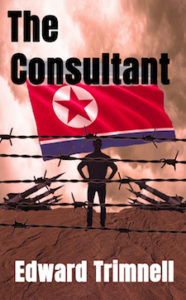
THE CONSULTANT is the story of Barry Lawson, a successful business consultant from Chicago who finds himself in the wrong place at the wrong time.
And then he finds himself in North Korea.
Barry Lawson is an aging Lothario in his late forties. He has a way with the ladies, and this has often gotten him into trouble. Barry is divorced, with two children.
When Barry is approached by an attractive woman at a bar in Osaka, Japan, he can’t resist….even though he knows better.
This is a decision that he’ll soon regret. Within hours, Barry Lawson, successful business consultant and ladies’ man, must find a way to survive in—and hopefully escape from—the hellhole that is North Korea.
He’s not the only foreigner there, though. Barry he meets a Japanese man, Shoji Tanaka, whom the North Koreans abducted from Hokkaido (in northern Japan) when he went out for cigarettes one night.
Barry also meets Anne Henry, a woman who knows the Korean language. Anne, it turns out, has a traumatic abduction story of her own.
***
That’s all for now. I don’t want to ruin the book for you.
THE CONSULTANT is available in paperback and Kindle. (An audiobook is in the works.) You can presently read THE CONSULTANT in Kindle Unlimited, as well.
Want to preview THE CONSULTANT? You can do so below.
1970s blizzard years
Those awful, wonderful winters from 1976 to 1978
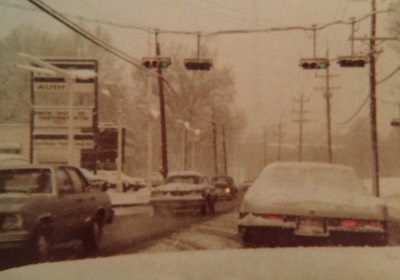
This past week two consecutive winter storms dropped more than a foot of snow on Cincinnati. I managed to shovel two driveways, twice, without a.) throwing out my back, b.) re-repturing my 2005 hernia, or c.) having a heart attack. At my current age of fifty-two, I consider that a not unnoteworthy accomplishment.
The winter of 2020 to 2021 has been a rough one so far in Cincinnati, especially compared to the past three or four. Yet more snow is forecast to arrive later this week.
Of course, for American adults around my age—especially if they grew up east of the Mississippi—there are two childhood winters that stand out in memory: those are the back-to-back “blizzard winters” in the mid-1970s: the winter of 1976 to 1977, and the winter of 1977 to 1978.
The winter of 1976 to 1977
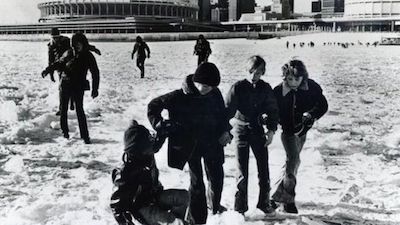
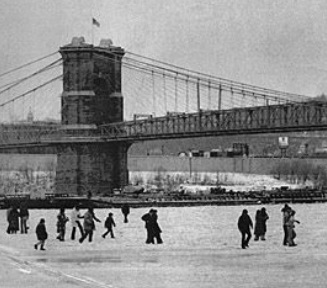
The winter of 1976 to 1977 was the winter of record-breaking, pipe-bursting, river-freezing cold. Here in Cincinnati, there were three straight days of record cold in January 1977, in which the temperature stayed below minus 20 degrees Fahrenheit the whole time.
The Ohio River froze solid—for the first time since 1958, and only the thirteenth time on record. In the Cincinnati media archives, there are photos of people walking across the Ohio River, and even driving across the ice that month. The freezing of the Ohio was quite a novelty, much talked about on the local news. One of my older friends has told me about driving his car across the Ohio River that winter on a dare. He was then nineteen years old, and he’s now in his sixties. So he obviously made it across.
January of 1977 was also a snowy one. Cincinnati had 30.3 inches of snow that year. (The usual figure for Cincinnati in January is six inches.)


The winter of 1977 to 1978
The following winter of 1977 to 1978 was just as bad, with almost as much cold, and even more snow. On January 25, 1978, one of the worst blizzards in U.S. history pummeled Cincinnati with almost seven inches of snow. There were already fourteen on the ground.
I remember the night of January 25, 1978 well. I played forward on our fourth-grade basketball team. That night we had a game at a rival Catholic school in the area, Guardian Angels. I remember walking outside at halftime with other members of my team. The air was not exceptionally cold yet by January standards. (It would soon plummet below zero degrees.) But there was a strange fog in the air. I think we all had the feeling that something momentous was imminent. On the way home from the game, the snow began. By morning, it was a whiteout.
Winter landscapes of the memory
At the age of eight or nine, one doesn’t have much life experience to draw upon. I could sense, though, that those two winters were worse than the handful of winters I could recall before. During those two winters, the outside air always seemed to be bitterly cold. Furnaces ran constantly. Fireplaces crackled nonstop. The ground was always snow-covered.
Many people are depressed by snow and cold weather, and winter in general. Not me. I will confess that some of my happiest childhood memories are winter ones, in fact.
I was particularly close to my maternal grandparents. During those blizzard years of the 1970s, they lived just down the street from us. When school was canceled due to inclement weather, I got to pass the day with my grandfather, who had recently retired. We spent a lot of time together in those years. I’m grateful for all the snow.
The cyclical nature of winter weather
It has been my observation that bad and mild winters tend to alternate in cycles. From the mid-1970s through the early 1980s, the winters were harsh, with record cold and snow.
The winter of 1981 to 1982 was cold. The Cincinnati Bengals went to the Super Bowl that year. On January 10, 1982, the Bengals won a key home game against the San Diego Chargers. The air temperature at Cincinnati’s Riverfront Stadium on game day was minus nine degrees, with wind chills down to 35 below. That game has gone down in NFL history as the “Freezer Bowl”.
I was in the eighth grade in 1981-1982, and going through a (brief, in retrospect) rebellious adolescent phase. This included hanging out with an edgier crowd, and embracing a short-lived fascination with smoking cigarettes and drinking alcohol.
Even in 1982, smoking and drinking weren’t acceptable pursuits for eighth graders. But hiding these illicit activities from adult authority figures was half the fun. I have many memories of shivering outside that bitter January, as I sipped a furtive drink of whiskey, or smoked a Marlboro. Even today, when I happen to smell someone else’s newly opened pack of cigarettes, or taste an alcoholic beverage, I’m transported back to that brutally cold winter of 1981 to 1982.
The last bad winter I remember from that larger cycle was the winter of 1983 to 1984. That winter brought record cold and snow to the entire United States, including Florida and Texas. As I recall, there was a lot of anxiety about the citrus crop that year, and skyrocketing prices of orange juice.
Over Christmas break in December 1983, my parents decided to embark on a rare family trip to Florida. When we reached Macon, Georgia, it was 4 degrees, with 23 degrees forecast for our destination in the Sunshine State. After spending a night shivering in a Macon hotel room with an inadequate heater, my parents decided to cut our losses. We headed home the next morning. We could freeze in Ohio for free, after all.
But the weather is no more constant than anything else in this world. That cycle of severe winters, from 1976 to 1984, transitioned into a milder pattern over subsequent years. The winters of 1984-1985 and 1985-1986 weren’t exactly balmy; but they weren’t severe, either. Throughout my last two years of high school, classes were rarely canceled due to weather. This was fine with me, because I generally enjoyed high school more than grade school.
And during my college years, spanning the winters of 1986 to 1987 through 1990 to 1991, the winters in Cincinnati were notably mild. I did not go away for college; I lived with my parents and commuted to two local schools. I did not miss a single class due to bad winter weather throughout my entire college career.
That mild cycle continued through the early 1990s, only to go the other way again in the middle of the decade. The winter of 1995 to 1996 was an especially bad one for the entire Midwest, resulting in a rare shutdown of the University of Cincinnati in January of ’96. By this time, I was a working adult in my mid-twenties.
The winter of 1995 to 1996 drew comparisons in the media to the blizzard winters of the mid-1970s. I remember scoffing when I heard this. Having been a kid during those fabled winters of the 1970s, I never took the comparison seriously.
But then, everything seems to happen on a larger scale when you’re a kid…even the weather.
Horror from the 1800s!
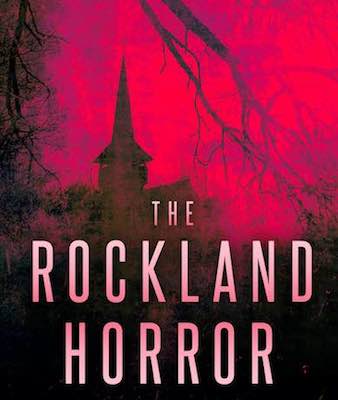
The Rockland Horror, Book 1, is now available on Amazon. The story opens in Southern Indiana in 1882.
You can preview the book below.
‘The Rockland Horror’: multigenerational horror saga
Available now!
Hey, I’ve got a new horror series coming out. The first book will hit Amazon later this week, in all likelihood. (It is in the final proofreading stage.)
Here’s a little about the series:
Origins of the story: The Evil Dead in a haunted house
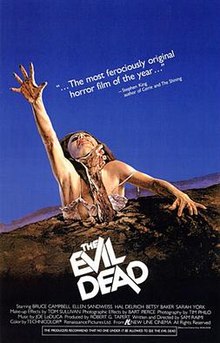
One of my all-time favorite horror films is Sam Raimi’s cult classic, The Evil Dead (1981).
The Evil Dead (just in case you’re one of the rare horror fans who hasn’t seen the film) follows a simple setup and plot:
A group of college students decide to spend a weekend in a cabin in rural Tennessee. One of them discovers a copy of the Sumerian Book of the Dead, along with a tape recorder. Both items were left in the cabin by an archeologist—who has apparently met a bad end.
And, of course, the college students throw caution to the wind, and tamper with both items. Because that’s the sort of thing people always do in horror movies.
Hijinks ensue. Evil spirits are roused, and they take over the college students one-by-one, transforming each of them into homicidal zombies.
I loved The Evil Dead, even though I recognized some of its flaws.
What flaws? you ask. The characters are cardboard cutouts, for one thing. Also, there is Raimi’s fondness for blending black humor with horror. The combination mostly worked in The Evil Dead. It detracted from some of his subsequent horror films.
But flaws aside, The Evil Dead was truly a powerful film, especially for the early 1980s. I recall watching it for the first time back in the summer of 1983. I watched a VHS rental copy of The Evil Dead, on the Zenith television in my parents’ living room. (I was 14 or 15 at the time.) For a full 85 minutes, my eyes were glued to the television screen. The rest of the world receded into the background. Only good storytelling can do that.
My concerns and storytelling style are different from Raimi’s. I like more character development; and I don’t like comedy-horror. But I loved The Evil Dead, nevertheless. I’ve long known that I would someday write a story of my own that would take The Evil Dead as its inspiration.
* * *
One day during the long, turbulent summer of 2020, I decided that I wanted to write a book that might best be described as “The Evil Dead inside a haunted house”. Basically, I was aiming for a story that captured the spirit of Raimi’s 1981 movie, without ripping it off.
I wrote an initial story that more or less followed the plot line of the 1981 movie. It was set in the present day. But as mentioned above, I didn’t want to rip off Raimi. I swapped out the claustrophobic Tennessee cabin of The Evil Dead for a big, old house in Southern Indiana. Like all haunted houses, this one had a backstory. (Haunted houses are usually haunted for a reason, after all.)
As I began writing the book, though, I discovered something: The backstory was much more than a backstory. The house had a long, horrific history—as did the people who lived (and died) there.
I realized that one story simply wasn’t going to get the job done.
So I scrapped my original manuscript, and went back to the drawing board.
Instead of starting the story in the present day, I decided to go back to the very beginning, to the origins of The Rockland Horror.
That is where Book One begins…
A total of nine books have been planned out, and are in various stages of writing and development. When completed, The Rockland Horror saga will cover the horrific history of one cursed house from 1882 through 2020.
Kristen Clarke, Harvard, and “race science”
Kristen Clarke, Biden’s nominee to head the DOJ Civil Rights Division, penned a 1994 letter to the Harvard Crimson, stating that African Americans have “superior physical and mental abilities”. At the time, Clarke was an undergraduate at Harvard, and the president of the university’s Black Students Association.
Clarke based her letter on…race science.
Here are some excerpts from the letter:
“One: Dr Richard King reveals that the core of the human brain is the ‘locus coeruleus,’ which is a structure that is Black, because it contains large amounts of neuro-melanin, which is essential for its operation.
“Two: Black infants sit, crawl and walk sooner than whites [sic]. Three: Carol Barnes notes that human mental processes are controlled by melanin — that same chemical which gives Blacks their superior physical and mental abilities.
“Four: Some scientists have revealed that most whites [sic] are unable to produce melanin because their pineal glands are often calcified or non-functioning. Pineal calcification rates with Africans are five to 15 percent [sic], Asians 15 to 25 percent [sic] and Europeans 60 to 80 percent [sic]. This is the chemical basis for the cultural differences between blacks and whites [sic].
“Five: Melanin endows Blacks with greater mental, physical and spiritual abilities — something which cannot be measured based on Eurocentric standards.”
Obviously, this is complete hooey, dressed up in the sort of pseudo-scientific language that passes for erudition at places like Harvard.
Obviously, the mainstream media would be shrieking, Twitter would be exploding, if a white nominee to any senior federal government post had made similar claims about whites, based on “race science”.
Nevertheless, I’m of two minds on this one.
Clarke’s age is not available online, but her Wikipedia entry states that she graduated Harvard in 1997. Backing into the numbers, this would mean that she was about 19 years old when she wrote the above words.
Most people don’t reach full adulthood until they are about halfway through their twenties. (This is why I would be in favor of raising the voting age, rather than lowering it, but that’s another discussion.)
This doesn’t mean you should get a blank check for everything you do when you’re young, of course. But there is a case to be made that all of us say and think things during our formative years that will make us cringe when we look back on them from a more mature perspective.
This is certainly true for me. I was 19 years old in 1987. I am not the same person now that I was then—both for better and for worse.
Secondly, let’s acknowledge environmental factors. Being a student at Harvard is likely to temporarily handicap any young person’s judgement and intellectual maturity. Even in 1994, Harvard University was a hotbed of pointy-headed progressivism and insular identity politics.
Clarke was also involved in the Black Students Association. There was a Black Students Association at the University of Cincinnati when I was an undergrad there during the late 1980s. Members of UC’s BSA were known to write whacko letters like the one above. Most of them, though, were nice enough people when you actually talked to them in person. They just got a little carried away when sniffing their own farts in the little office that the university had allocated for BSA use.
What I’m saying is: I’m willing to take into account that 1994 was a long time ago. A single letter from a 19-year-old, quoting pseudo-academic race claptrap, shouldn’t be a permanent blight on the record of a 47-year-old. And I would say the same if Kristen Clarke were white, and had taken a very different spin on “race science”.
We all need to stop being so touchy about racial issues, and so preoccupied with them. That goes for whites as well as blacks, and vice versa.
I’m willing to give Clarke a fair hearing, then. But I’m skeptical. Her 1994 Harvard letter isn’t an automatic disqualifier; but it’s a question that needs to be answered.
I’m also skeptical of Biden. Biden may be a feeble old man; he may be a crook. He is not particularly “woke” at a personal level. In fact, some of his former positions on busing and crime suggest that he’s anything but “woke” on matters of race.
Yet Biden is now head of a Democratic Party that is obsessed with race. This means that Biden may try to overcompensate, by filling his government with race radicals. This recent selection supports that concern.
Given the time that has elapsed between the present and 1994, given Kristen Clarke’s age at the time, I want to hear what she has to say in 2021 before I outright condemn her as a hater or a looney. But this recent personnel selection doesn’t make me optimistic about the ideological tilt of the incoming Biden administration.
-ET
Scary Christmases gone by
Krampus, Dickens, and what I saw on Christmas Eve, 1976
Merry Christmas, everyone!
Yes, I know this has been a lousy year. It’s almost over, though.
Christmas is generally a festive holiday, but there are some macabre Christmas traditions, too. And they didn’t necessarily begin with this very macabre year of 2020.
Consider, for example, the Dickens tale, A Christmas Carol. This is one of my holiday favorites. Who can forget the Ghost of Christmas Yet to Come, which reminds us of the Grim Reaper? Or, for that matter, Marley’s ghost?

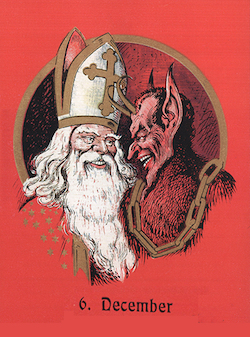
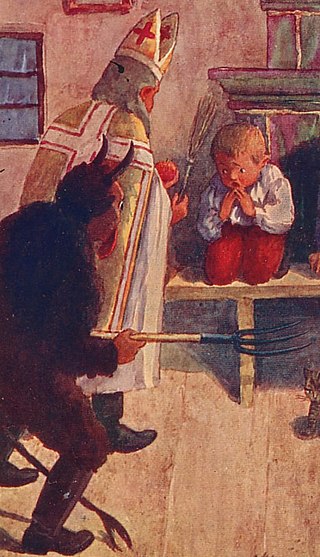
In some parts of Europe, Christmas includes the Krampus, a horned creature that incorporates both Christian and pre-Christian (pagan) traditions. In Germanic folklore, the Krampus works in conjunction with St. Nicholas, rewarding children who have been good, and punishing those who have been bad.
Let me tell you about something that happened to me on Christmas Eve many years ago…in 1976.
I was at my grandparents’ house in the suburbs of Cincinnati, Ohio. The family had just had our Christmas Eve dinner—Grandma’s turkey, stuffing, and mashed potatoes. (My grandmother also used to prepare a festive gelatin salad made with raspberry Jell-O, diced nuts, sliced carrots, and Cool Whip. (I realize that might not sound very tasty, but it was.))
Anyway, I had just left the table for a call of nature. This took me to a hallway in another part of the house.
There in the semidarkness of the hallway, I saw the shadow of a small, gnomish creature. It was right there, within lunging distance of me, cast on the wall.
I was startled—though not necessarily in mortal terror. Being eight years old in 1976, I ran back into the dining room, and told the adults.
There was something in the hall!
They accompanied me back to the hallway where I’d seen the unusual shadow. Needless to say, it was gone.
But there had been something there. I know there was.
My grandparents lived in that house for the rest of their lives. I was close to my grandparents, and visited them often, well into my adult years.
I never saw anything there resembling that gnome shadow figure again. Nor did I ever see any other other strange phenomena in the house.
But I know that something made a brief visit there on Christmas Eve, 1976.
A bad elf, maybe? I don’t know. But like I said, I saw something.
Three early novels back in Kindle Unlimited
Most writers tend to change over time. Stephen King’s most recent offering, If It Bleeds, is quite distinct from his early breakout novels like Carrie, ‘Salem’s Lot, and The Shining. If It Bleeds is almost like a book from a different author.
King is one of the best-known examples of writers who’ve changed, but there are many others.
***
I haven’t been writing and publishing for as long as Stephen King, of course. But I’ve been at it for about a decade now, and that’s long enough for my story interests and narrative style to undergo significant changes.
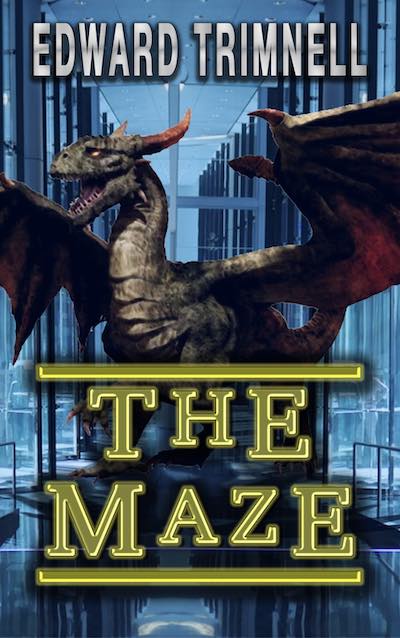
Relatively early in the game, I wrote and published a short story collection, along with three novels: Blood Flats (2011), Termination Man (2012), and The Maze (2013).
The short story collection, Hay Moon and Other Stories, has remained on Amazon since 2011. Readers have liked it, and it sells fairly well, as short story collections go.
But the aforementioned novels were a different matter. These are all standalone novels, and in a mix of genres. A marketing nightmare. Although reviews were generally positive, sales languished.
***
These three novels are all long books, well in excess of 100K words. (Blood Flats is about 180K words). This past year I decided that it would be a good idea to take the books off the market for a time, give them a thorough reread, and decide if they needed to be altered, republished as originally written, or scrapped.
I’ve written so much in the intervening years, that rereading these books was a bit like reading three books written by another person. I remembered the general plots of each novel, of course; but I had also forgotten huge swaths of the stories.
I was pleasantly surprised to find out that all of these novels are, well…pretty darn good.
I subjected these books not only to an author’s reread, but also to an external proofread. A handful of typos were found and corrected (though not many).
I’ve rereleased these books and put them back in Kindle Unlimited. Here they are, with Amazon links and descriptions:
Blood Flats: Lee McCabe is on the run from the law, mafia hitmen, and rural meth dealers. A gun-blazing chase through the badlands of Kentucky.
Termination Man: Sex, lies, and corporate conspiracies! A workplace thriller for fans of John Grisham and Joseph Finder.
The Maze: Three ordinary people step into an alien world of magic and nonstop danger. A modern-day parallel world fantasy with the soul of a thriller!
***
If the above story descriptions appeal to you, then I think you’ll like each of these books. And you can presently read them for free in Kindle Unlimited.
‘The Osbournes Want to Believe’: quick review
Watch The Osbournes Want to Believe on Amazon
The music of Ozzy Osbourne has long been one of my guilty pleasures. I’m from the Ozzy generation, you might say. I hit adolescence in the early 1980s, perfect timing for Ozzy’s three breakout albums: Blizzard of Oz (1980), Diary of a Madman (1981) and Bark at the Moon (1983).
By the time I graduated from high school in 1986, Ozzy Osbourne’s music was already becoming somewhat predictable and repetitive. Or maybe I was just getting older?…Who knows? But anyway—if you were around in the early 1980s and into rock music, you’ll surely remember the energy of those first few albums. They were really something.
Ozzy Osbourne was always more of an entertainer than a technical musician. From the beginning of his solo career, the former Black Sabbath frontman effected this macabre persona, which was uniquely appealing to 13-year-old boys, circa 1981. Then there was the thing about him biting the head off a dove at a meeting with CBS record executives. (He was intoxicated at the time.)
By the early 2000s, Ozzy Osbourne’s style of music was long past its expiration date. The singer pivoted—to reality TV. From 2002 to 2005, MTV aired The Osbournes. Each episode of The Osbournes was basically a day-in-the-life with the singer and his family. I caught about fifteen minutes of one such episode, and immediately knew that The Osbournes wasn’t for me. I’m not a big fan of reality TV to begin with, and I found Ozzy’s two teenage children, Kelly and Jack, somewhat annoying.
I was therefore a bit skeptical when I tuned into my first episode of The Osbournes Want to Believe, which now airs on the Travel Channel. But the The Osbournes Want to Believe is actually not too bad…if you’re willing to accept it for what it is.
The Osbournes Want to Believe presents a new spin on the well-traveled paranormal investigation/ghosthunting TV genre. This show doesn’t feature parapsychologists and professional skeptics, breaking down videos of shadowy figures and independently moving objects. Here, instead, you watch and listen as three members of the Osbourne family give their take on such matters.
Son Jack serves as the host of the show. Yes, I found him annoying 18 years ago; but he’s now 35 and actually pretty good as a television host.
Ozzy Osbourne, meanwhile, is a shadow of his former self. To quote his Wikipedia entry, Ozzy “has abused alcohol and other drugs for most of his adult life.” In 1978, he unapologetically told a journalist, “I get high, I get f***ed up … what the hell’s wrong with getting f***ed up? There must be something wrong with the system if so many people have to get f***ed up … I never take dope or anything before I go on stage. I’ll smoke a joint or whatever afterwards.”
The singer is now in his early seventies, and his decades of substance abuse are readily apparent. Ozzy is always likable, and at times genuinely witty; but he seems constantly on the verge of falling asleep. If not for his reputation, Ozzy could be mistaken for Joe Biden giving an unscripted press conference. (Sorry! I couldn’t resist.) No one need wonder, though, why Jack serves as the show’s moderator. Ozzy would not be up to the task.
Sharon Osbourne, of The Talk, is perfectly lucid and endlessly chirpy. Nor is she exactly unlikable. But—like the class clown of everyone’s school days— she tries too hard to turn every remark into a joke. Her humor doesn’t always miss the mark; but it rapidly wears thin because it just never stops.
The overall tone of the show is informal and conversational. The set looks like a room in one of the homes owned by Osbourne. Watching The Osbournes Want to Believe gives you the sense that you’re sitting around with this oddball family, watching these weird videos of weird happenings.
The Osbournes Want to Believe is not cutting-edge television; but it isn’t trying to be. And although I’m not an expert on such matters, it doesn’t appear to be cutting-edge in the field of paranormal research, either. Most of the commentary—however witty and occasionally funny—is purely speculative and anecdotal.
This show seems to be yet one more attempt to cash in on the Ozzy Osbourne brand. That brand was launched more than 50 years ago, when the first Black Sabbath album hit the record stores in 1970.
How long can the Ozzy brand go on and continue to make money? Probably for as long as Ozzy can be dissuaded from completely obliterating himself with drugs and alcohol.
Gen X-ers and the mall
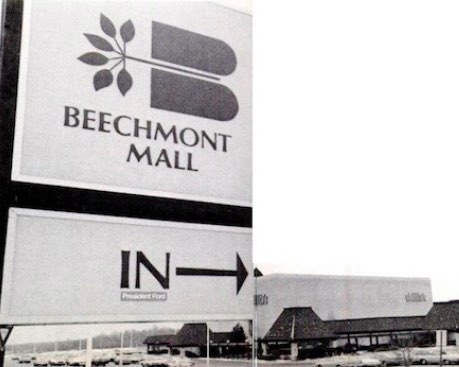
The other day, quite on a whim, I shared the above photo for my personal Facebook tribe, which consists disproportionately of former high school and grade school classmates. (I am 52 years old, and I was recently reunited on Facebook with a fellow who sat behind me in our third grade classroom. But that’s another story for another time.)
The above is the entrance to Beechmont Mall, on the east side of Cincinnati, Ohio. Beechmont Mall was opened in 1969, the year after I was born; and the above photo is from circa 1973. Beechmont Mall was a fixture of my childhood and adolescent years.
Beginning around 2000, Beechmont Mall was gradually dismantled, and replaced with an outdoor monstrosity now known as Anderson Towne Center. Twenty years later, what is left of Beechmont Mall would be virtually unrecognizable to a time traveler from 1970, 1980, or 1990.
Beechmont Mall was a place of wonders. There were bookstores, a record shop, and several well-stocked department stores. During the holiday season, there were elaborate Christmas displays.
Anderson Towne Center’s main draw is a Kroger grocery store that vaguely resembles a state correctional facility. We used to hang out at Beechmont Mall. No one wants to hang out at Anderson Towne Center.
I posted the above photo in my personal Facebook feed without expecting too much reaction. To be honest, I’d realized that with last month’s election and all, I’d been posting too much partisan political content there. I wanted to lighten the tone a bit.
I didn’t expect many reactions…maybe a like or two. But the photo got lots of likes. Almost immediately, my old friends and classmates began typing comments, detailing their fond memories of Beechmont Mall.
I wasn’t the only person who missed Beechmont Mall. Not by a long shot, as it turned out.
If you didn’t grow up on the east side of Cincinnati between 1970 and 2000, Beechmont Mall and the above photo mean nothing to you. I get that. This is my nostalgia, not necessarily yours.
But beyond the little corner of America where I grew up, there was a Golden Age of the American mall, between roughly 1970 and 1999. This is evidenced in the films of the late 20th century. Consider the centrality of the mall used in Fast Times at Ridgemont High (1982), and other Reagan-era teen movies.
The local mall was a place to people-watch and to be seen. It was a place to go to dinner with your parents. (But you didn’t want to be seen by any of your classmates on those outings, because going to dinner with one’s parents was just so uncool, no matter how much you loved them.) The mall was a place to spend your grass-cutting or babysitting money on the latest album from Def Leppard or AC/DC. I bought many Stephen King novels at Beechmont Mall’s two bookstores, B. Dalton and Waldenbooks.
Many of us had our first jobs at the local mall, too. I worked for a time at the Woolworth at Beechmont Mall. This was a Woolworth store built on the original model, complete with a little diner inside the store. The Woolworth had a unique, mid-2oth century environment. It was a time capsule of sorts even in 1985. I enjoyed working there.
By the time we entered our early twenties and college/working life, the magic of the local mall had faded for most of us. But the mall was a good place to be a kid or a teenager in the 1970s, 1980s, or 1990s.
The American mall can’t be replaced by today’s impersonal outdoor shopping centers. Nor can it be replaced by Amazon, even with free 2-day shipping.
The Maze: Chapter 2
Approximately one hour later, they arrived at their destination, about five miles south of the Columbus metro area. It wasn’t what Evan had expected.
The scenery here was still rural. There were plenty of cornfields, high and dark green in their late summer lushness. On the far, flat horizon, Evan could see a scattering of barns, and even a grain silo.
Following the directions generated by the Camry’s GPS system, Evan guided the car off the interstate at the designated exit.
“Is this it?” Evan asked, doubtful.
“This is it,” Hugh affirmed.
In the rearview mirror, Evan saw Amanda glance up at him, mildly annoyed.
The exit took them around a long, sloping curve that dead-ended in a two-lane highway. The android voice of the GPS told Evan to turn right.
“That’s Lakeview Towers over there,” Hugh said, pointing in that direction. Evan made the right turn; and as the Camry traversed the rural highway and crested a small hill, the office complex called Lakeview Towers came into view.
The glass-plated, ultramodern architecture looked more than a little out-of-place here in the middle of the Ohio countryside. True to its name, Lakeview Towers consisted of four towers that must have been ten or twelve stories high. The towers were connected by a series of shorter segments that were perhaps three stories in height each.
“It’s big,” Evan observed.
“Yes,” Hugh said. “It’s big.”
Evan kept driving.
How many office suites would there be in Lakeview Towers? Hundreds, at least. A lot of space to rent this far south of Columbus, Evan thought.
They continued to approach at about thirty miles per hour. Lakeview Towers seemed to grow even larger as it drew closer.
This was only an optical illusion, Evan decided. Down at the exit, the structure had been partially obscured by the topography. As they came upon the entrance to the main parking lot, though, Evan found himself growing more impressed by the scale of the office complex. The morning sunlight glinted off the glass-plated columns.
Evan saw a massive shadow pass over one of the glass columns. It was fleeting—as if something huge were flying by overhead.
He looked up through the Camry’s windshield. A shadow that large could only have been cast by a low-flying airplane.
Or a very, very large bird.
But Evan saw nothing unusual in the blue sky above the two-lane access road.
The shadow came from a cloud, he concluded.
Returning his attention to the road, Evan turned into the parking lot. The immaculately manicured “campus” (as it was now trendy to call corporate facilities) was filled with plenty of green space between the parking areas. A pair of artificial ponds dominated the weed-free lawn opposite the main entrance. In the middle of each pond was a water jet.
Evan also noticed a small gaggle of white geese distributed between the two bodies of water. This was a good place for the birds, he figured: There would be no hunters to disturb them here.
Had a goose cast that shadow? Evan wondered. No. Impossible. No way a goose could throw a shadow like that.
Then he recalled what he had concluded: The shadow had been cast by a puffy white cumulus cloud. There were plenty of those in the sky today.
Fortunately, there were plenty of open parking spaces, too. Evan found a space located reasonably close to the main entrance, adjacent to the two ponds, and parked.
Before killing the engine, he looked at the dashboard clock: It was 8:37 a.m. They had time to spare before the appointment, even with factoring in the time needed to set up the projector for the PowerPoint presentation.
Evan stepped out of the car, then leaned down to smooth his tie and his white dress shirt in the driver’s side exterior mirror. The right breast of the shirt bore a monogrammed “MSS”, and the logo for Merlesoft Software Systems—a generic computer motif.
Hugh and Amanda exited the vehicle as well. Finding the key fob in his pocket, Evan pressed the button that opened the trunk automatically. He reached down to lift the projector out of the trunk.
That was when Amanda pounced.
***
“Did you remember to include a slide containing the timeline of the four quotations we submitted?” Amanda asked, not quite casually.
Evan stared back at her, nonplussed. He had remembered everything, or so he had thought. He had spent hours preparing the PowerPoint slides, and additional hours preparing himself to deliver a flawless sales presentation.
But he had not thought to include a slide depicting the timeline of the quotations.
He could easily imagine what Amanda wanted: A visual representation not only of the successive changes in pricing, but also something that summarized the technical change points. This would demonstrate how Merlesoft had recommended cost-effective changes to the original specifications provided by Rich, Litchfield, and Baker.
It wasn’t a bad idea; but it was the one thing he hadn’t thought of—and the one thing that Amanda saw fit to remember, less than thirty minutes before game time.
“No, Amanda,” he said, pausing with his hand on the handle of the projector’s carrying case. “I didn’t think to include a slide showing the timeline of the quotations we submitted.”
As soon as the words were out of his mouth, Evan realized that he had delivered them flippantly. This hadn’t been his intention. He had meant to express the idea of, “I see what you’re getting at, but no—I forgot!”
That admission would be bad enough; it would add to the long list of black marks against him. This was a list that Amanda Kearns maintained, he was certain, in one form or another.
But now it was clear that Amanda perceived his words as a challenge to her authority, the one infraction that any manager at Merlesoft despised more than anything else.
“Don’t think that I don’t hear the resentment in your voice, Evan. I wouldn’t have to ask you this sort of thing, if only you would think of it yourself.”
Evan felt a wave of anger and resentment suddenly surge through him. Amanda was addressing him as if he were a slacker, a ne’er-do-well. The truth was that he had thought of many things. He just hadn’t thought of that particular thing—the one thing that she had chosen to ask about.
And in all the sales presentations prior to this one, he had never prepared a visual timeline of the quotations. Early quotations, in fact, were generally regarded as irrelevant. Final sales presentations usually focused on the most current quotation.
He now saw what Amanda was doing to him: She was using the process of elimination to trip him up. She had rigged the game so that he would inevitably lose it. There was no way for him to win in a situation like this.
Finally his temper snapped. “Do you want me to create the slide right now? I have my laptop computer back here.”
“Evan,” she replied with an air of calm superiority. “We both know that there’s no time for you to do that, when we have to meet with the client in a matter of minutes. My point was that it should have been done earlier.”
That was when Hugh intervened.
“Whoa, whoa,” he said, gently squeezing Evan’s arm and interposing himself between Amanda and him. “There’s no time now, buddy. She’s right about that. Let’s just focus on doing the best we can with the presentation we’ve got now. We can talk about next time later on. As it stands right now, we’re going to be on in about fifteen minutes.”
Evan nodded silently, allowing himself to be mollified by Hugh.
Amanda, too, allowed this to be the last word about the matter—for now. (There would doubtless be further recriminations later—especially if an order from Rich, Litchfield, and Baker failed to materialize.) Evan noted (and not for the first time) that Amanda sometimes allowed Hugh to exert a subtle form of authority, as long as he didn’t step on her toes in the process.
Loaded up with gear and presentation materials, they walked toward the double doors that formed the front entrance of the Lakeview Towers office complex. Evan could see their reflections bobbing in the glass face of the building.
He again recalled the vague warning that Hugh had given him while they were sitting in the McDonald’s—or the warning that Hugh had tried to give him.
And then something else happened.
***
Evan saw a reflection in the glass of the front entranceway. The reflection was distorted by the glass, the sunlight, and the angle; but it was unmistakably there.
And it was very close to the three of them.
It was a large, winged beast—not quite a bird, and not quite a mammal or a reptile. A brown-toned monstrosity that might have been covered with fur, or maybe with scales.
It flew behind and past them near ground level. In that fraction of an instant, Evan discerned a tapered snout filled with long, jagged teeth. A stout body topped by two batlike wings.
And then, behind the beast, a long tail, twitching back and forth as the creature swooped low toward the earth.
A second later, it was gone.
Evan whirled around, nearly dropping the load in his arms. He clutched the projector just as it was about to slip away from him.
When turned around, Amanda looked straight at him.
“Something wrong, Evan?”
There was plenty wrong. That had been no ambiguous shadow, prone to a half-dozen explanations and interpretations. That had been something—if only evidence of his own overstressed mind, now subjecting him to paranoid delusions.
“No,” Evan told Amanda. “Nothing’s wrong.”
“Well, then,” she said icily, “what say we keep going?”
***
Evan was still shaken, but he turned back around and kept going.
Don’t try to process that now, he told himself. That thing you just saw—you can think about that during the long drive back to Cincinnati.
And it was just your imagination, anyway, right?
Sure. That was all it had been.
They pushed through the entranceway. Evan exercised extra caution so as not to drop anything.
Once again, he imagined the projector slipping out of his hands and crashing to the floor. Then the whole sales presentation would be ruined, all because of his momentary blunder, his failure to anticipate. The resultant recriminations would be unbearable.
Even worse than that reflection he had just hallucinated in the glass.
The lobby was state-of-the-art, contemporary office chic. There was wall-to-wall, low-pile grey carpeting. Soft, frameless chairs in the waiting area. Strategically spaced, abstract paintings.
The three of them headed immediately to the wood-paneled security enclosure, where two security guards—a heavyset woman and a rather frail-looking older man—sat beneath soft cove lighting.
Amanda motioned for Hugh and Evan to complete the sign-in procedures before her. She wanted to check the messages on her phone before signing in, apparently.
She likely wanted to check for messages from Oscar, Evan thought.
While Evan and Hugh were pinning on their temporary access security badges and waiting for Amanda to finish with the security guards, Hugh pulled him aside and said discreetly:
“Stick with me while you’re here. And don’t talk to any other security guards you might happen to see here. Only these two at the front desk are okay.”
Once again Evan found himself wondering if Hugh was suffering from some sort of a delusion, or possibly setting him up for an elaborate practical joke.
What I just saw, that was my imagination, he reminded himself. The power of suggestion. There was nothing real to it. Couldn’t have been.
“You’re really serious about wanting me to not wander off in this building, aren’t you?” Evan asked.
He smiled in an attempt to break the tension of the quarrel with Amanda, and the imagined reflection in the glass. He needed to calm the butterflies in his stomach. He often felt a slight degree of nervousness just before a big client pitch, but his jitters were now approaching a terminal level. Too much to think about.
And Hugh was making it worse.
“Are you going to tell me what this is all about?” Evan asked, hoping for some levity in return. Maybe Hugh would break the joke now. Because this had to be a joke.
“Evan,” Hugh said, his voice low and deadpan. “You saw something, didn’t you? Just now, as we were coming in.”
Evan felt his heart leap again.
“Did you—?”
“That’s not important,” Hugh replied. “I don’t have the time to explain this to you now. But if we make it out of here okay, then I promise you I will.”
“What the hell are you talking about? ‘If we make it out of here okay’?”
“Maybe nothing more than my imagination, buddy. But maybe something. In any case, safety is the best policy. Just remember what I said.”
Evan opened his mouth to ask another question. Then Amanda appeared, her temporary visitor badge pinned to her blouse.
“Are you ready, gentlemen?”
“We’re ready,” Hugh said, answering for both of them. “Follow me. I’ve been here before, after all.”
***
Evan and Amanda followed, as Hugh led them down a hallway adjacent to the lobby, toward the law firm’s first-floor office suite.
Evan was conscious of the combined weight of the portable projector and his laptop. Amanda was carrying her briefcase, and a satchel that contained the handout materials for the presentation.
Hugh, meanwhile, was carrying only his attaché case. Given his heart condition, neither Evan nor Amanda would have expected him to carry anything more.
They passed by a number of office suites, Hugh leading the way. Each office suite was enclosed behind a stately wooden door. There were windows on both lateral sides of each door. This made it possible for Evan to look into the suites. He saw comfortable-looking office settings with modern office furniture, but no people.
Strange that there were no people. How much vacant space was there in Lakeview Towers? It seemed that most of the complex was vacant.
Miles and miles of space, Evan thought, for no reason that he could fathom.
On and on forever…
A wave of unexpected dizziness hit him. He nearly stumbled at one point, as he felt abruptly light-headed. He feared that he would drop the projector—for real this time. He experienced a moment of genuine panic, a sense that he was about to faint.
Then he quickly recovered and righted himself. As suddenly as the odd feeling had come upon him, it was gone now.
Since he was walking behind both Amanda and Hugh, neither of them had noticed, he was glad to see.
What’s wrong with me?
He detected a faint whiff of something unpleasant in the air. It was a burnt, sooty smell—not exactly organic, but not exactly chemical, either. Perhaps it was this odor that had made him suddenly dizzy. It might be the result of a problem with the ventilation system here.
Evan felt almost himself again when they finally arrived at the door with the decorative brass plaque that read: “Rich, Litchfield, & Baker, Attorneys at Law.”
A receptionist was stationed immediately inside the suite. Her desk was in the center of a small waiting room. The receptionist—a young, redheaded woman who caught Evan’s eye—informed them that they could proceed directly down the rear hallway to meeting room 1A—the law firm’s media room.
Meeting room 1A contained a large oblong oak table, surrounded by about a dozen high-backed, leather-padded chairs. The attorneys had spared no expense to make their office space attractive, it seemed. At the far end of the room, Evan spotted the roll-down screen that he would use to project the PowerPoint presentation.
Being careful not to make direct eye contact with Amanda, he went about setting up the projector and connecting it to his laptop. Luckily, there were plenty of electrical outlets in the room, and he had brought extra lengths of extension cord.
Hugh had warned him not to talk to any other security guards. Now why would Hugh say something like that? What did he mean? Evan could have asked him—if not for Amanda’s hovering presence.
Evan had just finished setting up the equipment for the presentation when the lawyers filed in. Introductions were made.
Evan was still feeling a bit light-headed, and he was still more than a little angry at Amanda. He was also dreading the inevitable follow-up confrontation that would surely result from today’s exchange with his boss. When they returned to the Merlesoft office, there would surely be hell to pay—in one form or another.
But now he had a job to do. He would spite Amanda Kearns by doing it to the best of his abilities.
***
“First, I want to thank all of you for taking the time to hear Merlesoft’s presentation today,” Evan began.
He was the only one standing in the darkened room. Seated closest to the projection screen around the oblong table were four attorneys from Rich, Litchfield, and Baker. They were joined by the firm’s accountant, and an information systems person. Finally, Amanda and Hugh were seated toward the back, behind all the client representatives.
The first PowerPoint slide featured an image of Rich, Litchfield, and Baker’s logo alongside an image of the Merlesoft logo. The idea was to suggest that the two companies were in an ad hoc union of sorts.
This was a standard bit of sales psycho-strategizing. The idea was to spin the (hopefully) imminent purchase order as a partnership—not a transaction. Then the client representatives wouldn’t feel that they were on the receiving end of a sales pitch. Even though it was very much a sales pitch.
While not exactly sinister, the whole thing seemed vaguely duplicitous. I’m no more a salesperson than a software guru, Evan thought.
Nevertheless, he launched into the presentation, clicking through the slides with the projector’s remote control. He had studied his lines so much in advance that he was almost able to run on autopilot. This was a good thing—as the dizziness that he had briefly experienced in the hallway was now returning with a vengeance.
And once again he was aware of that peculiar smell. The odor might best be described as a mixture of gasoline fumes and burning vegetable matter.
The smell was all around him now, as if it were coming through the air ducts.
The dark room and the soft glare of the projection screen began to shift before his eyes. He knew that his voice was wavering, because everyone in the room had turned their attention away from the screen at the front of the room. They were looking at him—no doubt wondering what was wrong.
That was a question that was acutely troubling him, as well. The partially illuminated faces around him began to shift, to melt into the darkness. When he tried to read the slide that was currently projected up on the screen, the words ran together.
I’ve got to get out of this room, he thought. Something’s wrong with me.
Then an additional complication arose. He was acutely aware of the large breakfast that he had eaten—the one that was supposed to give him energy to concentrate on his presentation. It was churning and bubbling in his stomach, threatening to erupt and spill out onto the meeting table.
To pass out before a roomful of customers would be bad enough. To upchuck in front of clients would be an unmitigated disaster.
Evan made a snap decision. He placed the projector remote on the table between Hugh and Amanda. One of them would have to take over.
“You’ll have to excuse me,” he announced to the room. “I’m afraid that I’m going to be sick.”
***Get THE MAZE on Amazon***
‘The Consultant’: a lone American trapped in North Korea!
This book was partially serialized here on the site.
Now you can get it on Amazon.
I’ve enrolled The Consultant in Kindle Unlimited for 90 days… so those of you who are members can read it for free.
Paperback also available. Audiobook version coming soon!

The most oppressive regime on earth has taken you prisoner. And they have a mission for you!
Barry Lawson is an American marketing consultant traveling on business to Osaka, Japan. After striking up a conversation with a woman in a bar, he agrees to accompany her back to her apartment.
But the mystery woman is not who she seems. Days later, Barry wakes up in a cell in North Korea. 
He discovers that the North Korean government has abducted him for a specific purpose. The North Koreans don’t plan to ransom him. They want him to work for them.
But Barry is determined to escape—whatever the cost.
His allies are a Japanese abductee, and a beautiful American woman who understands the North Koreans, and speaks their language.
With a U.S.-North Korean summit fast approaching, a coup plot shakes the very foundation of the Pyongyang regime. Barry chooses this moment to make a desperate dash for freedom. But he and his fellow escapees risk death at every turn.
The Consultant is a thriller ripped from real-life headlines, with unforgettable characters and nonstop action!
Get The Consultant on Amazon.com!
Kentucky crime fiction
Sometimes old novels need to be be updated in various ways. I recently rereleased Blood Flats with a new cover. I also corrected a few typos that had made it through when the novel was originally published in 2011.
This was my first novel, but I think it’s a pretty good one, nonetheless. (I reread the entire book in September, and I was frankly surprised at how much I enjoyed the story, huge chunks of which I had forgotten over the past decade.)
Blood Flats is the story of Lee McCabe, a former marine who returns to the fictional Hawkins County, Kentucky after serving in Operation Iraqi Freedom. Lee is framed for a drug-related double homicide that he did not commit. He goes on the run, pursued by local meth dealers, mafia men from Chicago, and law enforcement officers with a variety of motives.
I wrote most of this book in 2010, and the events would have occurred in 2009. You’ll therefore notice some differences in the way that cell phones work, for example. Other than that, though, this is a modern story set in the modern world.
Which brings me to the influences for Blood Flats. There were two novels that strongly influenced this book: Cormac McCarthy’s No Country for Old Men, and Larry McMurtry’s Lonesome Dove.
No Country for Old Men might best be described as a period noir crime novel, set in 1980. Lonesome Dove is a long western epic, set in the 1870s.
While writing Blood Flats, I had in mind the bleakness of the McCarthy’s book, and the long, epic journey of Lonesome Dove. The plot of Blood Flats isn’t similar to either of the books that influenced it; but I like to think that some of the moods and themes are similar.
This is my way of saying: If you like No Country for Old Men and Lonesome Dove, you’ll probably like Blood Flats.
Blood Flats is a long book. It isn’t quite as long as Lonesome Dove (about 900 pages). Blood Flats, though comes in at 180,000 words. This makes it about twice as long as the standard 90K-word commercial novel.
Want to know more about Blood Flats? You can either check it out on Amazon, or read the first ten chapters here.