After an early May that veered between March-like cold and constant rain, summer has come roaring into Southern Ohio. Afternoon temperatures in the Cincinnati area will flirt with the low 90s this weekend. (That’s 90 degrees Fahrenheit, for you readers in Canada and the UK.) No rain on the horizon for at least three or four days.
People in my neck of the woods are currently getting worked up about cicadas. Cicadas don’t bother me. Bring ‘em on! as they say. I survived the great cicada outbreak of ’87. I’ll make it through this one, too.
There is only one insect—only one creature, in fact— that I despise with implacable, murderous intent: the wasp. I have always hated them, and my market share of wasp spray is likely a line item on the balance sheets at both Raid and Spectracide.
There is an old German proverb, “God made the bee, but the Devil made the wasp.” It’s absolutely true. Wasps are pure evil. And they know when you’re about to come after them. I have the stings to prove it.
There is a group of wasps building a nest under the eaves on one side of my house. Armed with a good supply of chemical warfare agents, I intend to send as many of them as possible straight to Hell before the weekend is over.
I usually pimp my short horror story, The Wasp, in late May or early June. It’s like an annual rite of summer for me. But you can read it for free here on the site.
I hope you enjoy your Saturday, wherever you are. As for me, I’ll be cutting grass, trimming trees, oh…and killing wasps.
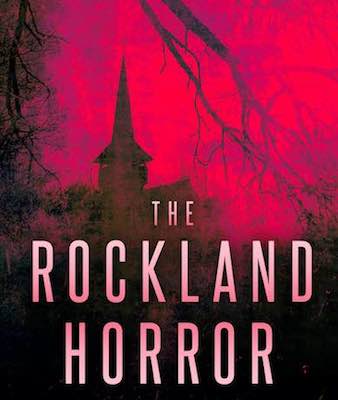
The next installment of The Rockland Horrorseries is set in 1917, early in the age of the automobile.
That, of course, means Henry Ford’s iconic Model T. The Ford Motor Company manufactured the Model T between 1908 and 1927.
The Model T was mass-produced with simple specifications. The car originally came only in black, though a few other color choices were added in later model years.
The Model T was also quite affordable. The base price for a 1916 Model T Runabout was just $345, or $8,324.76 in 2021 dollars. This was, obviously, much cheaper than just about any car manufactured for the U.S. market today.
But this simplicity came at a price. If the Model T was cheap (even by early 20th-century standards) it was also far more difficult to use than modern vehicles.
The Rockland Horror 3 (now in production) will be a horror novel, not a book about early automobiles. But the story does involve some car chase scenes, and I wanted to make these scenes reasonably authentic.
My maternal grandfather was born in 1921, and even he never owned a Model T. Driving the Model T is one of those experiences that has passed out of “living memory”, so to speak.
I therefore went to YouTube, where there were, indeed, a few videos about starting and driving the Model T. I’ve embedded two of them here.
You probably already know about the crank start. But even that isn’t the worst of it. To start a Model T, you had to arrange a series of switches and levers inside the car in the right combination. Then you had to “choke” the engine by priming it with gasoline, and then…
Krampus, Dickens, and what I saw on Christmas Eve, 1976
Merry Christmas, everyone!
Yes, I know this has been a lousy year. It’s almost over, though.
Christmas is generally a festive holiday, but there are some macabre Christmas traditions, too. And they didn’t necessarily begin with this very macabre year of 2020.
Consider, for example, the Dickens tale, A Christmas Carol. This is one of my holiday favorites. Who can forget the Ghost of Christmas Yet to Come, which reminds us of the Grim Reaper? Or, for that matter, Marley’s ghost?
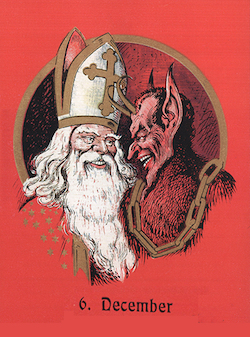
Krampus and St. Nicholas
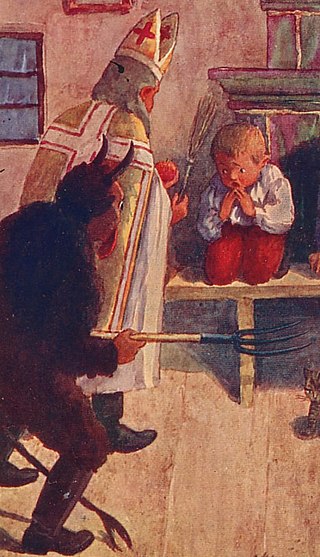
In some parts of Europe, Christmas includes the Krampus, a horned creature that incorporates both Christian and pre-Christian (pagan) traditions. In Germanic folklore, the Krampus works in conjunction with St. Nicholas, rewarding children who have been good, and punishing those who have been bad.
Let me tell you about something that happened to me on Christmas Eve many years ago…in 1976.
I was at my grandparents’ house in the suburbs of Cincinnati, Ohio. The family had just had our Christmas Eve dinner—Grandma’s turkey, stuffing, and mashed potatoes. (My grandmother also used to prepare a festive gelatin salad made with raspberry Jell-O, diced nuts, sliced carrots, and Cool Whip. (I realize that might not sound very tasty, but it was.))
Anyway, I had just left the table for a call of nature. This took me to a hallway in another part of the house.
There in the semidarkness of the hallway, I saw the shadow of a small, gnomish creature. It was right there, within lunging distance of me, cast on the wall.
I was startled—though not necessarily in mortal terror. Being eight years old in 1976, I ran back into the dining room, and told the adults.
There was something in the hall!
They accompanied me back to the hallway where I’d seen the unusual shadow. Needless to say, it was gone.
But there had been something there. I know there was.
My grandparents lived in that house for the rest of their lives. I was close to my grandparents, and visited them often, well into my adult years.
I never saw anything there resembling that gnome shadow figure again. Nor did I ever see any other other strange phenomena in the house.
But I know that something made a brief visit there on Christmas Eve, 1976.
A bad elf, maybe? I don’t know. But like I said, I saw something.
The other day, quite on a whim, I shared the above photo for my personal Facebook tribe, which consists disproportionately of former high school and grade school classmates. (I am 52 years old, and I was recently reunited on Facebook with a fellow who sat behind me in our third grade classroom. But that’s another story for another time.)
The above is the entrance to Beechmont Mall, on the east side of Cincinnati, Ohio. Beechmont Mall was opened in 1969, the year after I was born; and the above photo is from circa 1973. Beechmont Mall was a fixture of my childhood and adolescent years.
Beginning around 2000, Beechmont Mall was gradually dismantled, and replaced with an outdoor monstrosity now known as Anderson Towne Center. Twenty years later, what is left of Beechmont Mall would be virtually unrecognizable to a time traveler from 1970, 1980, or 1990.
Beechmont Mall was a place of wonders. There were bookstores, a record shop, and several well-stocked department stores. During the holiday season, there were elaborate Christmas displays.
Anderson Towne Center’s main draw is a Kroger grocery store that vaguely resembles a state correctional facility. We used to hang out at Beechmont Mall. No one wants to hang out at Anderson Towne Center.
I posted the above photo in my personal Facebook feed without expecting too much reaction. To be honest, I’d realized that with last month’s election and all, I’d been posting too much partisan political content there. I wanted to lighten the tone a bit.
I didn’t expect many reactions…maybe a like or two. But the photo got lots of likes. Almost immediately, my old friends and classmates began typing comments, detailing their fond memories of Beechmont Mall.
I wasn’t the only person who missed Beechmont Mall. Not by a long shot, as it turned out.
If you didn’t grow up on the east side of Cincinnati between 1970 and 2000, Beechmont Mall and the above photo mean nothing to you. I get that. This is my nostalgia, not necessarily yours.
But beyond the little corner of America where I grew up, there was a Golden Age of the American mall, between roughly 1970 and 1999. This is evidenced in the films of the late 20th century. Consider the centrality of the mall used in Fast Times at Ridgemont High (1982), and other Reagan-era teen movies.
The local mall was a place to people-watch and to be seen. It was a place to go to dinner with your parents. (But you didn’t want to be seen by any of your classmates on those outings, because going to dinner with one’s parents was just so uncool, no matter how much you loved them.) The mall was a place to spend your grass-cutting or babysitting money on the latest album from Def Leppard or AC/DC. I bought many Stephen King novels at Beechmont Mall’s two bookstores, B. Dalton and Waldenbooks.
Many of us had our first jobs at the local mall, too. I worked for a time at the Woolworth at Beechmont Mall. This was a Woolworth store built on the original model, complete with a little diner inside the store. The Woolworth had a unique, mid-2oth century environment. It was a time capsule of sorts even in 1985. I enjoyed working there.
By the time we entered our early twenties and college/working life, the magic of the local mall had faded for most of us. But the mall was a good place to be a kid or a teenager in the 1970s, 1980s, or 1990s.
The American mall can’t be replaced by today’s impersonal outdoor shopping centers. Nor can it be replaced by Amazon, even with free 2-day shipping.
Opening mall scene in Fast Times at Ridgemont High (1982)
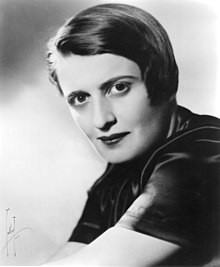
I had a brief flirtation with Ayn Rand the year I turned twenty. The most torrid part of the relationship lasted only about as long as some of Dagny Taggart’s warm-up love affairs in Atlas Shrugged. Officially, I broke off the romance; but it remains a memorable phase in my formative years.
Twenty is probably the perfect age to have a fling with Ayn Rand. In the enclosed terrarium of your teenage years, it is easy to hold any hifalutin concept of yourself that you can imagine. When you are twenty, though, things begin to change. The adult world looms large in the windshield. You realize that you aren’t quite as special, quite as brilliant, or quite as destined for spectacular success as you fancied yourself to be, only a few short years ago.
Ayn Rand, with hyper-individualist titles like Anthem and The Virtue of Selfishness, is the perfect salve for the twenty-year-old who suddenly fears that he might turn out to be quite ordinary, after all. The twenty-year-old’s brief burst of Ayn Randian egoism is a final cry of rebellion for the self-important teenager that is slipping away.
I first heard of Ayn Rand around 1983, when I was in high school. My favorite rock band was Rush. Neil Peart, Rush’s drummer and main lyricist, wrote at least two songs based on Rand’s novels and philosophical tracts. Continue reading “Ayn Rand and me”
My hometown of Cincinnati isn’t exactly Paris or New York. It is therefore somewhat understandable, I suppose, that our local news media is making a big deal of the episode of The Brady Bunch that was filmed here nearly a half-century ago:
While I was growing up in the 1970s and 1980s, going to Kings Island—Cincinnati’s only real amusement park—was a “big deal”. Much of the scenery in the above clip from The Brady Bunch therefore looks familiar.
Kings Island is still there, by the way. But it’s changed a lot since 1973.
***
A few feature-length films were shot in Cincinnati in the 1980s. Rain Man, starring Dustin Hoffman and Tom Cruise, comes immediately to mind. This movie was filmed in various locations in and around Cincinnati.
80sThen80s now is one of the few accounts I follow on Twitter, because, well…I’m nostalgic for the 1980s.
Today the account tweeted this post about the movie Red Dawn (1984). In response to the poll, I gave the movie a 9.
Red Dawn wouldn’t necessarily be a 9 if it were released today, mind you. But you have to evaluate a movie by the filmmaking standards of its era. A lot of movies in the early 1980s were pretty rough, compared to the slick, CGI-enhanced productions of today. And so it is with Red Dawn. Continue reading “Remembering ‘Red Dawn’”
Today I turn 52 years old. I am not making a big deal of the day in my real life, because well, when you’re this old, what’s another birthday but a step closer to the grave? (We’ll get to that matter shortly.)
Due to a misspelling on my Ohio driver’s license, I recently had to order a copy of my official birth certificate from the State of Wisconsin. My Certificate of Live Birth lists my parents’ ages as 22. It is difficult for me to imagine either of them as twenty-two today. For that matter, it’s not so easy to imagine myself as twenty-two.
Not that I have much to complain about, mind you. During my teen years, I developed a habit of moderate diet and daily exercise, and I’ve stuck with it. I’m not going to say that I feel like a 19-year-old. I don’t. But I don’t feel much different than I did when I was in my thirties. That’s something.
Of course, I’m also at that age where seemingly healthy men drop dead, out of the blue, from heart attacks. I’ve known several 50-something men who did just that. Once you reach the half-century mark, you really could go at any time.
Fifty is a special milestone in that regard, perhaps. But every birthday much beyond 40 carries with it a realization: You’re on the downhill run now. You’ve reached and surpassed the halfway point. There is more time in the rearview mirror than there is in the windshield.
This means being more deliberate about the choices you make, about how you spend your time. I have a good autobiographical memory. I remember being very young, under the age of 21. I can even remember my years from ten to fifteen with surprisingly clarity.
In those days, I often looked at adulthood as some distant, golden point on the far horizon. Now I wouldn’t mind being 10 again. (But I would want to be 10 in my own times, in my own life. I wouldn’t want to be someone else—and certainly not a random 10-year-old in 2020.)
I realize that it’s vaguely possible that fifty-two years from now, I could be seeing out the last of my days at the age of 104. Frankly, I hope not. As I note elsewhere in this blog, I’m a man of the last century, not this one. I’ll cope with the twenty-first century as I must; but I have no desire to live beyond its midway point.
Every human life has its limit. This is a universal that the atheist and the believer must both come to terms with. Likewise, every person (in my way of thinking, anyway) has their times. Just as I have no desire to be alive one hundred years ago, I have no desire to be alive one hundred years from now.
On this point, I’ve been fairly consistent over the years. I’m a nostalgic, not a futurist. The idea of making it into the record books for my longevity has never been a prospect that much appealed to me. I would rather make the most of a reasonably long—though reasonably limited—span of time.
My coming-of-age supernatural thriller, Revolutionary Ghosts, is set in 1976. The tale’s hero, an Ohio teenager named Steve Wagner, has a summer job at McDonald’s.
I was walking through my neighborhood in southwest Ohio this morning (about fifteen miles east of Cincinnati) when I saw this fellow loping down the sidewalk. Continue reading “An Ohio cryptid?”
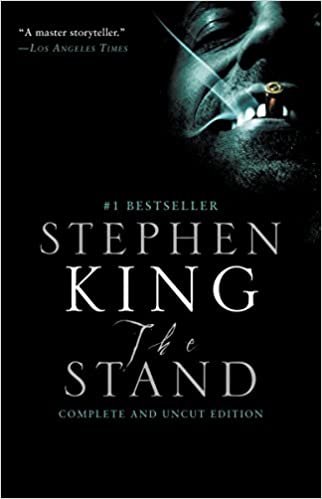
As I mentioned in a previous post, I have recently started rereading The Stand, Stephen King’s post-apocalyptic novel of the “superflu” or “Captain Trips”.
I also mentioned that I read the book for the first time back in the mid-1980s, when I was a high school student. (I believe I read it in the fall of my junior year, which would have been October~November 1984, more or less.) Continue reading “‘The Stand’: rereading update”
Like a lot of readers in recent days, I’ve been seized by a sudden (and arguably masochistic) urge to reread The Stand. This is Stephen King’s 1978 post-apocalyptic novel of a “super-flu” called Captain Trips. In the novel, at least, the super-flu wipes out civilization and leaves few survivors.
So I went ahead and ordered it from Amazon the other day.
The premise of The Stand is obviously topical now. But this is also a book populated with some of Stephen King’s most memorable characters: Stu Redman, Franni Goldsmith, Mother Abigail, etc. It is a long book, but it is not a slow book.
The Stand is the most common favorite of longtime Stephen King readers, a fact which has caused the author a certain amount of chagrin over the years. In at least one interview, King wondered aloud why so many readers give their highest rating to a book that he wrote while still in his early 30s. But that’s the way it goes with art sometimes.
I read this book for the first time in 1984. I was in high school then, and those were simpler times. That isn’t just my nostalgic side speaking. Heck, last year was simpler times.
Like a lot of you, I’ve been feeling a little bit like a character in The Stand of late, and I want this movie to end, already. The good news is that coronavirus is not nearly as deadly as Captain Trips, nor should a cure or a vaccine indefinitely elude researchers.
But yes, these are unsettling days, and we all need the catharsis of a good story—even one we’ve read before, a long time ago.