The story of Led Zeppelin (book recommendation/quick review)

Led Zeppelin formed in 1968, the year I was born, and disbanded in 1980, when I was twelve.

I was therefore too young to become a Led Zeppelin fan while the band was still a going concern. But Led Zeppelin was still enormously popular when I discovered rock music as a teenager in the early to mid-1980s. Lead singer Robert Plant, moreover, was then launching a solo career, and making use of the new medium of MTV.

Most of my musical interests lie in the past. I admittedly lack the patience to sort through the chaotic indie music scene on the Internet, and I shake my head disdainfully at the overhyped mediocrity of Taylor Swift. When I listen to music, I listen to the old stuff: Rush, Def Leppard, Led Zeppelin, and a handful of others.

Led Zeppelin is very close to the top of my list. I listen to Led Zeppelin differently than I did in the old days, though. The lyrics of “Stairway to Heaven” sound less profound to me at 55 than they did when I was 15. I now appreciate Led Zeppelin when they’re doing what they did best: raucous, bluesy rock-n-roll that had only a hint of deeper meaning: “Black Dog”, “Whole Lotta Love”, “Kashmir”, etc.

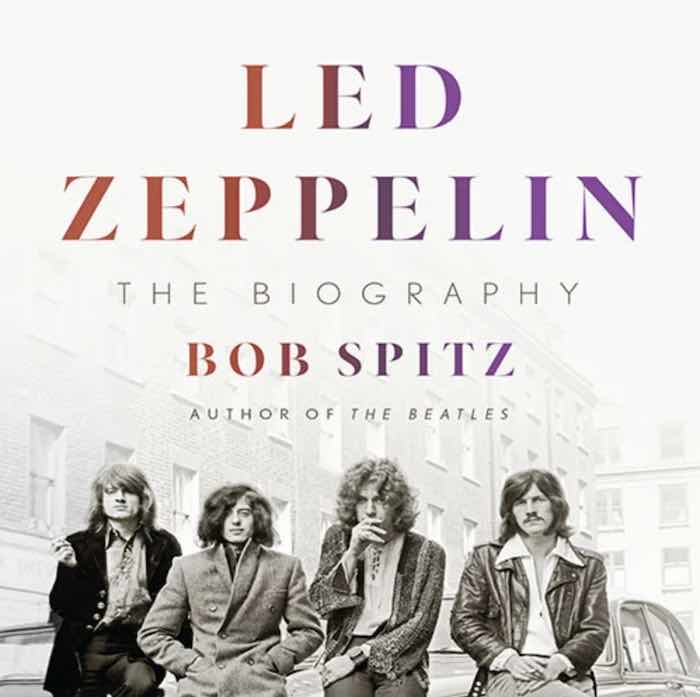
And of course, reading remains my first passion. I’m still waiting for an in-depth, definitive biography of Canadian rock band Rush. (I suspect that someone, somewhere is working on that, following the 2020 passing of Rush’s chief lyricist and drummer, Neil Peart.) But a well-researched and highly readable biography of Led Zeppelin already exists: Bob Spitz’s Led Zeppelin: The Biography.

At 688 pages and approximately 238,000 words, this is no biography for the casual reader. But if you really want to understand Led Zeppelin, its music, and the band’s cultural impact, you simply can’t beat this volume. I highly recommend it for the serious fan.

-ET

View Led Zeppelin: The Biography at Amazon

The Black Lizard Big Book of Pulps

The period between the two world wars was the golden age of the pulp fiction magazines. This was a time before television, or (of course) the Internet. Entertainment options were limited. (Heck, they barely had radio in those days.) Many people therefore turned to magazines that specialized in quickly written and fast-paced stories of romance, western adventure, crime, science fiction, or horror.

What happened to pulp fiction? The pulp magazines weren’t the victims of television, as is commonly thought. They were the casualties, rather, of the cheaply printed paperback. Modern paperback books were first introduced in 1935, but they really caught on during and shortly after World War II. The paperback completely changed the publishing and bookselling landscape, much as Amazon would about sixty years later.

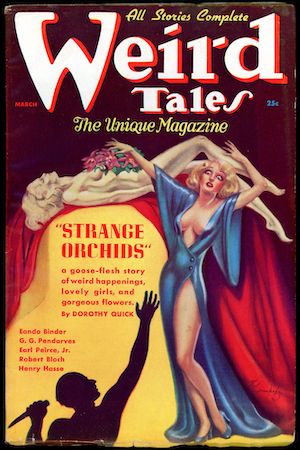
Some of the original pulp content is still with us, of course. Horror fans who adore H.P. Lovecraft may not know that favorites like “At the Mountains of Madness”, “Dagon” —and most other Lovecraft stories—were originally published in Weird Tales, a pulp magazine founded in 1922. (Note: Weird Tales technically still exists, though its format has undergone some modifications; the magazine has a site on the Internet.)

I’ve read and reread Lovecraft’s oeuvre  as much as I care to. So when I was recently in a mood to do some reading off the beaten path, I decided to indulge in a bit of vintage pulp crime fiction.

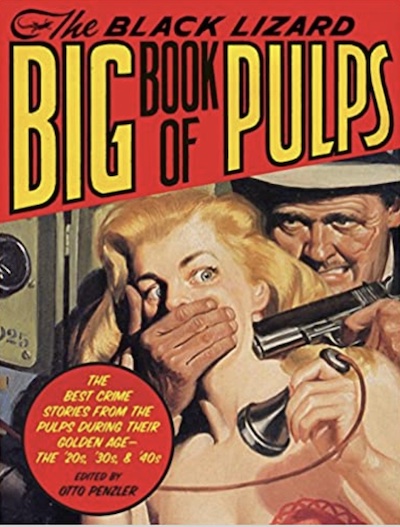
Or actually, quite a lot of vintage pulp crime fiction. The Black Lizard Big Book of Pulps contains forty-seven stories and two complete novels. Writers represented in this collection include well-known names like Raymond Chandler (1888-1959) and Dashiell Hammett (1894-1961). There are also plenty of stories by writers who are long forgotten.

Why read pulp fiction? Well, you probably already watch pulp television.

I’m a longtime fan of pulp TV, in fact. During the 1980s, I regularly tuned in to action television shows like The A-Team, Knight Rider, Airwolf, and the original MacGyver. These shows were all escapist television, with plots that roared out of the gate like a 1981 DeLorean or a 1987 Toyota Supra.

My favorite was The A-Team. An episode of The A-Team kept you on the edge of your seat. Each episode ended with a blazing gunfight, in which no one was usually killed or seriously injured. The A-Team made absolutely no attempt to provide any sort of messaging on social, political, or philosophical issues. The other aforementioned 80s-era pulp TV shows were done in a similar vein.

Most of these shows did not age well. For nostalgia’s sake, I recently tuned in to a few old episodes of The A-Team and the original MacGyver. In the MacGyver episode, the eponymous hero found himself in the Soviet Union, where everyone conveniently spoke English. The Russians even spoke English with each other. I managed to sit through about twenty minutes of this. Life is too short.

The same might be said of the stories in The Black Lizard Big Book of Pulps. You can detect the literary and storytelling skills at work; but you can also tell that you’re reading fiction produced in a different era, when expectations were very different. My 1980s pulp TV shows did not have to compete with Netflix. The writers whose work is collected in The Black Lizard Big Book of Pulps did not have to compete with Michael Connelly or Lee Child.

The stories in The Black Lizard Big Book of Pulps are interesting as artifacts of the pulp era, in the same way that a Ford Model T is an interesting artifact of automobile technology in the 1920s. But as entertainment for present-day audiences? Keep in mind that some of these stories are more than eighty years old. You had might as well ask me if I would like to use a Model T for my daily commuting needs.

I suspect that this massive tome (more than one thousand pages in print) is so massive for a reason. The editors knew that the phrase “your mileage may vary” would be very applicable here.

What about their usefulness for writers? Those of us who write fiction are always thinking of a story in market analysis terms, after all. 

I wouldn’t recommend that any twenty-first century writer try to imitate the style of these stories, exactly. At least a quarter of these tales contain plot holes that you could drive a Model T through; and almost all of them contain hackneyed dialogue. (“He’s on the square!” “The place looked swell.”)

And oh, the eyebrows that will be raised among the finger-wagging social justice crowd. While these stories aren’t intentionally sexist, they are the product of a different time, when ideas about men and women were different. They overflow with gendered terminology that would make any writer the target of an online pitchfork mob today (“honey,” “doll”, “sugar”, “dame”, etc.).

The female characters in these crime stories are mostly props. But then, so are most of the men. These stories are all about plot, plot, plot.

And that is where this book may be instructive for writers who have found themselves too immersed in navel-gazing literary fiction. The writer who suspects he is spending too much time on flowery descriptions and internal monologue may learn something valuable here: how to get to the point, or to the plot. The pulp-era writers were certainly good at that, despite their other shortcomings.

-ET

**View ‘The Black Lizard Big Book of Pulps: The Best Crime Stories from the Pulps During Their Golden Age–The ’20s, ’30s & ’40s’ on Amazon**


JFK, Marlene Dietrich, and the problem of the aging Lothario

Eleanor Herman’s Sex with Presidents: The Ins and Outs of Love and Lust in the White House, is well worth reading both for its historical content, as well as its human interest angle.

In this book, you’ll learn about the honey trap in which Alexander Hamilton was ensnared in 1797. Women and sex, it turns out, were among Hamilton’s principal weaknesses.

There are the requisite chapters about Warren G. Harding and the Nan Britton affair. Also Eisenhower’s unconsummated sexual liaisons with his wartime driver, Kay Summersby. (Apparently, Ike was impotent by the time he became involved with the much younger, statuesque Summersby.)

Needless to say, the chapter on John F. Kennedy is among the most lurid. There are the expected entries about Marilyn Monroe, and the two White House secretaries nicknamed Fiddle and Faddle. But there are also some surprises.

According to this book, JFK was into partner-swapping mini-orgies involving other men, too (Note: not with any male-male contact, though). And of course, threesomes with two women. (What man isn’t, after all?)

JFK

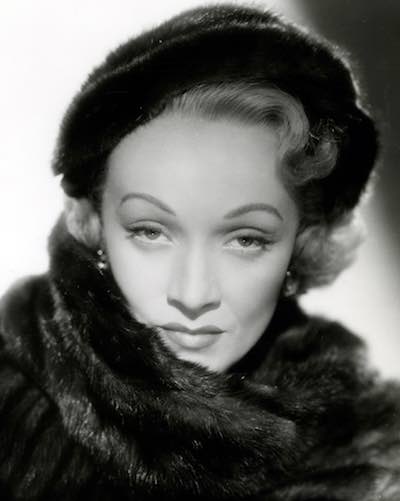
While most of JFK’s conquests were on the younger side, not all of them were. When German actress Marlene Dietrich visited the White House shortly before JFK’s death, Kennedy decided that he had to have her, too.

Dietrich, born in 1901, was sixteen years older than Kennedy. She was then already in her sixties. Dietrich quickly decided, though, that she would not turn down a chance to romp with America’s youthful, charismatic commander-in-chief.

But there was one caveat: “I was an old woman by then,” she later recounted, “and damn if I was going to be on top.”

Dietrich also reported that the encounter did not last long. JFK was fast out of the gate. That assessment conformed to other reports about our 35th president.

Marlene Dietrich

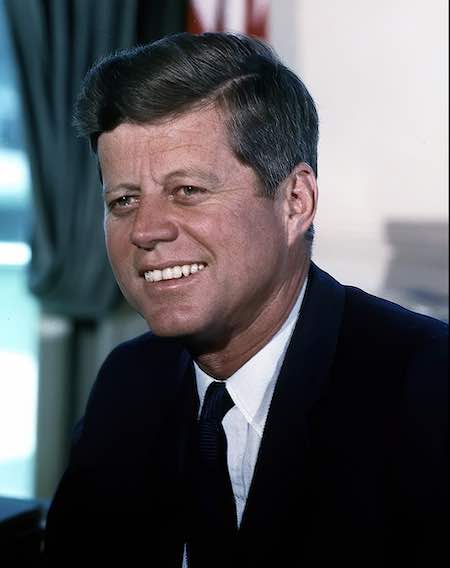
Speaking of age: JFK died at 46, when he was still in his prime. He is frozen in amber as a youngish, good-looking man.

For as long as he lived, JFK was largely attractive to women. But even during his lifetime, he showed signs of what would now be called predatory behavior. He often manipulated women into sex, and occasionally plied them with alcohol and drugs.

And speaking of age again: Some of his partners were far too young for a grown man in a position of power, even by the standards of that era.

What if JFK had not been martyred at the age of 46? What if he had served out a presumable second term and died of old age? A normal lifespan would have placed Kennedy’s death sometime in the 1990s or the early years of the twentieth century. (He would have turned 100 in 2017.)

We can assume that at a certain point—probably not far into the 1970s— the women would no longer have been quite so willing, and JFK would have met with more resistance. For JFK, sex was more than a mere biological drive. He was clearly compulsive about his conquests, and regarded sex as an extension of his power.

It is therefore not difficult to imagine JFK, had he lived, being embroiled in a sordid late-life sexual harassment scandal, not unlike those that befell both Trump and Biden. (Joe Biden was accused of sexual harassment, too, both by Senate staffer Tara Reade, and seven other women. But the mainstream media chose not to dwell on these accusations. Make of that what you will.)

Like many Americans who are too young to remember JFK in office (he died five years before I was born), I grew up thinking of Kennedy as a mythic figure. I attended Catholic schools, and a portrait of JFK hung in at least two of my K-12 classrooms, right beside portraits of the Pope and several of the saints.

But keep in mind: had he not been martyred in 1963, JFK would have been just another former president in his golden years.

I might also note that Donald Trump had no shortage of willing female partners in his 30s and 40s. In those days, Trump was not a controversial septuagenarian politician, but a glamorous tabloid billionaire. Many women wanted to be with him.

Time and age are the enemies of sex appeal. The difference between a celebrated ladies’ man and a reviled lecher is often a matter of a few years and a few wrong presumptions. Just ask Donald Trump.

-ET

View it on Amazon: Sex with Presidents: The Ins and Outs of Love and Lust in the White House

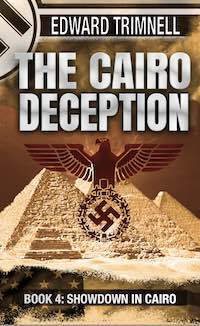
Book 4 of ‘THE CAIRO DECEPTION’ now available

The fourth book in THE CAIRO DECEPTION series is now available on Amazon:

“Betty Lehmann travels to Cairo, and finally achieves her goal of participating in a mission for the Third Reich. But she may not survive the experience. 

And even in Egypt, her past catches up with her.

Rudolf Schenk pursues the Vogels in Cairo. But there are new enemies standing in his way.

Jack McCallum is in Egypt seeking buried treasure and an easy fortune. Instead he finds a woman he cannot resist, who draws him into a Nazi plot.”

If you enjoyed the first three books, I think you’ll like this one, too.

(There is one more book in the 5-book series, and it’s in production now.)

View ‘Showdown in Cairo: Book Four of ‘The Cairo Deception’ on Amazon

Thieves and buried treasure

Coming soon:

SHOWDOWN IN CAIRO: Book 4 of THE CAIRO DECEPTION

What follows is a sneak peek at Chapter 6 of the fourth book in THE CAIRO DECEPTION, my World War II-era adventure/drama series. 

The first three books of THE CAIRO DECEPTION are already available on Amazon.

In the excerpt below, Jack McCallum, a soldier turned treasure hunter, has made a discovery in the Egyptian desert outside Cairo. 

The discovery could make him rich, set for life.

But treasure isn’t the only thing waiting in the Egyptian desert…

CHAPTER 6

The gemstone was about the size of a plum. Jack picked it up from among the clay fragments, his heart pounding. 

There were little images on one side of the stone, carved into its oblong surface. Jack recognized these as Egyptian hieroglyphics, too, though he had no idea what they said.

“Tahmid,” Jack said. “Do you realize what this is?”

“Yes, boss. I do.”

It was unbelievable. This was the Garnet of Hatshepsut. Exactly as John Millhouse had promised. 

Jack felt a sudden, not altogether unpleasant wave of dizziness. He paused for a moment, to take in the realization: He was going to be a rich man. 

“Looks like you’ve struck it rich, boss,” Tahmid said, as if reading his mind. 

Jack was distracted by the distant sound of voices, going back and forth in Arabic. 

He looked up over the side of the hole. 

There were roughly a dozen men, dressed in what approximated Arab bedouin attire. They had arrived on about as many camels. 

They were about a quarter-mile away. At present. 

Roughly half of the men were carrying rifles. The rifles appeared old, but they probably still fired. Several of the rifle-bearing men wore bandoliers criss-crossed over their chests. Many of the men were also wearing scabbards with what looked like long fighting knives.

Jack ducked down back into the hole. He raised a finger to his lips, in order to indicate that Tahmid should be absolutely silent. He pantomimed the presence of the men with his hands and fingers. 

Tahmid took a cautious peek, as well. When he ducked down again, the man’s face bore an expression of abject terror. 

“Thieves,” Tahmid said. “Like I tell you, the desert not safe place.”

“You said that it isn’t safe at night,” Jack countered. “This is the middle of the day.” Jack pointed upward, at the blazing sun.

“Sometimes dangerous during the day, boss. Better to stay in the city.”

Jack was tempted to ask Tahmid why—if he felt that way—he had hired on as a digging assistant to begin with. But that was a fruitless discussion that he had no time for.

His only concern now was those men in the desert. It was a dire situation. Those men would think nothing of murdering two treasure hunters in order to take the gemstone.

Jack thought back to his encounter in the alleyway, with the gang of eight hoodlums (led by the short man with the scar), and the advice of Rudy Gunther, who had literally saved his life that day.

Rudy had advised him to acquire a gun. Jack realized now that he should have taken that advice. But he didn’t know how much use a British Webley revolver would be, anyway, against a small army of armed men. 

There was nothing to do but wait. The men were on their way to somewhere, obviously. They had stopped for a rest, or simply to look around, perhaps using the nearby pyramid as a landmark.

If they rode by here, Jack and Tahmid were goners. If they rode in another direction, they could probably escape. 

Jack waited ten minutes. Hearing nothing, he looked up over the edge of the hole again.

The men were gone.

“How long till our ride meets us at the rendezvous point?” Jack asked Tahmid. Jack’s digging assistant took care of arranging their daily transportation. So far, he had done that with reasonable reliability and efficiency. 

Don’t let me down today, Tahmid, Jack thought. Please.

“Two hours,” Tahmid reported.

The rendezvous point was at the intersection of two poorly maintained macadam roads. The spot was out in the open. Completely exposed.

Jack didn’t think it would be advisable to go there now, and risk so much time at a vulnerable location. Not with the garnet in his possession, and with a roving band of thieves afoot. 

“We’ll leave in one hour,” he told Tahmid.

He wrapped the garnet in a clean cloth, and placed it in his pocket.

***

An hour later, Jack and Tahmid set out with their sparse equipment for the spot where their transportation would be waiting.

They reached the spot, and Jack scanned the horizon anxiously. What if the armed men returned?

Then all was lost. But this was the last big risk. If he could make it back to Cairo, he would be set. Or almost set.

A short while later, an old Ford Model A came chugging into view.

“That’s our ride,” Tahmid said.

The car was driven by two Arab men, who greeted Tahmid in Arabic, and nodded unsmilingly at Jack. They strapped the shovels and other equipment to the roof of the car. Then Jack and Tahmid piled into the back seat.

Jack remained acutely aware of the gemstone in the pocket of his trousers. This was the stone that—if he could hold on to it and get it out of Egypt—would change his life.

The Arab men chatted with Jack during the roughly half-hour ride to the edge of Cairo. Jack didn’t mind. By now he was used to people speaking a language that he couldn’t understand. (And Jack had all but given up on learning any Arabic.) Jack, moreover, was lost in his own thoughts; and he now had a lot to think about.

There was another matter, though. Jack knew nothing about these men in the front seat, or their relationship with Tahmid. What was to stop Tahmid from double-crossing him? Tahmid could tell the men about the gemstone, and arrange a robbery. Then they could plan to split the proceeds from the sale of the garnet among them. Never mind that a stone this valuable would be virtually impossible to sell in Egypt. 

When he arrived safely back in the city, however, Jack felt guilty for his suspicions during the ride. True, Tahmid had been an unmotivated and lackluster employee. There was no indication, however, that he was dishonest or prone to criminal activity. Otherwise, Jack supposed, he would having joined the crew of the scarred gangster from the alleyway, or perhaps the men on camels whom they had seen today in the desert. 

Get Book 1 of THE CAIRO DECEPTION

World War II historical fiction in Kindle Unlimited

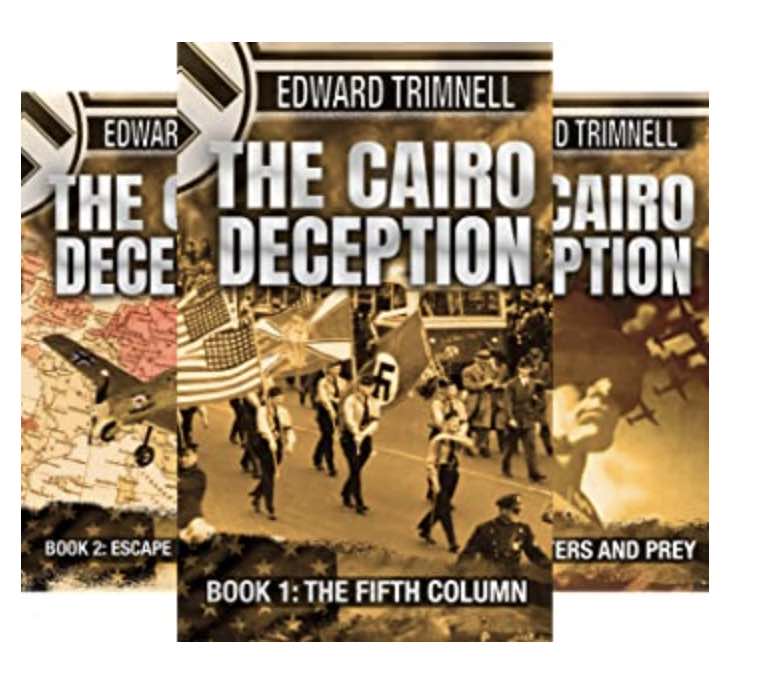
Book 3 of The Cairo Deception just dropped on Amazon. There are two more books coming, with release dates later in 2022!

Amazon description:

“An epic of espionage, sacrifice, and betrayal set in the years immediately before World War II.

A group of Germans and Americans must choose sides for and against Nazi Germany, and deal with the consequences of their decisions. 

Their stories begin in Pennsylvania, Indiana, Hamburg, and Stuttgart. They will come together in Cairo, Egypt for a showdown in 1938.”

**You can read the series for FREE in Amazon’s Kindle Unlimited program** (This is kind of like a Netflix for books, for those of you who are unaware. And yes, I do get paid when you do that, thanks!). 

Click here for Kindle Unlimited free trial:

Click here to view THE CAIRO DECEPTION series page on Amazon!

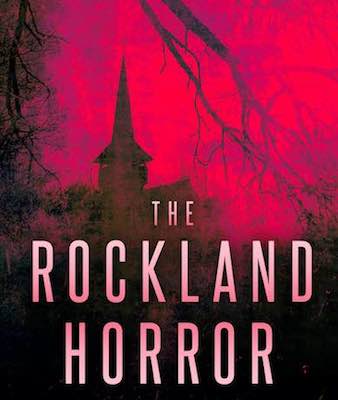
‘The Rockland Horror 4’ available for preorder

I’m presently working on The Rockland Horror 4. As the title suggests, this is the fourth installment in The Rockland Horror series. 

The release date for the book has been set for May 3, 2022. It should be available before then, however. (I would imagine sometime in January or February of next year; March at the latest.)

If you would like to order the book in advance (at a reduced price), then you can do so here, via Amazon. Another advantage to the preorder is that the book will drop automatically onto your Kindle when it comes out.

If you would prefer to wait, or if you haven’t read the first three books of The Rockland Horror series, then you can either check back here (I’ll announce the actual release with a blog post, of course) or check  The Rockland Horror series page at Amazon. 

A note on reading order.  While each of the books is a self-contained story, they are best read in order. If you haven’t read books 1, 2, and 3, I would recommend that you start with those. 

Start ‘The Rockland Horror’ series for FREE: November 1 through 5

I am working on BOOK 4 of THE ROCKLAND HORROR series. THE ROCKLAND HORROR is a multigenerational horror saga about a cursed house in Indiana.

BOOK 4 will be set in the immediate post-WWII era of 1945 to 1946. More information on that shortly.

BOOKs 1, 2, and 3 are already available on Amazon, and enrolled in Kindle Unlimited (for those of you who read through KU.)

BOOK 1 is FREE on Kindle for everyone from November 1 through 5, 2021. 

Keep in mind that Amazon manages the back end of all of this, and the exact hours at the tail end of the free run may vary, depending on your time zone. (So grab it early. Don’t wait until 11:58 p.m. on November 5.)

If you’re interested in trying out the series with a zero commitment, this is your chance.

If you’re interested in trying out Kindle Unlimited, check it out here.

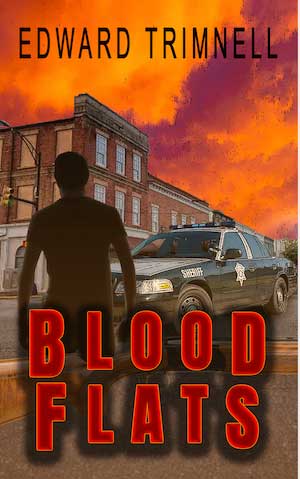
BLOOD FLATS: new cover

BLOOD FLATS, originally published in 2011, was my first novel. It is the story of a former marine who goes on a quest to clear his name after he is wrongly blamed for a double homicide.

BLOOD FLATS is the story of a journey–with lots of gunfights along the way, of course.

I reedited and republished the book last year; but the cover sorely needed updating. This is the newest cover (and the third since the book’s publication). 

View BLOOD FLATS on Amazon.

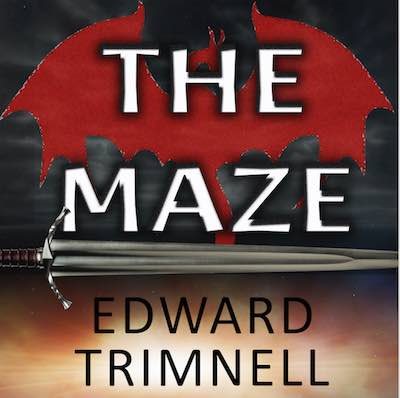
‘The Maze’: a parallel world fantasy in Kindle Unlimited

Just a quick book note here: The Maze is now available again to readers in Amazon’s Kindle Unlimited program. You can also purchase the ebook outright, or get the paperback version. 

This is a modern-day “portal”, or parallel world fantasy.

The Maze was originally published in 2013. It had good reviews, but there were a few changes I wanted to make. The book is now back on Amazon with an updated cover.

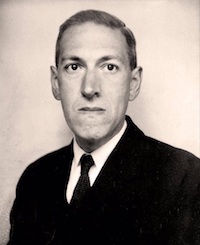
H.P. Lovecraft and first-person narration

A small addendum to my earlier post on HP Lovecraft.

I have noticed that H.P. Lovecraft has a strong preference for first-person narration.

First-person narration is neither intrinsically good nor bad. I’ve used it myself in a handful of novels, including The Eavesdropper, Termination Man, Revolutionary Ghosts, and 12 Hours of Halloween.

I suspect, however, that Lovecraft’s excessive reliance on first-person narration traces to his generally weak sense of character and characterization. As I previously noted, every Lovecraft character is essentially the same person: a solitary male engaged in arcane pursuits, often with the assistance of an uncle who is a professor at Miskatonic University.

But all writers, I should note—me included—have their quirks and habitual crutches. This is not a condemnation of Lovecraft, but merely a literary observation.

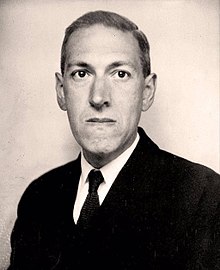
Rereading Lovecraft in 2021

I’ve been working my way through that body of H.P. Lovecraft’s fiction that is loosely based around the Necronomicon, or the Cthulhu Mythos cycle. (Actually, I am listening to the audiobook edition, mostly while I mow my lawn and work out at the gym.) This edition, read by various narrators and published by Blackstone Audio, is the edition authorized by the Lovecraft estate.

The readings are well done. The narrators take Lovecraft’s frequently purple prose seriously, without overdoing it. If you like audiobooks and you like Lovecraft, you’ll enjoy this audio collection.

Lovecraft’s body of work is partly nostalgia for me. I read most of Lovecraft’s stories during my college years. I discovered Lovecraft while browsing through the shelves of the University of Cincinnati bookstore in 1988. Also, Stephen King had mentioned him in several of his essays.

Reimmersing myself in Lovecraft after all these years, a few things stand out, both good and bad.

Let’s start with the good.

First of all, H.P. Lovecraft had an incredible imagination. When he wrote these stories, there were no horror movies. There wasn’t even much fantasy fiction as we know it today. Lovecraft died in 1937, the same year that The Hobbit was published. Yet Lovecraft created so many horror/dark fantasy tropes and conventions from thin air.

Working within the constraints of the pulp fiction era, Lovecraft did a fairly decent job of establishing continuity across his stories. The Cthulhu Mythos cycle isn’t technically a series. These stories were published individually, at different times, in various pulp magazines of the 1920s and 1930s. The marketplace more or less forced Lovecraft into the short story/novella form, and every story had to begin with a blank slate. The writer couldn’t assume that any given reader had read his previous works. Nevertheless, when Lovecraft’s stories are compiled, there is a discernible consistency running through all of them.

And yes, his purple prose. Lovecraft was hyper-literate. You can’t read, or listen to, Lovecraft’s stories without increasing your vocabulary.

Now for the not-so-good.

His narrative style. Lovecraft was a contemporary of Ernest Hemingway and F. Scott Fitzgerald. Read Hemingway’s “Hills Like White Elephants” or Fitzgerald’s “Winter Dreams”, and you’ll definitely see the differences.

Hemingway and Fitzgerald wrote in a style that we would recognize as modern. Hemingway, in particular, was well-known for his direct, economical prose. But both Hemingway and Fitzgerald thought in terms of showing, rather than telling.

Lovecraft, by contrast, writes more like Herman Melville or Thomas Hardy. Rather than creating scenes on the page, Lovecraft often simply tells you what happened. This makes his writing occasionally cumbersome to wade through, and less accessible to modern readers.

There isn’t much we can say about Lovecraft’s characters, because his characters are paper-thin. They exist only as observers of the supernatural phenomena in his stories.

There are notably few exceptions here. The two main characters in “Herbert West—Reanimator” stuck in my mind a bit longer than the characters in the other stories, who disappeared as soon as the stories were over.

The typical Lovecraft character is a scholarly male recluse who is drawn into arcane research and observations by chance, or by idle curiosity. Lovecraft has virtually no female characters. Not even any damsels in distress.

In some literary genres in recent years, there has been a tendency to depict every female main character as a tough-talking heroine who can whip every male villain she encounters, even if they’re twice her size. We often see this in television shows and movies, and no one believes it.

But Lovecraft errs in the opposite extreme: I don’t want to read female characters that were obviously crafted for the sole purpose of making a feminist statement. But I don’t want to read a fictional world that is entirely comprised of guys who can’t seem to find dates, either. 

Lovecraft’s writing also reveals his prejudices, which were extreme and extensive even by the standards of his time. Lovecraft looked down on just about everyone who wasn’t an Anglo-Saxon New England brahmin. His stories are filled with savage Africans and “swarthy”, conniving Greeks and Italians.

Not that he cared much for white, native-born rural people, either. Multiple Lovecraft stories discuss the degraded hill people who live in the backwaters of Vermont, for example.

There has been much writing, and much posturing, in recent years, about “canceling” Lovecraft because of his attitudes on race. His name was removed from a prominent award, and some book bloggers have even declared that Lovecraft’s fiction is no longer suitable for people with the “correct” attitudes on social and political issues. The hand-wringers often forget that while Lovecraft certainly didn’t like African Americans, he didn’t like much of anyone else, either. Lovecraft was an equal-opportunity snob/bigot. 

I am not going to make a show of being offended by a piece of pulp fiction that was written eighty or ninety years ago. But an undeniable fact remains: H.P. Lovecraft comes across as a rather narrow-minded person with a narrow range of experiences and interests.

That doesn’t mean that you shouldn’t read his fiction. As I said by way of disclaimer: I’ve already read all of these stories at least once. (I believe I’ve read “The Colour Out of Space” four or five times, the first time in 1988.) The scope of Lovecraft’s imagination was so broad, that these stories are worthwhile for any reader drawn to horror, dark fantasy, or so-called “weird fiction”. Lovecraft was a flawed man and a flawed writer; but he nevertheless produced some very engaging tales.

Experience ‘The Rockland Horror 2’

The Rockland Horror 2 is available on Amazon!

(But you’ll want to read the first book in the series, The Rockland Horror, first.)

Both books are filled with murder, betrayal, evil spirits, zombies, supernatural monsters, and characters you’ll never forget! 

Here’s a sample chapter from The Rockland Horror 2:

Chapter 1

August 1882

Ellen Briggs, née Ellen Sanders, was in her own house, and she was absolutely terrified.

Of course, this was not really her house, was it? It was her marital residence, where she now effectively lived in a state of captivity.

Not to mention…absolute terror.

She had married Theodore Briggs—railroad tycoon, necromancer, and murderer—only a few months ago.

In the early days of the marriage, Briggs had warned her: Stay out of unfamiliar rooms. Although the house was not old, it was home to many old secrets, Briggs had explained.

But she had forgotten his warning, in light of all that had happened since then…

Today Ellen had been wandering through the first floor of the massive house. Since her escape attempt earlier in the summer, Briggs seldom allowed her leave. But she could not sit still within these walls. If she remained in one place, she would go completely mad.

So today she had gone wandering, even though she had known better.

That was how she came across the undead child…

The door to the room containing the undead child was located adjacent to the first-floor ballroom. Ellen had opened the door, not realizing that the room connected to the basement via one of the home’s labyrinthine internal tunnels.

She reckoned that only later—after it was too late.

It was in the basement that her husband kept his worst secrets. Bodies were buried in the basement—and they didn’t always stay buried. Sometimes, they found their way to other parts of the house…

Nevertheless, this miscellaneous room had seemed harmless enough when she had first entered it. Heavy draperies were drawn on both of the room’s high windows, but some late afternoon sunlight filtered through.

The room seemed made for casual exploration. Various works of art had been stored within it. Paintings bound in frames, but not yet hung, stood stacked against all four walls.

Throughout the floor, in a random arrangement, were various statues: of nymphs, cherubs, and Greek deities. There was one life-size replica of the Venus de Milo. There were waist-high vases, and teak dividers carved in what looked like Turkish patterns.

The fortunes of Ellen’s husband were vast. He had no doubt purchased most of these items in bulk from a broker, with the intention of placing them around the house at a later date.

That work might have been left to Juba, the maidservant whom her husband had ordered killed, for her part in Ellen’s escape attempt. That same escape attempt had also resulted in her husband murdering Wilbur Craine, her former beau and would-be rescuer. 

As she made her way through the cluttered room, Ellen endeavored to push those thoughts from her mind. She couldn’t think about Juba now. And certainly not about Wilbur.

She was kneeling down on the hardwood floor, admiring one of the paintings leant against the wall, when she heard something shift from a corner of the room.

Ellen immediately looked away from the landscape painting, toward the movement. She stood up. Something had stirred behind the teak screen in the room’s far corner, near one of the windows.

The teak screen was suspended above the floor on a set of wooden legs. In the gap between the screen and the floor, Ellen could see two small feet, clad in simple leather shoes. The shoes were caked with dried mud.

The feet moved toward the edge of the screen, but not in proper steps. One foot dragged behind the other.

A small figure stepped out from behind the screen. It was short, between four and five feet tall. The very sight of it was absolutely terrifying.

Chapter 2

Ellen immediately recognized the figure as a child. And at the the same time, this was not a child at all.

There was an unholy, yellowish glow in the thing’s eyes. Ellen had seen this glow in the eyes of Ni’qua, Briggs’s undead first wife. Ni’qua lurked around the house, and appeared before Ellen when least expected.

But this child was even worse. Ni’qua had been dead for decades, after all. This victim had been taken only months ago.

“Come play with me!” the thing croaked hoarsely, through rotting lips.

Ellen didn’t speak. There was nothing to say to this thing; and that would only slow down her escape, anyway.

She needed to think.

No—she needed to get out of this room. Immediately.

Ellen turned and bolted for the door.

Behind her she could hear dragging footsteps. The child was giving chase, but Ellen moved much faster, owing to the damage Briggs and his valet had done to the child’s injured leg prior to burial.

The thing was now cursing at her—using the vocabulary of some ancient language that she did not understand.

A few more steps, and Ellen was at the threshold, then beyond it.

She had never moved faster in her life, she thought.

Then she was on the other side of the doorway.

She did not want to turn around, did not want to look back. She knew, however, that it would be necessary to close the door, lest the thing pursue her out into the hallway.

When Ellen turned around, the creature was within sprinting distance of the doorway, if not for the ruined leg.

As Ellen reached for and grasped the doorknob, an expression of bottomless rage contorted the already rotting and grimacing face. This evil before her was intelligent; it knew what she planned to do.

Ellen ignored her terror, for the time being, forced herself to focus.

She yanked on the doorknob, and slammed the door shut behind her.

Then she twisted the external catch on the doorknob. Another strange thing about this house: Her husband had designed it so that many of the rooms locked from the outside.

That done, the thing was effectively contained inside the room. A second later, there was a loud thud, as a creature that had once been a human child slammed into the closed door.

“Let me out!” it roared. The voice was ancient, booming. It echoed against the walls of the hallway.

Ellen stepped away from the closed door. She looked in one direction, and saw that the hallway terminated there in a bare wall.

In the other direction, from which she had arrived here, the hallway ended in another doorway.

With the thing still pounding on the door of the storage room, still cursing in that hideous language, Ellen made her escape through the high-ceilinged hallway. She fled toward the doorway.

There was a locking door here, too. Ellen closed it behind her and locked it.

The undead child was now locked behind two heavy doors. Was that enough to make her safe?

She shook her head at the very notion. There was no such thing as true safety in this house.

View the book on Amazon!
Supernatural horror with an American gothic twist

The Rockland Horror 2 is now available!

Recommended for fans of:

  • Stephen King
  • Peter Straub
  • H.P. Lovecraft
  • Joe Hill
  • Bentley Little

And, of course, readers of the first book in the series (or my other horror novels).

The Rockland Horror continues!

**The terrifying second installment in the multigenerational saga about a cursed house in Southern Indiana**
A young wife, an older husband, a haunted house

In 1882, twenty-one-year-old Ellen Sanders finds herself trapped in a macabre marriage to Theodore Briggs, a semiretired railroad tycoon, Civil War hero, necromancer, and murderer.

She resides in a luxurious Victorian mansion filled with evil spirits, supernatural creatures, and the undead.

Infidelity and bloodshed

As Ellen begins a rebellious extramarital affair with the Italian laborer Silvio, she sets in motion a chain reaction that will end in murder and suicide.

Horror descends on the town of Rockland

With blood spilled, the full horrors of the haunted mansion are unleashed on the town of Rockland, Indiana.

Only three people know the truth: a local lawman, a young woman with psychic powers, and an agnostic Roman Catholic priest.

But can they solve the secrets of the Briggs House in time to prevent another wave of death and destruction?

Get The Rockland Horror 2 on Amazon!

(Or, if you haven’t read Book One, start with The Rockland Horror.)