To be clear about the title of this post: no, I do not have firsthand childhood memories of World War II. I was born in 1968, twenty-three years after the war ended. By the time I became aware of names like Pearl Harbor, Hitler, and Hirohito, the war was at least thirty years in the past.
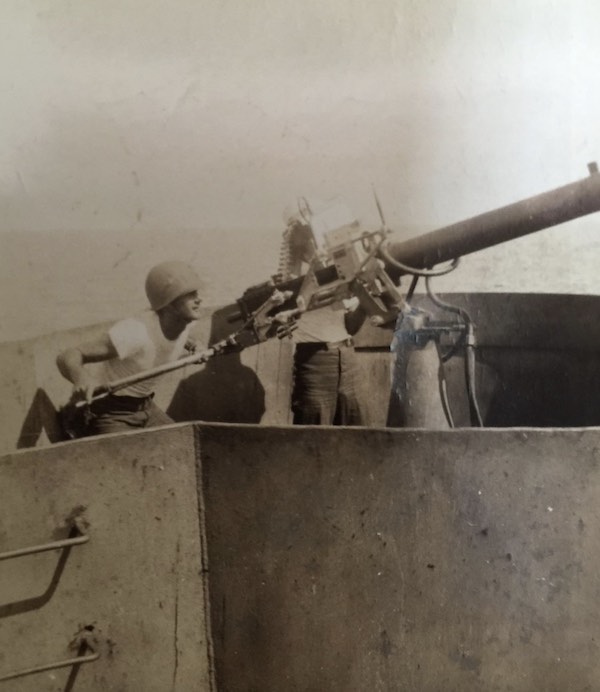
My grandfather, however (pictured above) was a WWII combat veteran. He served in the Atlantic in the US Navy. His experiences were roughly similar to those depicted in the 2020 Tom Hanks movie, Greyhound.
From a very young age, I was captivated by history. And what better way to learn about history, than by listening to the stories of a relative who actually took part in it?
My grandfather regaled me with his accounts of Egypt, Russia, the United Kingdom, and Syria. He also told me stories about fighting the German U-boats and Messerschmidts.
My grandfather was, in many ways, my first “action hero”. His experiences, though, were very common among men of that generation, who have been called (for good reason) the Greatest Generation.
I don’t remember a thing about World War II. But some of my fondest childhood memories involve listening, with rapt attention, while my grandfather told me about it. He has been gone for decades now, but I still miss him, and I miss his stories. He gave me an enduring interest in World War II, and it isn’t surprising that the war should show up in some of my stories.
Below is a series of scenes from THE ROCKLAND HORROR 4, an upcoming installment in THE ROCKLAND HORROR series.
In the following scenes, undead samurai warriors have invaded the town of Cumminsville, Kansas!
They’ve come across the Pacific Ocean and half a continent. They’re on their way to Rockland, Indiana, of course!
***
From THE ROCKLAND HORROR 4:
As the dusk fell, a man named Roy Hollis pushed back his wife’s frilly curtains from the living room window of his one-story farmhouse. Roy’s farm lay four miles outside the town limits of Cumminsville. The middle of nowhere, really.
Roy gazed out across the rows of his cornfield.
He had a bad feeling tonight.
Something foul was afoot.
The sun had begun to set about an hour ago, but there was still a trace of sunlight above the western horizon. It burned the top of the cornstalks gold, orange, and red.
Roy strained his eyes examining the cornfield. He was sure he had seen a trace of movement amid the cornstalks.
There was no wind tonight. It might have been a stoat or a bobcat. The little farm was surrounded by woods, and animals of every kind.
Roy hoped that it was something as harmless as a stoat or a bobcat.
“Whatsamatter, Pa?” Randy asked. Randy was Roy’s fourteen-year-old son.
Roy turned around, and was a little startled to see Randy standing just behind him.
“You alright, Pa?”
“I’m fine, son. It’s just—don’t sneak up on me like that, okay?”
“Sure. But what’s wrong outside? Why are you looking out the window?”
“I just thought I saw something moving out in the cornfield,” Roy said.
“You want me to fetch the .22 and go have a look?” Randy responded eagerly.
Randy was disappointed that the war had ended before he was old enough to serve. He was always looking for some excuse to fetch the family’s .22 rifle and go on a mock patrol.
“No,” Roy said. “Don’t you go out there.”
“Why?”
“Just don’t go. Now listen to me, son.”
“Yessir,” Randy said, deflated.
Randy’s other son, twelve-year-old Micah, sat at the kitchen table, poring over a copy of Life magazine.
Life magazine was filled with news about the war. Roy did not need to read Life. He already knew all about the war. He had been there, done that. Roy was a recent veteran, after all.
Although he had been married and old enough to avoid the draft, Roy had nevertheless enlisted after Pearl Harbor. He had honestly believed that Hitler and Hirohito had designs on taking over the United States. They would plant their Rising Sun and swastika flags not just in godless New York and Washington DC, but also in little salt-of-the-earth towns like Cumminsville, Kansas.
That prospect might seem far-fetched now. It had seemed all too realistic in December 1941, when Germany and Japan were winning all the battles, and taking territory left and right.
Roy had joined the United States Navy and served in the Pacific. He had had a few close calls near the end of the war, when the Japanese started going after American ships with those kamikaze suicide attacks.
His war, though, had been nothing like that of the marines who had been tasked with the duty of going ashore, and removing the enemy from their entrenched island positions. Roy was very grateful that he had chosen the Navy, and not the Marine Corps.
Since returning to Cumminsville, Roy had occasionally found himself on edge. Lingering anxiety from the war, he supposed. There were articles about that in the newspapers, too. Men who had returned from the war, but who could not remove the war from inside their own heads.
“Got a bad feeling tonight,” Roy said to no one in particular.
His wife, however, answered him from the kitchen.
“You need to relax, Roy,” Mabel Hollis said. “No one’s going to be sneaking up on the farmhouse. There are no Japanese soldiers in Cumminsville.”
Mabel was cleaning up the remains of their dinner, recently concluded.
“I know that, Mabe,” he said, closing the curtain. “I know there are no Japanese soldiers in Kansas. Of course I know that.”
Tonight, however, he wasn’t completely certain that was true. Tonight he had a bad case of the heebie-jeebies, and he couldn’t say why.
***
Some time later, the Hollis family was listening to a broadcast of The Jack Benny Program on the big Magnadyne radio in the living room of the farmhouse. Mabel, Randy, and Micah all laughed uproariously throughout the show, but Jack Benny’s jokes simply didn’t resonate with Roy like they had before the war.
By the time the thirty-minute show ended, Roy had barely cracked a smile.
Moreover, he had a persistent feeling that something was in his barn that didn’t belong there. The same thing that had been in his cornfield an hour ago.
He couldn’t have described exactly how he knew this. It came to him in a vision. Not a vivid, picture-perfect vision like the evangelical preachers sometimes claimed to have. This was a vague sensation, partly seen and partly only felt.
In any case, though, Roy sensed that it would not let him go until he checked, and knew for certain.
He began to stand up from his rocking chair.
Mabel looked over at him uneasily. She had been sitting on the sofa, working on one of her knitting projects while she listened to the radio.
Randy and Micah usually occupied the floor while the family consumed radio programs. The boys sat Indian-style throughout the broadcasts, leaning forward with rapt attention. They were still there, even though Jack Benny had just concluded.
The evening news broadcast was beginning. Randy was interested in news about the emerging postwar order—or rather, disorder. Randy was still planning to enlist when he turned eighteen. He said that by then, there would be another war, this one with the Ruskies.
Now Randy and Micah were looking up at their father, though. Roy stood in the middle of the living room.
“I think I’ll go have a look-see in the barn,” he said.
“Why?” Mabel asked. “Did you hear something?”
“No,” Roy answered. This was the truth. Also, Mabel was no fool. There was no way she would believe that he had heard something in the barn while Jack Benny was playing on the radio. No one’s hearing was that sharp.
“Want me to—?” Randy began.
“No,” Roy said. “Stay here with your mother and brother.”
***
Roy did not take the .22 rifle to the barn with him. He took a 12-gauge shotgun that he kept in the home’s mud room, immediately off the kitchen.
Before he set off, he lit a kerosene lantern. That would not only light the way, it would also keep the mosquitos at bay.
Roy desperately hoped that all of this would turn out to be nothing, that a few hungry mosquitos would be the worst perils he would encounter on his way to the barn and back.
He exited the farmhouse through the door off the mudroom. He began his walk out to the barn, the lantern in one hand, the 12-gauge in the other.
The short walk, across the main yard and skirting the edge of the main cornfield, was uneventful. No mosquitos, even.
Then he came to the big, unpainted wooden barn. The barn had been there since the late 1800s, when Roy’s grandfather, father, and uncles had built it.
He pushed the sliding barn door open, making it creak on its runners. He set the lantern down in the grass while he did this, to free one hand.
The barn door open, Roy picked up the lantern again and looked inside. He was reminded again that he needed to electrify the barn, now that he was home for good. That had been on his to-do list even before the war. There was adequate light, though, between the lantern, and what moonlight came in through the barn’s two clear glass windows.
The family had one horse, a gelding named Priam. Priam was edged back against the rear of his stall. The horse’s eyes were blank, almost as if the animal were drugged.
Priam was…scared? Was that possible?
Roy set the kerosene lantern on his nearby workbench. (He kept the 12-gauge in his right hand.) Then he spoke soothingly to the horse.
“Whatsamatter, Priam?”
The horse did not answer him. He just continued to stare at Roy with those blank, dark eyes of his.
What was there for Priam to be afraid of? There were no wolves in this part of Kansas; there hadn’t been for nearly a hundred years.
And on a related matter: why, exactly, had he deemed it necessary to come out here?
It was just that very intense feeling he had gotten, while listening to Jack Benny. And that half-formed vision of an intruder
Roy heard something shift behind him. He turned around and saw the intruder. And yet, that description did not really do justice to what he saw.
The creature standing in the open doorway of the barn looked vaguely like a Japanese soldier from the late conflict. And yet, it wasn’t a Japanese soldier, either. It was some hideous malformation that was based on a Japanese soldier, but it had elements of something else.
Since returning from the war, Roy had taken an odd interest in Japanese history and culture. This interest bewildered even him. But he felt a compulsive need to learn more about his former enemy.
There were several books on Japanese history in the Cumminsville public library. These books informed Roy that Japan had long been a martial society. He had read about the samurai warriors, who had hacked each other to pieces with curved, razor-sharp swords.
The samurai had dressed for combat in armor that was designed to intimidate the enemy, as well as protect the wearer. Roy had seen illustrations of the old samurai warriors, clad in full battle gear.
The creature standing in the open doorway of the barn looked something like one of those medieval samurai warriors. Or a misshapen version of that.
The thing had glowing red eyes.
“Wha—?” Roy said, trembling.
The intruder opened its mouth, revealing rows of long, canine teeth. No—more like crocodile teeth.
In the space of just two seconds, a complicated series of thoughts went through Roy’s mind. There was no way he could even begin to understand what this thing was, or exactly what it wanted.
What was clear enough was that it was hostile. He had to kill it now, or it would kill him.
Roy began to raise the shotgun.
But the intruder was too fast.
Roy Hollis’s shotgun did go off in the final second of his life, as the intruder raced forward at him, but the muzzle of the gun was knocked astray. The shotgun boomed, and buckshot scattered harmlessly into the far wall of the barn.
Roy’s blood splattered on the wall of the barn, too.
Priam, the gelding, began bucking and whinnying in his stall.
The horse drew the attention of the supernatural creature.
The intruder moved with impossible speed, covering the floorspace of the barn in a mere second.
A few seconds after that, Priam was silent, too.
***
“Did you hear that?” Randy said, addressing his mother and younger brother. “Out there in the barn, I mean.”
Micah and Mabel nodded. They had all heard the sound of the shotgun going off. They had also heard Priam, whinnying in what sounded like distress, before his whinnying was abruptly cut silent. This far out in the country, sounds carried long distances with clarity. And the barn was a short walk from the house.
“I heard it,” Mabel said. Then she added, hopefully, “Your pa might have killed a weasel or a skunk out there.”
Randy didn’t immediately contradict his mother, but he didn’t share her interpretation, either. That wouldn’t explain why Priam had whinnied, and then gone instantly silent.
“I’m going out there to see,” Randy said.
Mabel began to object. Randy, in a rare act of outright adolescent defiance, cut her off.
“I’m going out there,” he said. “Pa may be in trouble. He may need my help.”
“All right,” she acquiesced. “But give him a few more minutes, okay? Then you can go out there and see.”
“A few more minutes,” he agreed. “Then I need to go.”
***
Randy stood on the front porch of the farmhouse, holding the twenty-two.
His mother had still not liked the idea of him going outside to investigate. But when another ten minutes had passed with no sign of Roy, Mabel had relented.
Looking out into the night, Randy called out for his father.
“Pa! Are you there?”
No answer.
Then a dark blur, roughly the size of a man, moved across his field of vision, in front of the barn.
Randy blinked. The shape had moved so fast that he could not fully catch sight of it, especially with the darkness factored in.
Then another blur. And another. Both of similar size and shape.
Then more blurs, rushing to and fro.
There were three shapes in total. They were moving across the yard in a bizarre, zigzagging pattern.
Randy knew, somehow, that these things were responsible for whatever had happened to his father.
(And something had to have happened; because his father had not returned to the house, or answered Randy’s calls.)
But what the heck were they? He had anticipated nothing like this.
“Where’s my pa?” Randy shouted, his voice trembling.
One of the blurs paused, perhaps midway between the barn and the front porch of the house.
It looked at Randy. And now Randy could see it, partially illuminated by the moonlight. But he could not believe it.
Randy took in the creature’s glowing red eyes. Its mouth opened, exposing razor-sharp teeth.
His hands shaking, Randy aimed the twenty-two and fired.
The thing darted out of the way,before Randy had even pulled the trigger.
Randy lowered the gun. Beneath his terror, and his dread regarding the fate of his father, was bewilderment. How had it moved so quickly? The thing traveled at a blinding speed, like a large, monstrous hummingbird.
That was the last thought that would ever go through fourteen-year-old Randy Hollis’s mind.
One of the thing’s companions took Randy from his right side. Randy never even saw it coming; and he never learned the full truth of what had happened to his father, either.
That’s the end of the excerpt!
This is a secondary plot line—which takes place far from Rockland, Indiana. But it will give you a taste of that the book will be like.
THE ROCKLAND HORROR is where history meets horror!
THE ROCKLAND HORROR 4 will be released in early April!
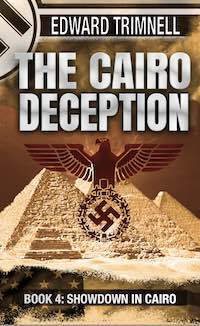
The fourth book in THE CAIRO DECEPTION series is now available on Amazon:
“Betty Lehmann travels to Cairo, and finally achieves her goal of participating in a mission for the Third Reich. But she may not survive the experience.
And even in Egypt, her past catches up with her.
Rudolf Schenk pursues the Vogels in Cairo. But there are new enemies standing in his way.
Jack McCallum is in Egypt seeking buried treasure and an easy fortune. Instead he finds a woman he cannot resist, who draws him into a Nazi plot.”
If you enjoyed the first three books, I think you’ll like this one, too.
(There is one more book in the 5-book series, and it’s in production now.)
How about a story set in the period immediately before World War 2, featuring Nazi undercover agents, in both Germany and America?
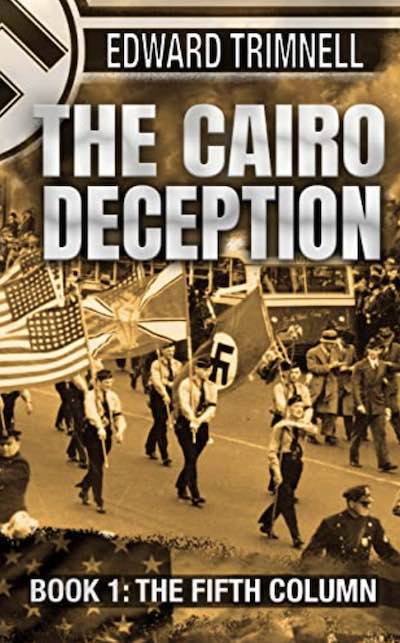
THE FIFTH COLUMN, Book One in THE CAIRO DECEPTION, will be FREE on Amazon Kindle from March 5 through March 9!
Description:
In 1938, 19-year-old Betty Lehmann is the town beauty of Dutch Falls, Pennsylvania. She’s also a member of the German-American Bund, and an undercover agent-in-training for Nazi Germany.
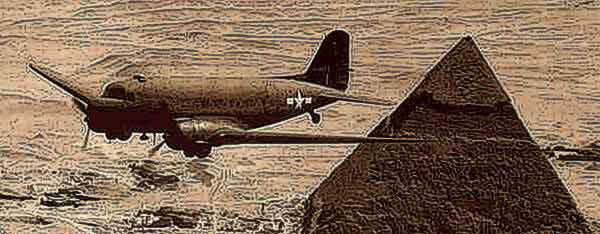
In the excerpt below, Jack McCallum, a soldier turned treasure hunter, has made a discovery in the Egyptian desert outside Cairo.
The discovery could make him rich, set for life.
But treasure isn’t the only thing waiting in the Egyptian desert…
CHAPTER 6
The gemstone was about the size of a plum. Jack picked it up from among the clay fragments, his heart pounding.
There were little images on one side of the stone, carved into its oblong surface. Jack recognized these as Egyptian hieroglyphics, too, though he had no idea what they said.
“Tahmid,” Jack said. “Do you realize what this is?”
“Yes, boss. I do.”
It was unbelievable. This was the Garnet of Hatshepsut. Exactly as John Millhouse had promised.
Jack felt a sudden, not altogether unpleasant wave of dizziness. He paused for a moment, to take in the realization: He was going to be a rich man.
“Looks like you’ve struck it rich, boss,” Tahmid said, as if reading his mind.
Jack was distracted by the distant sound of voices, going back and forth in Arabic.
He looked up over the side of the hole.
There were roughly a dozen men, dressed in what approximated Arab bedouin attire. They had arrived on about as many camels.
They were about a quarter-mile away. At present.
Roughly half of the men were carrying rifles. The rifles appeared old, but they probably still fired. Several of the rifle-bearing men wore bandoliers criss-crossed over their chests. Many of the men were also wearing scabbards with what looked like long fighting knives.
Jack ducked down back into the hole. He raised a finger to his lips, in order to indicate that Tahmid should be absolutely silent. He pantomimed the presence of the men with his hands and fingers.
Tahmid took a cautious peek, as well. When he ducked down again, the man’s face bore an expression of abject terror.
“Thieves,” Tahmid said. “Like I tell you, the desert not safe place.”
“You said that it isn’t safe at night,” Jack countered. “This is the middle of the day.” Jack pointed upward, at the blazing sun.
“Sometimes dangerous during the day, boss. Better to stay in the city.”
Jack was tempted to ask Tahmid why—if he felt that way—he had hired on as a digging assistant to begin with. But that was a fruitless discussion that he had no time for.
His only concern now was those men in the desert. It was a dire situation. Those men would think nothing of murdering two treasure hunters in order to take the gemstone.
Jack thought back to his encounter in the alleyway, with the gang of eight hoodlums (led by the short man with the scar), and the advice of Rudy Gunther, who had literally saved his life that day.
Rudy had advised him to acquire a gun. Jack realized now that he should have taken that advice. But he didn’t know how much use a British Webley revolver would be, anyway, against a small army of armed men.
There was nothing to do but wait. The men were on their way to somewhere, obviously. They had stopped for a rest, or simply to look around, perhaps using the nearby pyramid as a landmark.
If they rode by here, Jack and Tahmid were goners. If they rode in another direction, they could probably escape.
Jack waited ten minutes. Hearing nothing, he looked up over the edge of the hole again.
The men were gone.
“How long till our ride meets us at the rendezvous point?” Jack asked Tahmid. Jack’s digging assistant took care of arranging their daily transportation. So far, he had done that with reasonable reliability and efficiency.
Don’t let me down today, Tahmid, Jack thought. Please.
“Two hours,” Tahmid reported.
The rendezvous point was at the intersection of two poorly maintained macadam roads. The spot was out in the open. Completely exposed.
Jack didn’t think it would be advisable to go there now, and risk so much time at a vulnerable location. Not with the garnet in his possession, and with a roving band of thieves afoot.
“We’ll leave in one hour,” he told Tahmid.
He wrapped the garnet in a clean cloth, and placed it in his pocket.
***
An hour later, Jack and Tahmid set out with their sparse equipment for the spot where their transportation would be waiting.
They reached the spot, and Jack scanned the horizon anxiously. What if the armed men returned?
Then all was lost. But this was the last big risk. If he could make it back to Cairo, he would be set. Or almost set.
A short while later, an old Ford Model A came chugging into view.
“That’s our ride,” Tahmid said.
The car was driven by two Arab men, who greeted Tahmid in Arabic, and nodded unsmilingly at Jack. They strapped the shovels and other equipment to the roof of the car. Then Jack and Tahmid piled into the back seat.
Jack remained acutely aware of the gemstone in the pocket of his trousers. This was the stone that—if he could hold on to it and get it out of Egypt—would change his life.
The Arab men chatted with Jack during the roughly half-hour ride to the edge of Cairo. Jack didn’t mind. By now he was used to people speaking a language that he couldn’t understand. (And Jack had all but given up on learning any Arabic.) Jack, moreover, was lost in his own thoughts; and he now had a lot to think about.
There was another matter, though. Jack knew nothing about these men in the front seat, or their relationship with Tahmid. What was to stop Tahmid from double-crossing him? Tahmid could tell the men about the gemstone, and arrange a robbery. Then they could plan to split the proceeds from the sale of the garnet among them. Never mind that a stone this valuable would be virtually impossible to sell in Egypt.
When he arrived safely back in the city, however, Jack felt guilty for his suspicions during the ride. True, Tahmid had been an unmotivated and lackluster employee. There was no indication, however, that he was dishonest or prone to criminal activity. Otherwise, Jack supposed, he would having joined the crew of the scarred gangster from the alleyway, or perhaps the men on camels whom they had seen today in the desert.
Book 3 of The Cairo Deceptionjust dropped on Amazon. There are two more books coming, with release dates later in 2022!
Amazon description:
“An epic of espionage, sacrifice, and betrayal set in the years immediately before World War II.
A group of Germans and Americans must choose sides for and against Nazi Germany, and deal with the consequences of their decisions.
Their stories begin in Pennsylvania, Indiana, Hamburg, and Stuttgart. They will come together in Cairo, Egypt for a showdown in 1938.”
**You can read the series for FREE in Amazon’s Kindle Unlimited program** (This is kind of like a Netflix for books, for those of you who are unaware. And yes, I do get paid when you do that, thanks!).
The third book in THE CAIRO DECEPTION series will be released on Amazon on February 28:
Here’s the bookstore description:
Betty Lehmann travels to Berlin, where she discovers a new sense of purpose as an agent of the Third Reich.
Ingrid and Heinrich Vogel begin their new lives in Cairo. They find that they have not gone nearly far enough to avoid the grasp of the German Gestapo.
In the United States, an American soldier is forced to commit a fatal act of self-defense. He flees to Cairo in search of treasure and a fresh start.
This installment introduces a new character: Jack McCallum, a young American soldier-turned-treasure-hunter from Indiana.
If you’ve enjoyed the previous two books in the series, I think you’ll like this one, too.
Oh, I should also note that HUNTERS AND PREY (like the previous two books in the series) will be enrolled in Amazon’s Kindle Unlimited subscription service. This means that you can read the series for free if you’re an Amazon Kindle Unlimited subscriber. (Click here for a free Kindle Unlimited trial.)
I’m presently working on The Rockland Horror 4. As the title suggests, this is the fourth installment in The Rockland Horror series.
The release date for the book has been set for May 3, 2022. It should be available before then, however. (I would imagine sometime in January or February of next year; March at the latest.)
If you would like to order the book in advance (at a reduced price), then you can do so here, via Amazon. Another advantage to the preorder is that the book will drop automatically onto your Kindle when it comes out.
If you would prefer to wait, or if you haven’t read the first three books of The Rockland Horror series, then you can either check back here (I’ll announce the actual release with a blog post, of course) or check The Rockland Horror series page at Amazon.
A note on reading order. While each of the books is a self-contained story, they are best read in order. If you haven’t read books 1, 2, and 3, I would recommend that you start with those.
Keep in mind that Amazon manages the back end of all of this, and the exact hours at the tail end of the free run may vary, depending on your time zone. (So grab it early. Don’t wait until 11:58 p.m. on November 5.)
If you’re interested in trying out the series with a zero commitment, this is your chance.
If you’re interested in trying out Kindle Unlimited, check it out here.
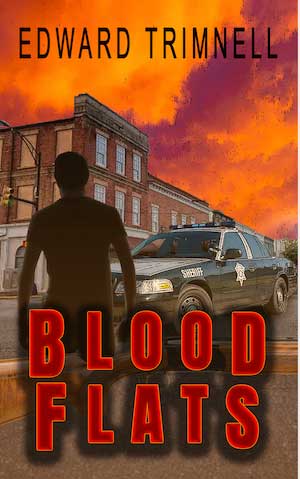
BLOOD FLATS, originally published in 2011, was my first novel. It is the story of a former marine who goes on a quest to clear his name after he is wrongly blamed for a double homicide.
BLOOD FLATS is the story of a journey–with lots of gunfights along the way, of course.
I reedited and republished the book last year; but the cover sorely needed updating. This is the newest cover (and the third since the book’s publication).
It was a chilly, wet day in March 1917, and thirty-year-old Joe Cullen was overdue for a smoke break.
Joe shot a quick glance over his shoulder. He wanted to make sure that his foreman was nowhere in sight.
Joe was relieved to find himself completely alone on the tree-lined road. All around him, there was nothing but the silent woods. And the light, cold moisture falling from the leaden sky.
Well, almost nothing. There was the Briggs House, too.
This thought made him smile self-consciously. Country people and their superstitions. Never mind that Joe was as country as they came. He also read books, dagnabbit. He had knowledge of the broader world.
He bent and laid his shovel down in the long, sallow, late-winter grass at the edge of the road. The road itself was muddy, owing to the wet weather. He did not want the handle of his shovel to get muddy, too. He still had a lot of work to do with that shovel before quitting time.
That done, he stood, removed his gloves, and slipped them into the lower left side pocket of his coat. From the lower right side pocket he removed a box of Lucky Strikes and a box of wooden matches.
Joe was wearing a broad-rimmed hat, a treated canvas raincoat, and heavy boots. The overhanging tree branches—though still bare of leaves—also caught some of the light rainfall. But when you were working outside in weather like this for an entire day, it was impossible to avoid either the dampness or the chill.
Today’s precipitation was not a hard, driving rain; but it was a steady, unrelenting spittle that varied between mist and drizzle. Fireplace weather, Joe’s mother would have said.
But there would be no fireplace for Joe today—not until quitting time, at least; and that was still several hours away.
***
Joe was currently employed by the Indiana Department of Transportation, a brand-new state agency created by the Indiana Highway Act of two years prior. Joe was part of a crew that had been charged with preparing Washington Hill Road for paving.
At present, the road was all packed earth and gravel. It was literally the same road that had been used in the pioneer days. Washington Hill Road turned to mud every springtime, or even during a midsummer thunderstorm. That might have been suitable for the age of the horse. It would not do for the age of the automobile.
As he paused to light his cigarette—cupping both the cigarette and the match in his hands to shield them against the moisture in the air—Joe allowed himself a look at the Victorian mansion that was impossible to miss at this point on Washington Hill Road.
The Briggs House rose above him in the distance. The decrepit monolith appeared old-fashioned and dark, even when silhouetted against today’s cloudy gray sky.
The Briggs House was on the left side of the road. It stood at the top end of a long, winding, overgrown private lane that rose to a promontory. When the trees were bare, the roofline of the mansion could be partially glimpsed far below Washington Hill, Joe knew. He was a lifelong resident of Rockland, Indiana.
He smiled to himself, and took a drag on his cigarette. Joe Cullen knew all about the Briggs House—the murders, the whispered stories of witchcraft and necromancy. Much of that was pure fabrication, and at least half of it was pure nonsense.
Joe Cullen had no way of knowing that within a matter of minutes, he would hold an entirely changed attitude about the Briggs House.
About The Rockland Horror saga:
“A terrifying multigenerational horror saga set in a cursed house in Indiana. Zombies, evil spirits, and supernatural monsters!”
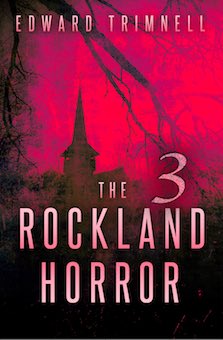
The third installment of The Rockland Horror saga is now available on Amazon:
The 20th century holds new horrors for Rockland, Indiana!
The year is 1917. In faraway Europe, the Great War rages on. The world waits anxiously to see if U.S. President Woodrow Wilson will take America into the conflict.
By now, the events of 1882 are fading into the stuff of legend, for all but the town of Rockland’s oldest residents.
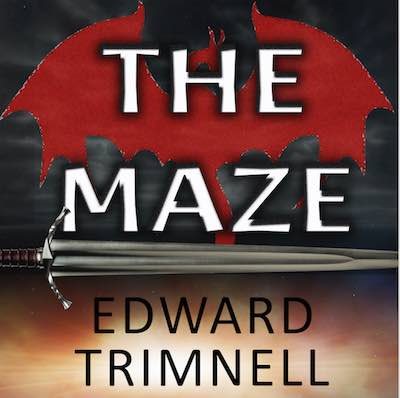
Just a quick book note here: The Maze is now available again to readers in Amazon’s Kindle Unlimited program. You can also purchase the ebook outright, or get the paperback version.
This is a modern-day “portal”, or parallel world fantasy.
The Maze was originally published in 2013. It had good reviews, but there were a few changes I wanted to make. The book is now back on Amazon with an updated cover.