The Iran Hostage Crisis of 1979 is one of the first major global events that I remember.
I was 11 years old on November 4, 1979, when Iran’s revolution came to a head, and a mob of student militants overran the US Embassy in Tehran. The student militants took 66 American hostages. 52 of these hostages would remain in Iran until January, 1981.
American hostages in Tehran, Iran in 1979
I followed the 444-day crisis on the news. But being 11 years old, I was sketchy on most of the historical background.
I’ve read a lot more about the crisis since then. I’m presently finishing up the above book, Guests of the Ayatollah: the First Battle in America’s War with Militant Islam, by Mark Bowden.
Bowden’s book includes not only the overarching historical details, but also many individual stories: of the hostages, and others whose lives were impacted.
Definitely worth a read if this is a subject that interests you!
Hello, Dear Reader. I hope you have a safe and happy Memorial Day, and remember those who made the ultimate sacrifice in the service of the USA.
For traditional holidays like this one, you can’t beat Norman Rockwell. The artist painted the above work, Homecoming Marine, in 1945.
If you look closely, you’ll see that the painting conveys a significant amount of backstory. The young marine, and his relationship to the setting, are evident in the painting. The painting also gives us a rough idea of where he served. (Hint: not Europe.)
The obvious youth of the marine in the painting reminds me that at 55, I am now decades older than most of those who served in World War II and all subsequent wars.
I am also humbled. I have never served in the military. But I send out my appreciation and respect to those who have, and do.
I am a diehard fanatic of only a handful of books, movies, and musical oeuvres. And I evangelize only a subset of those.
For example, I love the music of Rush and Iron Maiden; but I don’t consider the appeal of these bands to be universal, by any means. Likewise, I realize that a coming-of-age movie that spoke volumes to me in 1984 might not have the same significance for a teenager of 2024. Or for a Boomer who was a teenager in 1964, for that matter.
But everyone should see The Americans.
The Americans is part family saga, part period drama, and part espionage thriller. The show is set in both America and Russia during the last decade of the Cold War.
I watched The Americans in its entirety during the show’s original primetime run on FX from 2013 to 2018. During those years, I looked forward to each new episode.
I loved the series so much, I recently decided to watch it again. But as is so often the case with these modern conveniences of ours, the situation has been made less convenient than it would have been in pre-Internet days. No longer do non-primetime shows circulate to rerun syndication in non-primetime hours. They move to paid streaming platforms.
If you want to see all six seasons of The Americans in 2024, you have several options. You can pay to download each episode from Amazon, or you can purchase a subscription to Hulu, where the series is now streaming.
Or you can purchase the complete series on DVD. I determined this to be my best and most cost-effective option. The above package arrived on my doorstep from Amazon yesterday.
I look forward to watching this series again from beginning to end. And if you haven’t yet seen The Americans, you might consider buying the DVDs, too. They are still in stock on Amazon.
I just finished reading Stephen King’s fantasy-horror-adventure novel, Fairy Tale.
This being a recent Stephen King novel, it’s been summarized in detail throughout the Internet, so I’ll stick with the high points here.
Length, scope, and pacing
This is a long book (almost 600 pages).
Fairy Tale begins with a coming-of-age plot, something that Stephen King has always done well. That goes on for about 200 pages before the fantasy part really gets going.
The fantasy portion of the novel takes place in a parallel world called Empis. Fairy Tale is almost like two stories stuck together. Depending on your tastes, that may be a feature, and it may be a bug.
Overall, Fairy Tale takes a long time to get going. The grand finale is a page-turner, but there are long sections of this very long book that are extremely slow-burn, and kind of a slog.
Stephen King’s evolved style
I should provide a bit of context here. Sometime in the late 1980s/early 1990s, Stephen King’s style changed dramatically. In the 1970s and early 1980s, he wrote plot-driven stories that were tightly structured with minimal fat (Stephen King’s well-known aversion to outlining notwithstanding).
I became a rabid King fan based on the early novels: ‘Salem’s Lot, Christine, The Dead Zone, The Shining, etc.
Some of those early books were actually quite long. But you never noticed, because the plots were so engaging.
Later on, King started writing long, meandering novels like Duma Key, Desperation, The Outsider, etc. I first noticed the change in style with It (1986), but the longer, slower storytelling has been a consistent feature of Stephen King’s writing for decades now.
And some fans, I should note, prefer the later style. 11/22/63 is an 850-page fantasy/alternate history tale that was published in 2011. It has a huge fanbase. It left me very lukewarm. Give me Pet Sematary or Cujo any day.
Or better yet, King’s first short story collection, Night Shift.
Among the books that King has written and published since 1990, I have definitely tended to prefer the novellas, short story collections, and short novels. I particularly liked Joyland (2013) and The Girl Who Loved Tom Gordon (1999).
Am I glad I read ‘Fairy Tale’?
Overall, yes. This is still a good book, compared to most of the horror/fantasy novels being published nowadays.
I am admittedly prejudiced, because as an early (since 1984) reader of Stephen King, I always want him to write the kind of book that he might have written in 1978 or 1982. And lo and behold, he rarely does.
That’s rather presumptuous on my part, of course…especially since Stephen King’s longer, less plot-driven style has been a thing for 30 years now.
Some books bring back memories. And so it is for me, with Stephen King’s illustrated novella, Cycle of the Werewolf.
I remember purchasing this book at the B. Dalton bookstore in Cincinnati’s Beechmont Mall in the mid-1980s. I had only recently become a Stephen King fan, and I was working my way through his entire oeuvre, which then consisted of about ten years’ worth of novels and collections.
The copy I bought in the 1980s has long since been lost. I’m glad to see that the book is still available, with the original illustrations from Bernie Wrightson.
You can get a copy of Cycle of the Werewolf on Amazon by clicking here.
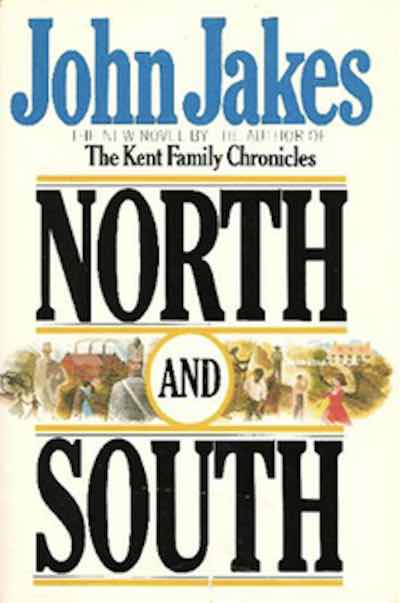
I discovered the books of historical novelist John Jakes (1932 – 2023) as a high school student during the 1980s. The television miniseries adaptation of his Civil War epic, North and South, aired in 1985.
North and South was extremely well-done for a network (ABC) television production of the mid-1980s. The cast included Patrick Swayze, Kirstie Alley, David Carradine, Lesley-Anne Down, and Parker Stevenson. The sets were realistic and the production values were high.
After watching that, I decided to give John Jakes’s books a try. I read North and South(1982), plus the subsequent two books in the North and South trilogy, Love and War (1984) and Heaven and Hell (1987).
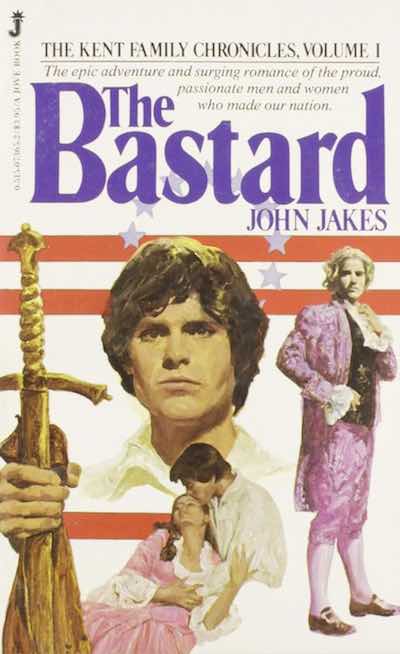
Then I delved into The Kent Family Chronicles. The books in this long family saga were published between 1974 and 1979. These are the books that really put Jakes on the map as an author of commercial historical fiction.
I emphasize commercial. John Jakes never strove for the painstaking historical accuracy of Jeff Shaara, or his approximate contemporary, James Michener. Jakes’s first objective was always to entertain. If the reader learned something about the American Revolution or the Civil War along the way, that was icing on the cake.
As a result, John Jakes’s novels lie somewhere along the spectrum between literary fiction and potboilers. His characters are memorable and he imparts a sense of time and place. But these are plot-driven stories.
At the same time, Jakes’s plots have a way of being simultaneously difficult to believe and predictable. Almost all of his books have a Forrest Gump aspect. His characters are ordinary men and women, but they all seem to rub shoulders with figures from your high school history classes.
That said, Jakes is one of the few authors whose books pleased both the teenage me and the fiftysomething me. This past year, I started rereading The Kent Family Chronicles, and catching up on the few installments I missed back in the 1980s. I have changed as much as any person changes between the ages of 17 and 55, but I still find these books to be page-turners.
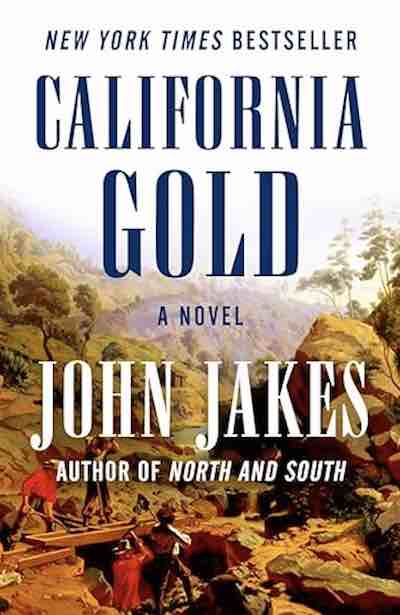
This past week, I started listening to the audiobook version of California Gold. This one was published in 1989, after Jakes’s long run of success with The Kent Family Chronicles and the North and South trilogy.
California Gold is the story of Mack Chance, a Pennsylvania coal miner’s son who walks to California to seek his fortune in the 1880s.
I will be honest with the reader: I don’t like California Gold as much as Jakes’s earlier bestsellers. California Gold is episodic in structure, and the main character is far less likable than some of Jakes’s earlier creations. In California Gold, Jakes indulges his tendency to pay lip service to the issues of the day (in this case: the budding American labor movement and early feminism) through the voices of his characters. Most of these pronouncements are politically correct and clichéd.
Worst of all, California Gold employs sex scenes as spice for low points in the plot. This is always a sign that a writer is struggling for ideas, or boring himself as he writes. When Jakes wrote California Gold, he may have been a little burned out, after writing The Kent Family Chronicles and the North and South trilogy.
California Gold, though, won’t be tossed aside on my did-not-finish (DNF) pile. This is still a good novel. Just not the caliber of novel I’d come to expect from John Jakes. No novelist, unfortunately, can hit one out of the park every time.
There really was something special about growing up in an era when video games were not old hat, but something brand-new and on the cutting edge of the technology of that time.
I suppose I like my 21st-century iPhone and my MacBook as much as the next person, but they are tools for me, not objects of indulgence. I don’t think I’ve ever enjoyed anything quite as much as that first Atari console I received for Christmas in 1981.
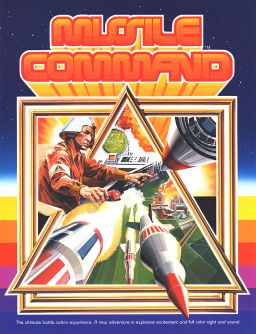
Did I have a favorite game? Of course I did. Space Invaders, hands down. Missile Command came in a close second, though.
Today’s solar eclipse was a bit anticlimactic here in Cincinnati. The local news channels all predicted a 99.2 percent eclipse in my area just outside the city.
That didn’t happen, not by a long shot:
Me, eagerly awaiting the full eclipse as the shadows start to lengthen
This is going to get good any minute now! I tell myself. But I am already growing skeptical.
The high point of the eclipse, at around 3:20 p.m. EST. The sun has been noticeably dimmed, but it’s a long way from dark.
What can I say? Here in Cincinnati, the local weather forecasts are right only about 50 percent of the time. Why should the eclipse forecast be any different?
This was worth walking outside for, but I’m glad I didn’t make a day of it.
I hope the eclipse was better for you, if you live in an area that was forecast to experience it.
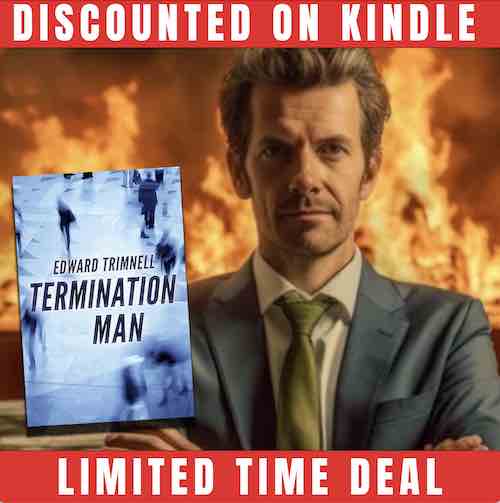
Termination Man is a corporate mystery/thriller. I wrote this story in 2012, and it was inspired by my experiences in the automotive industry.
I also took inspiration from some of the more unsavory corporate HR practices I’d read about, including the controversial practice of “managing out” an unwanted employee. (This basically means: making the employee’s life so unpleasant that he or she will want to quit.)
Who should read Termination Man? This is a good fit for readers who already like the corporate/financial thrillers of Joseph Finder. Fans of John Grisham will find significant overlap, too.
Termination Man will be available on Amazon Kindle at a reduced price through the end of this weekend. Kindle Unlimited members can read it there gratis, too.
One of those is Bobby Mackey’s Music World in Wilder, Kentucky. (I live in suburban Cincinnati, Ohio. But Wilder, Kentucky is less than thirty minutes from my front door. I’m a hop, skip, and a jump from the Ohio River.)
Bobby Mackey’s has been the subject of many paranormal studies and documentaries over the decades. I won’t venture a guess as to whether or not the site is haunted, but the building (a former slaughterhouse) is loosely associated with a gruesome murder that occurred in 1896.
The murder itself is a matter of historical record. Two men beheaded a young woman, Pearl Bryan, nearby. Bryan was pregnant at the time, and one of the murderers was the father.
The killers were promptly caught and hanged for the despicable crime. But Pearl’s head was never found.
Guess where urban legends say the head ended up? Bryan’s headless body was found 2.5 miles away, in Fort Thomas, Kentucky. But if you believe the local legends, the killers tossed Pearl’s severed head down a well in the basement of the slaughterhouse that would become Bobby Mackey’s Music World in 1978.
Photo by Nicolas Henderson
Over the years, many patrons of Bobby Mackey’s have reported various phenomena: cold spots, disembodied voices, and worse. Above the main bar hangs a disclaimer, stating that the building is haunted, and that management is absolved of all responsibility for injuries or trauma caused by wayward spirits.
I’ve also talked to patrons who report that the only danger is the very living, very human clientele. Bobby Mackey’s has a reputation as a mildly dangerous place. Despite its popularity on the ghost tour circuit, the bar draws a rough-and-tumble crowd on the weekends. But if you’re a certain kind of person, that’s part of the charm, maybe.
No, I have never been there myself. Partly because I don’t like the bar scene (especially the country music bar scene), and partly because I don’t like to tempt the paranormal…especially when demonic forces are said to be involved, as is the case here.
I don’t know if the stories about Bobby Mackey’s Music World are true or not, but I don’t want to find out.
And now it looks like I won’t get the chance, anyway. The 76-year-old Bobby Mackey is moving his business to a new, and hopefully unhaunted, location nearby.
This blog wishes Mr. Mackey success at the new site.
I’m a child of the Cold War. I was twenty-one when the Berlin Wall fell in 1989. I well remember the Soviet Union as a topic on the evening news. I grew up with a dark fascination with the USSR. I am always interested in acquiring new books and other materials about it.
I was therefore eager to listen to Anne Applebaum’s book: Gulag: A History. Although she’s recently taken to opining about current events on Twitter, Applebaum is the author of a handful of books on Soviet history.
Gulag, as the title suggests, is focused on the Soviet work/concentration camp system, which often housed political prisoners.
Gulag is a thoroughly researched book. Applebaum draws not only on Soviet-era documents, but also on extensive interviews she conducted with camp survivors.
The book has no ideological ax to grind. Applebaum doesn’t soft-pedal the human cost of the Soviet gulag system. Nor does she endlessly bludgeon the reader with authorial intrusions of shock and disapproval. Applebaum assumes that the reader can make her own moral judgments.
While there are passages about the leadership of the USSR and Kremin-level politics, the emphasis of the book is on the prisoners’ experience. Gulag gives the reader a sense of what it was like to have been an inmate in a Soviet prison camp, as much as any book could.
The only downside to this approach is that the many, many firsthand stories sometimes overload the reader with repetitive details.
I’m listening to the audio version of this book, but the printed version is 736 pages. My guess is that 436 pages could have accomplished the same ends in a more succinct manner.
But no book, either fiction or nonfiction, is perfect. Gulag: A History is a worthwhile read for anyone with a serious interest in Soviet history.
I am a big fan of making use of all available time. During the spring and summer months, I mow two suburban lawns. That means about three hours of walking behind a lawnmower.
Here’s the problem, though: ordinary earbuds don’t provide sufficient hearing protection while you’re mowing the lawn. Nor are you likely to hear much of what you’re listening to, unless you only want to listen to KISS and AC/DC.
It took me only a minute to sync my pair with my iPhone, which is loaded with podcasts and audiobooks. These headphones muffle the sound of my lawnmower to a very small background rumble, and I can hear the spoken audio content perfectly.
You can also accept incoming calls on these bad boys. Even with the lawnmower going, the party on the other end of the call can hear you perfectly if you speak at normal volume.
Highly recommended for audiobook enthusiasts who mow their own lawns. Audiobooks make the task of lawn-mowing much more pleasant.
Amadeus, the biographical drama about the life of Wolfgang Amadeus Mozart, was one of the most critically acclaimed movies of the mid-1980s. Starring F. Murray Abraham, Tom Hulce, and Elizabeth Berridge, Amadeus brought the famed 18th-century composer and his times to life.
Amadeus remains one of my favorite movies of all time. But when I saw it for the first time, as a teenager in the 1980s, I was inspired: I had a sudden desire to learn more about classical music, or at least about Mozart.
This was more than a little out of character for me at the time. As a teenager, my musical tastes ran the gamut from Journey to Iron Maiden, usually settling on Rush and Def Leppard.
So I read a Mozart biography. I was already an avid reader, after all. Then it came time to listen to the actual music. That’s when my inspiration fell flat.
I found that Mozart the man was a lot more interesting than his music. At least to my then 17-year-old ears. Nothing would dethrone rock music, with its more accessible themes and pounding rhythms.
Almost 40 years later, I still prefer rock music. In fact, I still mostly prefer the rock music I listened to in the 1980s.
Recently, however, I took another dive into classical music.
Classical music, like popular, contemporary music, is a mixed bag. Some of it is turgid and simply too dense for modern ears. Some pieces, though, are well worth listening to, even if they were composed in another era.
Barber’s “Adagio for Strings” is one such piece. For the longest time, I mistakenly assumed that this arrangement was written for the 1986 Vietnam War movie, Platoon, in which it is prominently figured.
I was wrong about that. “Adagio for Strings” was composed in 1938, long before either Platoon or the Vietnam War.
“Adagio for Strings” is practically dripping with pathos. It is the perfect song to listen to when you are coping with sadness or tragedy. This music simultaneously amplifies your grief and gives it catharsis. You feel both better and worse after listening.
“Adagio for Strings” was broadcast over the radio in the USA upon the death of President Franklin D. Roosevelt in 1945. It was played at the funeral of Albert Einstein ten years later. The composition was one of JFK’s favorites; and it was played at his funeral, too, in 1963.
Most of the time, though, you’ll be in the mood for something more uplifting. That will mean digging into the oeuvre of one or more of the classical composers.
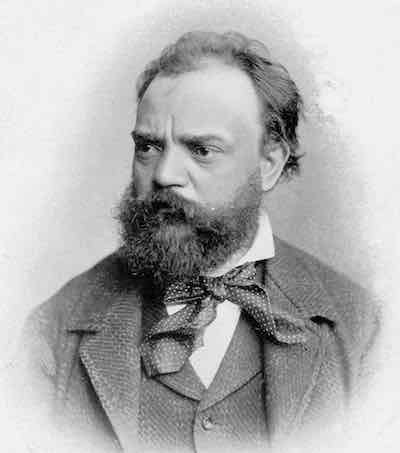
While the best-known composers (Mozart, Bach, Beethoven, etc.) all have their merits, I am going to steer you toward Czech composer Antonin Dvorak (1841-1904) instead.
Dvorak was born almost a century after Mozart and Beethoven, and longer than that after Bach. To my philistine ear, Dvorak’s music sounds more modern, while still falling within the realm of the classical.
Antonin Dvorak
I would recommend starting with Symphony Number 9, Aus der Neuen Welt (“From the New World”). This is arguably Dvorak’s most accessible work, and my personal favorite at present. Symphony Number 9 contains a lot of moods. It takes you up and down, and round again.
This is not the story of an older adult turning away from the pop culture of his youth for more sophisticated fare. Far from it. Dvorak is not going to replace Def Leppard on my personal playlist. Bach and Mozart have not supplanted Rush and AC/DC.
But time has made me more musically open-minded. Almost 40 years after I was inspired by the movie Amadeus, I have, at long last, developed a genuine appreciation for classical music.
But that is a qualified appreciation, for an art form that I still prefer in measured doses.
Unlike some people who write books, I’m not hostile to television, especially good television.
And Netflix’s Ozark is very good television. I’m now binge-watching the series, and I’m already in the fourth season.
I’m sort of dreading the end of the fourth season, because that’s all there is! Netflix has already announced that there will be no fifth season of Ozark.
Here’s the premise of Ozark, briefly stated. Marty Byrde (played by Jason Bateman) is a Chicago-based financial advisor. Despite being a whiz with money, he’s never quite been able to keep his head above water.
Then Marty is courted by the Navarro drug cartel as a money launderer. After extensive discussions with his wife, Wendy (Laura Linney), Marty reluctantly agrees to the proposition.
But Marty’s old college friend and business partner, Bruce (Josh Randall), makes a fatal mistake. Bruce attempts to cheat the cartel, by skimming some of the laundered cash.
And as we all know, cheating Mexican drug cartels is never a good idea. The cartel eventually finds out what Bruce is up to. Cartel operatives show up in Chicago. They execute Bruce, along with his fiancée, and the father-son trucking company owners who were also involved in the theft.
Marty witnesses the massacre. Needless to say, he is shaken…but alive.
The cartel allows Marty to go on living, but his life is still on the line. Marty and Wendy, along with their two children, must leave Chicago for the Lake of the Ozarks in central Missouri. There they must launder cartel money through local businesses. Or else.
Hijinks ensue, along with numerous compelling storylines.
How compelling? Ozark is the first TV series I’ve seen in a long time that makes me forget I’m watching TV. I’ve even been having dreams about the show. And I never dream about television. Or at least I haven’t since I was a little kid.
But how does the show pull this off? There is an old debate in storytelling circles. Which is more important: a big, original idea (aka “high concept”), or competent execution?
Ozark lands a decisive vote on the side of execution being important.
Think about it: how many movies, novels, and television series have we seen about ordinary people getting involved with Mexican drug cartels? This is one of the most common go-to storylines in crime film, TV, and fiction.
Ozark is also a fish-out-of-water story. A Chicago family coping with life in rural Missouri. These, too, are as old as television: The Beverly Hillbillies, Green Acres, Northern Exposure. Need I go on?
Fish-out-of-water crime and espionage stories are nothing new, either. For example, Ray Donovan was a series about a low-level Boston mobster in Los Angeles. The Americans told the story of deep-cover Soviet assets in Washington D.C., posing as ordinary American citizens (hence the name of the show) during the final decade of the Cold War.
That the Byrdes are transported from Chicago to Missouri makes for an interesting setup, but nothing earth-shattering, in itself. It’s really just a variation on a tried-and-true storytelling technique.
What about killer plot twists? Well, there are some of those, too. And while the plotting in Ozark is very strong, it’s a long way from perfect. There are a few twists that strain credibility just a bit. I even noticed one twist that might be assessed as an instance of the dreaded jumping the shark.
Lovable characters? Not so much. Marty and Wendy Byrde are deeply drawn characters. (A long series leaves plenty of time and space for that.) But Marty is too much of a milquetoast for my tastes, and Wendy is simply too much of a loose cannon.
Ruth Langmore (played by the talented Julia Garner) is certainly memorable. She’s also lifelike. Although I’ve never been to Missouri, there are young women here in Ohio, and neighboring Kentucky, who are similarly combative and profane. Ruth’s circumstances, moreover, invite sympathy. But in real life, her constant cantankerousness and never-ending stream of F-bombs would grow wearisome.
The idea of spending a week with any of the Ozark characters in real life would leave me distinctly unenthusiastic. I suspect I’m not alone in this opinion.
Nor can Ozark lean on its setting much. Unlike Magnum P.I. or Miami Vice, Ozark isn’t set in any vacation spots. Most of the show takes place in the rural American South and Chicago.
Ozark is also set against a background of poverty. (Much of the show literally takes place in a trailer park.) That’s supposed to be a no-no for any filmmaker or novelist who seeks mass appeal.
Ozark holds our attention not with high concept, nor with avante garde originality, nor with airtight, ingenious plot twists. And no—not with settings we’d like to visit, or with characters whom we’d love to meet in real life.
Ozark holds us in thrall with what literary agent and editor Donald Maass once dubbed microtension.
What is “micro tension”? In Maass’s words, microtension is:
“the moment-by-moment tension that keeps readers in a constant state of suspense over what will happen—not in the (overall) story, but in the next few seconds.“
That’s what Ozark does best. Once again, I’ll avoid any spoilers here. But suffice it to say that in each scene in Ozark, there are multiple open questions, and multiple opportunities for the viewer to be surprised.
By maintaining this constant tension in each scene, and by constantly weaving new, intersecting plot threads, Ozark grabs hold of you at the outset, and never lets you go. You are always on-guard, always tense, because you really never know what will happen next.
Ozark’s writers, directors, and actors make you experience the show’s real-life dangers, but without the real-life consequences. They pull you in as much as is possible through the medium of television. That’s why the show is so popular, and has been nominated for so many awards.
I’m just a few episodes from the end of Ozark, and like I said: I’m dreading it—just like I’m dreading the moment-to-moment question of “what will happen next?” that grips me in practically every scene.
Led Zeppelin formed in 1968, the year I was born, and disbanded in 1980, when I was twelve.
I was therefore too young to become a Led Zeppelin fan while the band was still a going concern. But Led Zeppelin was still enormously popular when I discovered rock music as a teenager in the early to mid-1980s. Lead singer Robert Plant, moreover, was then launching a solo career, and making use of the new medium of MTV.
Most of my musical interests lie in the past. I admittedly lack the patience to sort through the chaotic indie music scene on the Internet, and I shake my head disdainfully at the overhyped mediocrity of Taylor Swift. When I listen to music, I listen to the old stuff: Rush, Def Leppard, Led Zeppelin, and a handful of others.
Led Zeppelin is very close to the top of my list. I listen to Led Zeppelin differently than I did in the old days, though. The lyrics of “Stairway to Heaven” sound less profound to me at 55 than they did when I was 15. I now appreciate Led Zeppelin when they’re doing what they did best: raucous, bluesy rock-n-roll that had only a hint of deeper meaning: “Black Dog”, “Whole Lotta Love”, “Kashmir”, etc.
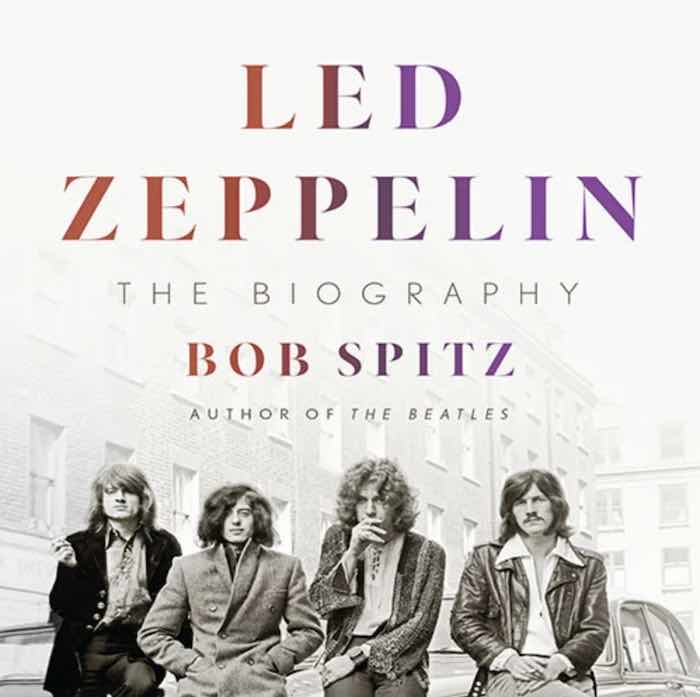
And of course, reading remains my first passion. I’m still waiting for an in-depth, definitive biography of Canadian rock band Rush. (I suspect that someone, somewhere is working on that, following the 2020 passing of Rush’s chief lyricist and drummer, Neil Peart.) But a well-researched and highly readable biography of Led Zeppelin already exists: Bob Spitz’s Led Zeppelin: The Biography.
At 688 pages and approximately 238,000 words, this is no biography for the casual reader. But if you really want to understand Led Zeppelin, its music, and the band’s cultural impact, you simply can’t beat this volume. I highly recommend it for the serious fan.