‘You Like It Darker’: one of the best Stephen King collections in years

I’ve pulled no punches about the fact that I am not a fan of many of Stephen King’s post-1990 novels. Last year, I was less than thrilled with the overlong and rambling Fairy Tale.

In recent decades (King’s career is now so long that this is the most meaningful unit of measurement), his best work has often been his collections of short fiction.

No, I won’t give you another endorsement of Night Shift (1978). I already did that five years ago. King has produced plenty of good short fiction since the beginning of the new millennium, including Everything’s Eventual (2002), Full Dark, No Stars (2010), and The Bazaar of Bad Dreams (2015).

And most recently: You Like It Darker (2024). I purchased this book in hardcover within days of my disappointing read of Fairy Tale, because—when King is at his best, he hits them out of the park.

I only recently got around to reading this latest short story collection, though. (I have a rather large TBR backlog.) I am happy to report that You Like It Darker is one of his best short story collections in years—probably since the aforementioned Everything’s Eventual. Not every story in You Like it Darker is a home run. But a handful of them are.

“Danny Coughlin’s Bad Dream” is a long short story about a man who is framed for a murder he did not commit. The whole thing starts with a recurring bad dream about a buried body.

“On Slide Inn Road” is a shorter tale about a family trip gone wrong. It reverses some of the usual age dynamics that you see in stories. This one is more of a crime story than a horror tale. (There are no supernatural elements.) But it’s a good one.

Rattlesnakes is a novella set in Florida. This is also a sequel to Cujo (1981). The main protagonist of that book, Vic Trenton, is now in his seventies, and he’s been through a lot in the intervening years. He goes through a lot in this story, too.

The Answer Man is another novella. In 1937, a young man meets a roadside hawker who can foresee the future—for a price. The young man interacts with “the Answer Man” over the next sixty years.

This is ultimately a story about finding meaning in life’s unexpected challenges and tragedies. This one is an absolute gem, and worth the entire price of the book.

***

Stephen King is now 77. I started reading his books in the 1980s, when he was only in his thirties, and I was in my teens. (Note: I’ve gotten older since then, too.)

I hope that Stephen King continues to write for many years to come. That was my overriding thought, as I finished this collection.

-ET

**View You Like It Darker on Amazon

An American trapped in North Korea

New trailer for: THE CONSULTANT

A lone American, kidnapped and taken to North Korea. He has one objective: escape!

A story ripped from the headlines, and immersed in the deadly politics of North Korea.

A thriller for fans of Tom Clancy, James Clavell, and Dale Brown. A riveting story about an ordinary man who is forced to take on the most evil regime on earth!

**View on Amazon**

Classical music in small doses 

Amadeus, the biographical drama about the life of Wolfgang Amadeus Mozart, was one of the most critically acclaimed movies of the mid-1980s. Starring F. Murray Abraham, Tom Hulce, and Elizabeth Berridge, Amadeus brought the famed 18th-century composer and his times to life.

Amadeus remains one of my favorite movies of all time. But when I saw it for the first time, as a teenager in the 1980s, I was inspired: I had a sudden desire to learn more about classical music, or at least about Mozart.

This was more than a little out of character for me at the time. As a teenager, my musical tastes ran the gamut from Journey to Iron Maiden, usually settling on Rush and Def Leppard.

So I read a Mozart biography. I was already an avid reader, after all. Then it came time to listen to the actual music. That’s when my inspiration fell flat.

I found that Mozart the man was a lot more interesting than his music. At least to my then 17-year-old ears. Nothing would dethrone rock music, with its more accessible themes and pounding rhythms.

Almost 40 years later, I still prefer rock music. In fact, I still mostly prefer the rock music I listened to in the 1980s.

Wolfgang Amadeus Mozart, 1781 portrait
**View Mozart biographies on Amazon**

Recently, however, I took another dive into classical music.

Classical music, like popular, contemporary music, is a mixed bag. Some of it is turgid and simply too dense for modern ears. Some pieces, though, are well worth listening to, even if they were composed in another era.

Barber’s “Adagio for Strings” is one such piece. For the longest time, I mistakenly assumed that this arrangement was written for the 1986 Vietnam War movie, Platoon, in which it is prominently figured.

I was wrong about that. “Adagio for Strings” was composed in 1938, long before either Platoon or the Vietnam War.

“Adagio for Strings” is practically dripping with pathos. It is the perfect song to listen to when you are coping with sadness or tragedy. This music simultaneously amplifies your grief and gives it catharsis. You feel both better and worse after listening.

“Adagio for Strings” was broadcast over the radio in the USA upon the death of President Franklin D. Roosevelt in 1945. It was played at the funeral of Albert Einstein ten years later. The composition was one of JFK’s favorites; and it was played at his funeral, too, in 1963.

Most of the time, though, you’ll be in the mood for something more uplifting. That will mean digging into the oeuvre of one or more of the classical composers.

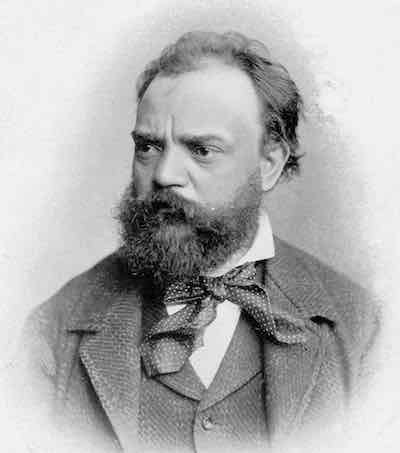
While the best-known composers (Mozart, Bach, Beethoven, etc.) all have their merits, I am going to steer you toward Czech composer Antonin Dvorak (1841-1904) instead.

Dvorak was born almost a century after Mozart and Beethoven, and longer than that after Bach. To my philistine ear, Dvorak’s music sounds more modern, while still falling within the realm of the classical.

Antonin Dvorak

I would recommend starting with Symphony Number 9, Aus der Neuen Welt (“From the New World”). This is arguably Dvorak’s most accessible work, and my personal favorite at present. Symphony Number 9 contains a lot of moods. It takes you up and down, and round again.

This is not the story of an older adult turning away from the pop culture of his youth for more sophisticated fare. Far from it. Dvorak is not going to replace Def Leppard on my personal playlist. Bach and Mozart have not supplanted Rush and AC/DC. 

But time has made me more musically open-minded. Almost 40 years after I was inspired by the movie Amadeus, I have, at long last, developed a genuine appreciation for classical music.

But that is a qualified appreciation, for an art form that I still prefer in measured doses.

-ET

The ideology behind ‘The Girl with the Dragon Tattoo”

The other day, a reader asked me what I thought of Stieg Larsson’s The Girl with the Dragon Tattoo (2005).

Yes, I read the book; and I saw the 2011 movie starring Daniel Craig and Rooney Mara.

Despite the name, The Girl with the Dragon Tattoo is mostly the story of a polyamorous middle-age journalist, Mikael Blomkvist, who tracks down Nazis with the occasional help of Lisbeth Salander, the eponymous young lady with the dragon tattoo.

Blomkvist is a stand-in for the novel’s author. Stieg Larsson (1954-2004) was a left-of-center Swedish journalist. Larsson flirted with the radical leftist movements of the 1960s at a very young age. He declared himself a Marxist at the age of 14.

To his credit, Larsson later disavowed outright Marxism. He longed, though, to wage a righteous battle against European Nazism. Never mind that most authentic European Nazis were in nursing homes and graveyards by the time he reached full adulthood.

The Girl with the Dragon Tattoo suggests a preoccupation with rightwing conspiracies. Not that there’s much of a risk in Larsson’s native land. Sweden, on the contrary, is one of the most “woke” countries on earth. The Swedes pioneered the use of the self-consciously “gender neutral” pronoun half a decade before such absurdities reached the English-speaking world.

There are also the cartoonish, over-the-top depictions of misogyny in the book and the movie. The original title of the novel was, Män som hatar kvinnor (“Men Who Hate Women”).

Was Larsson kidding? No, he wasn’t. Even in Sweden, though, there was enough common sense in commercial publishing to avoid saddling a book with an ideological title like that.

If you read the book and/or watched the movie, you’ll find that The Girl with the Dragon Tattoo is fantasy fulfillment for its author. Mikael Blomkvist saves Lisbeth Sanders from the bad guys. He doesn’t really want to sleep with his much younger heroine. (According to the book, Blomkvist has always preferred middle-age women to “young girls” in their twenties.) But the twenty-something Salander comes on to him. So how can he say no?

Don’t get me wrong. I enjoyed The Girl with the Dragon Tattoo, even though I saw it for what it was: fantasy fulfillment for a politically left-leaning journalist who had entered midlife crisis territory.

The Girl with the Dragon Tattoo is not a bad novel, despite it’s flaws. By all means read and enjoy it. Just don’t take it literally; and realize that the book’s author, Stieg Larsson, had multiple axes to grind when he sat down at the keyboard.

-ET

**View THE GIRL WITH THE DRAGON TATTOO on Amazon (quick link)**

A right (and wrong) reader for every book

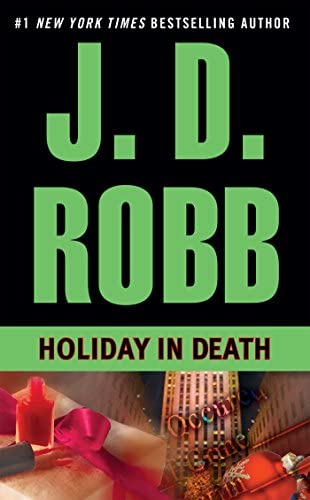
I’m slogging my way through Holiday in Death, by J.D. Robb. I purchased the audiobook for this title at a steep discount on Chirp.

I now know that J.D. Robb is a pen name for Nora Roberts. I wish I had known this in advance, as Nora Roberts has never pleased me in the past.

I know: blasphemy to some of you. Nora Roberts is, after all, a bestselling author who has delighted millions of readers over the years. I don’t dispute that.

But she’s also a writer of various flavors of romance, and every book she writes tends to be at least one-half romance novel.

Holiday in Death is no exception. It’s ostensibly a police procedural set in the near future (2058). Like other Nora Roberts titles, the premise of this one intrigued me, but I was underwhelmed by the execution.

Why? Maybe it’s because I’m a heterosexual male. I can only read so many paragraphs about the “beauty” of a male character before I gag, or at least grow bored, and start wanting to skip ahead. But female romance readers eat those details up.

Holiday in Death, sure enough, has all the characteristics of a romance novel. There is more sex than shooting, and the female detectives in the book spend as much time checking out hot guys as they do investigating the serial murderer who is the villain of the story.

The novel’s protagonist is NYPD Lieutenant Eve Dallas. She’s tough and snarky, and I’m fine with that. But far too much space is devoted to her storybook relationship with her unlikely husband, the Irishman named Roarke.

And here we descend into full-blown romance novel territory. Like most romance novel male characters, Roarke is less a human male than a personification of female fantasy. He’s tall, broad-shouldered, and (of course) he’s a self-made business mogul.

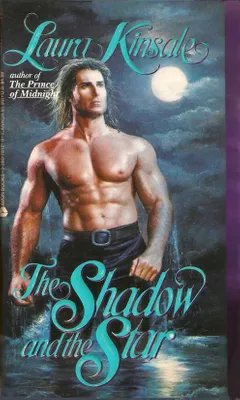
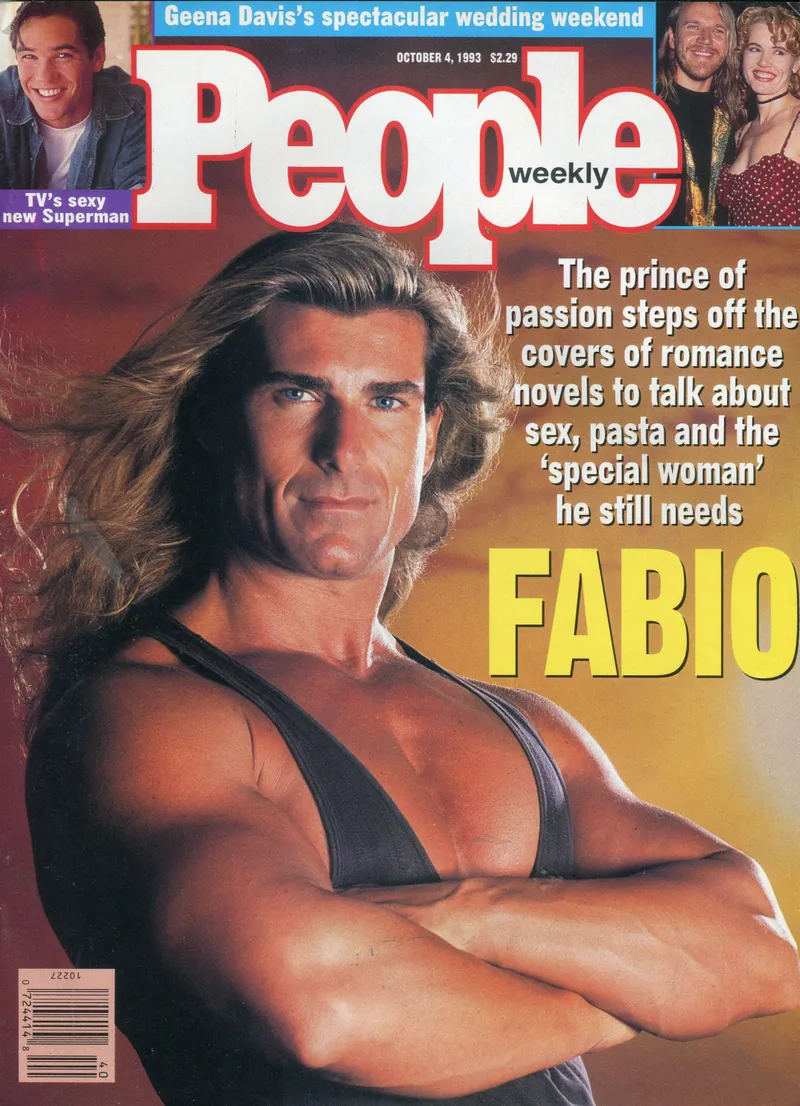
Roarke is tanned and well-muscled. (Despite being married and running a business empire, he still finds time to spend hours each day in the gym, one supposes.) And—of course, once again—he has long, Fabio-like hair. (Male pattern baldness does not exist in the universe of women’s romance fiction.)

Holiday in Death presently has a 4.7-star average on Amazon, with 3,885 ratings. Most of Roberts’ books have high ratings. Nora Roberts is not only a bestseller, but a multi-decade bestseller. Her first novel, Irish Thoroughbred, was published in 1981, more than forty years ago. I was barely in junior high then.

My intention here is not to knock Nora Roberts (once again, Nora Roberts is doing just fine.) My objective, rather, is to illustrate a point that many reader-reviewers (and many review-hungry indie writers) often overlook: a reader can simply be a mismatch for a basically good book.

Holiday in Death is a good match for many readers (most of whom are devotees of romance fiction, one imagines). Otherwise, it would not have so many 5-star reviews.

But Holiday in Death is a bad match for a mystery/police procedural reader who is a fan of Michael Connelly, C.J. Box, and John Sandford.

The book is probably a bad match for any heterosexual male. I was definitely ready to quit when I heard the paragraph about how the gorgeous, long-haired Roarke “emptied himself” into Eve Dallas at the climax of some acrobatic lovemaking. Sorry, but I don’t need to read about other dudes ejaculating. And if I did want that much detail about the sex act, I’d go to Pornhub.

For reader-reviewers, the lesson here is: don’t pan a book simply because it doesn’t match your tastes. (I won’t be rating or reviewing Holiday in Death on Amazon or Goodreads, as this is such a clear case of book-reader mismatch.)

For authors, the lesson is: don’t market your book to everyone. Your book is almost certainly not for everyone. Few books, after all, are for everyone. Not even books written by the esteemed Nora Roberts.

-ET

**View Nora Roberts’s novels on Amazon**

Horror fiction: sharks in the Ohio River

I have had a lifelong fascination with—and dread of—sharks.

I have also been a lifelong resident of southern Ohio, a region that borders the Ohio River. As I type these words, the Ohio River is but a short drive from here. (I could walk there, in fact.)

A few years back, I started reading news reports about bull sharks turning up in the Mississippi River. The Ohio River, though far to the north, connects to the Mississippi.

I got to wondering: what if there were sharks in the Ohio River?

Hey, what if?

The result was the short story, “By the River”, which you can read for free here on Edward Trimnell Books.

“By the River” is one of the stories in my 2011 collection, Hay Moon & Other Stories.

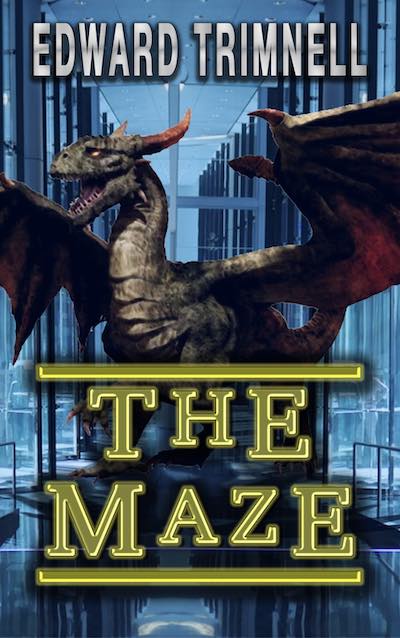
The Maze: Chapter 2

Approximately one hour later, they arrived at their destination, about five miles south of the Columbus metro area. It wasn’t what Evan had expected.

The scenery here was still rural. There were plenty of cornfields, high and dark green in their late summer lushness. On the far, flat horizon, Evan could see a scattering of barns, and even a grain silo.

Following the directions generated by the Camry’s GPS system, Evan guided the car off the interstate at the designated exit.

“Is this it?” Evan asked, doubtful.

“This is it,” Hugh affirmed.

In the rearview mirror, Evan saw Amanda glance up at him, mildly annoyed.

The exit took them around a long, sloping curve that dead-ended in a two-lane highway. The android voice of the GPS told Evan to turn right.

“That’s Lakeview Towers over there,” Hugh said, pointing in that direction. Evan made the right turn; and as the Camry traversed the rural highway and crested a small hill, the office complex called Lakeview Towers came into view.

The glass-plated, ultramodern architecture looked more than a little out-of-place here in the middle of the Ohio countryside. True to its name, Lakeview Towers consisted of four towers that must have been ten or twelve stories high. The towers were connected by a series of shorter segments that were perhaps three stories in height each.

“It’s big,” Evan observed.

“Yes,” Hugh said. “It’s big.”

Evan kept driving.

How many office suites would there be in Lakeview Towers? Hundreds, at least. A lot of space to rent this far south of Columbus, Evan thought.

They continued to approach at about thirty miles per hour. Lakeview Towers seemed to grow even larger as it drew closer.

This was only an optical illusion, Evan decided. Down at the exit, the structure had been partially obscured by the topography. As they came upon the entrance to the main parking lot, though, Evan found himself growing more impressed by the scale of the office complex. The morning sunlight glinted off the glass-plated columns.

Evan saw a massive shadow pass over one of the glass columns. It was fleeting—as if something huge were flying by overhead.

He looked up through the Camry’s windshield. A shadow that large could only have been cast by a low-flying airplane.

Or a very, very large bird.

But Evan saw nothing unusual in the blue sky above the two-lane access road.

The shadow came from a cloud, he concluded.

Returning his attention to the road, Evan turned into the parking lot. The immaculately manicured “campus” (as it was now trendy to call corporate facilities) was filled with plenty of green space between the parking areas. A pair of artificial ponds dominated the weed-free lawn opposite the main entrance. In the middle of each pond was a water jet.

Evan also noticed a small gaggle of white geese distributed between the two bodies of water. This was a good place for the birds, he figured: There would be no hunters to disturb them here.

Had a goose cast that shadow? Evan wondered. No. Impossible. No way a goose could throw a shadow like that.

Then he recalled what he had concluded: The shadow had been cast by a puffy white cumulus cloud. There were plenty of those in the sky today.

Fortunately, there were plenty of open parking spaces, too. Evan found a space located reasonably close to the main entrance, adjacent to the two ponds, and parked.

Before killing the engine, he looked at the dashboard clock: It was 8:37 a.m. They had time to spare before the appointment, even with factoring in the time needed to set up the projector for the PowerPoint presentation.

Evan stepped out of the car, then leaned down to smooth his tie and his white dress shirt in the driver’s side exterior mirror. The right breast of the shirt bore a monogrammed “MSS”, and the logo for Merlesoft Software Systems—a generic computer motif.

Hugh and Amanda exited the vehicle as well. Finding the key fob in his pocket, Evan pressed the button that opened the trunk automatically. He reached down to lift the projector out of the trunk.

That was when Amanda pounced.

***

“Did you remember to include a slide containing the timeline of the four quotations we submitted?” Amanda asked, not quite casually.

Evan stared back at her, nonplussed. He had remembered everything, or so he had thought. He had spent hours preparing the PowerPoint slides, and additional hours preparing himself to deliver a flawless sales presentation.

But he had not thought to include a slide depicting the timeline of the quotations.

He could easily imagine what Amanda wanted: A visual representation not only of the successive changes in pricing, but also something that summarized the technical change points. This would demonstrate how Merlesoft had recommended cost-effective changes to the original specifications provided by Rich, Litchfield, and Baker.

It wasn’t a bad idea; but it was the one thing he hadn’t thought of—and the one thing that Amanda saw fit to remember, less than thirty minutes before game time.

“No, Amanda,” he said, pausing with his hand on the handle of the projector’s carrying case. “I didn’t think to include a slide showing the timeline of the quotations we submitted.”

As soon as the words were out of his mouth, Evan realized that he had delivered them flippantly. This hadn’t been his intention. He had meant to express the idea of, “I see what you’re getting at, but no—I forgot!

That admission would be bad enough; it would add to the long list of black marks against him. This was a list that Amanda Kearns maintained, he was certain, in one form or another.

But now it was clear that Amanda perceived his words as a challenge to her authority, the one infraction that any manager at Merlesoft despised more than anything else.

“Don’t think that I don’t hear the resentment in your voice, Evan. I wouldn’t have to ask you this sort of thing, if only you would think of it yourself.”

Evan felt a wave of anger and resentment suddenly surge through him. Amanda was addressing him as if he were a slacker, a ne’er-do-well. The truth was that he had thought of many things. He just hadn’t thought of that particular thing—the one thing that she had chosen to ask about.

And in all the sales presentations prior to this one, he had never prepared a visual timeline of the quotations. Early quotations, in fact, were generally regarded as irrelevant. Final sales presentations usually focused on the most current quotation.

He now saw what Amanda was doing to him: She was using the process of elimination to trip him up. She had rigged the game so that he would inevitably lose it. There was no way for him to win in a situation like this.

Finally his temper snapped. “Do you want me to create the slide right now? I have my laptop computer back here.”

“Evan,” she replied with an air of calm superiority. “We both know that there’s no time for you to do that, when we have to meet with the client in a matter of minutes. My point was that it should have been done earlier.”

That was when Hugh intervened.

“Whoa, whoa,” he said, gently squeezing Evan’s arm and interposing himself between Amanda and him. “There’s no time now, buddy. She’s right about that. Let’s just focus on doing the best we can with the presentation we’ve got now. We can talk about next time later on. As it stands right now, we’re going to be on in about fifteen minutes.”

Evan nodded silently, allowing himself to be mollified by Hugh.

Amanda, too, allowed this to be the last word about the matter—for now. (There would doubtless be further recriminations later—especially if an order from Rich, Litchfield, and Baker failed to materialize.) Evan noted (and not for the first time) that Amanda sometimes allowed Hugh to exert a subtle form of authority, as long as he didn’t step on her toes in the process.

Loaded up with gear and presentation materials, they walked toward the double doors that formed the front entrance of the Lakeview Towers office complex. Evan could see their reflections bobbing in the glass face of the building.

He again recalled the vague warning that Hugh had given him while they were sitting in the McDonald’s—or the warning that Hugh had tried to give him.

And then something else happened.

***

Evan saw a reflection in the glass of the front entranceway. The reflection was distorted by the glass, the sunlight, and the angle; but it was unmistakably there.

And it was very close to the three of them.

It was a large, winged beast—not quite a bird, and not quite a mammal or a reptile. A brown-toned monstrosity that might have been covered with fur, or maybe with scales.

It flew behind and past them near ground level. In that fraction of an instant, Evan discerned a tapered snout filled with long, jagged teeth. A stout body topped by two batlike wings.

And then, behind the beast, a long tail, twitching back and forth as the creature swooped low toward the earth.

A second later, it was gone.

Evan whirled around, nearly dropping the load in his arms. He clutched the projector just as it was about to slip away from him.

When turned around, Amanda looked straight at him.

“Something wrong, Evan?”

There was plenty wrong. That had been no ambiguous shadow, prone to a half-dozen explanations and interpretations. That had been something—if only evidence of his own overstressed mind, now subjecting him to paranoid delusions.

“No,” Evan told Amanda. “Nothing’s wrong.”

“Well, then,” she said icily, “what say we keep going?”

***

Evan was still shaken, but he turned back around and kept going.

Don’t try to process that now, he told himself. That thing you just saw—you can think about that  during the long drive back to Cincinnati.

And it was just your imagination, anyway, right?

Sure. That was all it had been.

They pushed through the entranceway. Evan exercised extra caution so as not to drop anything.

Once again, he imagined the projector slipping out of his hands and crashing to the floor. Then the whole sales presentation would be ruined, all because of his momentary blunder, his failure to anticipate. The resultant recriminations would be unbearable.

Even worse than that reflection he had just hallucinated in the glass.

The lobby was state-of-the-art, contemporary office chic. There was wall-to-wall, low-pile grey carpeting. Soft, frameless chairs in the waiting area. Strategically spaced, abstract paintings.

The three of them headed immediately to the wood-paneled security enclosure, where two security guards—a heavyset woman and a rather frail-looking older man—sat beneath soft cove lighting.

Amanda motioned for Hugh and Evan to complete the sign-in procedures before her. She wanted to check the messages on her phone before signing in, apparently.

She likely wanted to check for messages from Oscar, Evan thought.

While Evan and Hugh were pinning on their temporary access security badges and waiting for Amanda to finish with the security guards, Hugh pulled him aside and said discreetly:

“Stick with me while you’re here. And don’t talk to any other security guards you might happen to see here. Only these two at the front desk are okay.”

Once again Evan found himself wondering if Hugh was suffering from some sort of a delusion, or possibly setting him up for an elaborate practical joke.

What I just saw, that was my imagination, he reminded himself. The power of suggestion. There was nothing real to it. Couldn’t have been.

“You’re really serious about wanting me to not wander off in this building, aren’t you?” Evan asked.

He smiled in an attempt to break the tension of the quarrel with Amanda, and the imagined reflection in the glass. He needed to calm the butterflies in his stomach. He often felt a slight degree of nervousness just before a big client pitch, but his jitters were now approaching a terminal level. Too much to think about.

And Hugh was making it worse.

“Are you going to tell me what this is all about?” Evan asked, hoping for some levity in return. Maybe Hugh would break the joke now. Because this had to be a joke.

“Evan,” Hugh said, his voice low and deadpan. “You saw something, didn’t you? Just now, as we were coming in.”

Evan felt his heart leap again.

“Did you—?”

“That’s not important,” Hugh replied. “I don’t have the time to explain this to you now. But if we make it out of here okay, then I promise you I will.”

“What the hell are you talking about? ‘If we make it out of here okay’?”

“Maybe nothing more than my imagination, buddy. But maybe something. In any case, safety is the best policy. Just remember what I said.”

Evan opened his mouth to ask another question. Then Amanda appeared, her temporary visitor badge pinned to her blouse.

“Are you ready, gentlemen?”

“We’re ready,” Hugh said, answering for both of them. “Follow me. I’ve been here before, after all.”

***

Evan and Amanda followed, as Hugh led them down a hallway adjacent to the lobby, toward the law firm’s first-floor office suite.

Evan was conscious of the combined weight of the portable projector and his laptop. Amanda was carrying her briefcase, and a satchel that contained the handout materials for the presentation.

Hugh, meanwhile, was carrying only his attaché case. Given his heart condition, neither Evan nor Amanda would have expected him to carry anything more.

They passed by a number of office suites, Hugh leading the way. Each office suite was enclosed behind a stately wooden door. There were windows on both lateral sides of each door. This made it possible for Evan to look into the  suites. He saw comfortable-looking office settings with modern office furniture, but no people.

Strange that there were no people. How much vacant space was there in Lakeview Towers? It seemed that most of the complex was vacant.

Miles and miles of space, Evan thought, for no reason that he could fathom.

On and on forever…

A wave of unexpected dizziness hit him. He nearly stumbled at one point, as he felt abruptly light-headed. He feared that he would drop the projector—for real this time. He experienced a moment of genuine panic, a sense that he was about to faint.

Then he quickly recovered and righted himself. As suddenly as the odd feeling had come upon him, it was gone now.

Since he was walking behind both Amanda and Hugh, neither of them had noticed, he was glad to see.

What’s wrong with me?

He detected a faint whiff of something unpleasant in the air. It was a burnt, sooty smell—not exactly organic, but not exactly chemical, either. Perhaps it was this odor that had made him suddenly dizzy. It might be the result of a problem with the ventilation system here.

Evan felt almost himself again when they finally arrived at the door with the decorative brass plaque that read: “Rich, Litchfield, & Baker, Attorneys at Law.”

A receptionist was stationed immediately inside the suite. Her desk was in the center of a small waiting room. The receptionist—a young, redheaded woman who caught Evan’s eye—informed them that they could proceed directly down the rear hallway to meeting room 1A—the law firm’s media room.

Meeting room 1A contained a large oblong oak table, surrounded by about a dozen high-backed, leather-padded chairs. The attorneys had spared no expense to make their office space attractive, it seemed. At the far end of the room, Evan spotted the roll-down screen that he would use to project the PowerPoint presentation.

Being careful not to make direct eye contact with Amanda, he went about setting up the projector and connecting it to his laptop. Luckily, there were plenty of electrical outlets in the room, and he had brought extra lengths of extension cord.

Hugh had warned him not to talk to any other security guards. Now why would Hugh say something like that? What did he mean? Evan could have asked him—if not for Amanda’s hovering presence.

Evan had just finished setting up the equipment for the presentation when the lawyers filed in. Introductions were made.

Evan was still feeling a bit light-headed, and he was still more than a little angry at Amanda. He was also dreading the inevitable follow-up confrontation that would surely result from today’s exchange with his boss. When they returned to the Merlesoft office, there would surely be hell to pay—in one form or another.

But now he had a job to do. He would spite Amanda Kearns by doing it to the best of his abilities.

***

“First, I want to thank all of you for taking the time to hear Merlesoft’s presentation today,” Evan began.

He was the only one standing in the darkened room. Seated closest to the projection screen around the oblong table were four attorneys from Rich, Litchfield, and Baker. They were joined by the firm’s accountant, and an information systems person. Finally, Amanda and Hugh were seated toward the back, behind all the client representatives.

The first PowerPoint slide featured an image of Rich, Litchfield, and Baker’s logo alongside an image of the Merlesoft logo. The idea was to suggest that the two companies were in an ad hoc union of sorts.

This was a standard bit of sales psycho-strategizing. The idea was to spin the (hopefully) imminent purchase order as a partnership—not a transaction. Then the client representatives wouldn’t feel that they were on the receiving end of a sales pitch. Even though it was very much a sales pitch.

While not exactly sinister, the whole thing seemed vaguely duplicitous. I’m no more a salesperson than a software guru, Evan thought.

Nevertheless, he launched into the presentation, clicking through the slides with the projector’s remote control. He had studied his lines so much in advance that he was almost able to run on autopilot. This was a good thing—as the dizziness that he had briefly experienced in the hallway was now returning with a vengeance.

And once again he was aware of that peculiar smell. The odor might best be described as a mixture of gasoline fumes and burning vegetable matter.

The smell was all around him now, as if it were coming through the air ducts.

The dark room and the soft glare of the projection screen began to shift before his eyes. He knew that his voice was wavering, because everyone in the room had turned their attention away from the screen at the front of the room. They were looking at him—no doubt wondering what was wrong.

That was a question that was acutely troubling him, as well. The partially illuminated faces around him began to shift, to melt into the darkness. When he tried to read the slide that was currently projected up on the screen, the words ran together.

I’ve got to get out of this room, he thought. Something’s wrong with me.

Then an additional complication arose. He was acutely aware of the large breakfast that he had eaten—the one that was supposed to give him energy to concentrate on his presentation. It was churning and bubbling in his stomach, threatening to erupt and spill out onto the meeting table.

To pass out before a roomful of customers would be bad enough. To upchuck in front of clients would be an unmitigated disaster.

Evan made a snap decision. He placed the projector remote on the table between Hugh and Amanda. One of them would have to take over.

“You’ll have to excuse me,” he announced to the room. “I’m afraid that I’m going to be sick.”

Sample chapters list
***Get THE MAZE on Amazon***

Sharks in New England

A 63-year-old New York woman was fatally attacked by a great white shark while swimming off the Maine coast. For whatever they’re worth, I offer my condolences. That would be a terrifying way to go. 

No one really expects to be attacked by a shark while swimming in the waters off Maine. Shark attacks are something we associate with the tropics, generally. Continue reading “Sharks in New England”

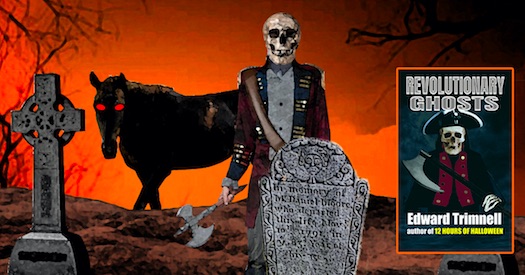
Revolutionary Ghosts, Chapter 1


I was tying my tie in Dr. Beckman’s exam room when I felt the chill. I was alone in the tiny, antiseptic space. The doctor had stepped out to allow me to get dressed.

I took a deep breath. The cool air had a vaguely chemical odor.

There was nothing in here to be afraid of. From where I stood, leaning against the exam table, I could see a sink and counter—spotless and sterile—lined with bottles of hydrogen peroxide and rubbing alcohol. Formica and metal surfaces, gleaming in the bright glare of the overhead florescent light panels.

The tiled floor gleamed, too. Beneath the sink, there was a little rolling stool. (There is one of those in every exam room on the planet, it seems.)

I took a deep breath, and continued tying my double Windsor knot.

There is nothing in here to be afraid of.

Then I saw the closet door, in the corner of the room behind the exam table.

The door was slightly ajar—just a crack.

Had it been closed ten minutes ago, when Dr. Beckman was in here, prodding me with his stethoscope, tongue depressor, and ear speculum?

I wasn’t sure. But after recent events—and after long-ago events—I don’t like doors that are slightly ajar, doors that partially reveal dark spaces.

I could feel my skin breaking out in gooseflesh beneath the starched fabric of my white Oxford dress shirt.

The room is chilly by design, I told myself. Someone—I forget who—once told me that temperatures in medical facilities are kept deliberately low, so as to stymie the growth of molds and bacteria.

But what else was growing in here? What was hiding in that closet, that I couldn’t see?


I felt foolish for having such thoughts, for even raising such questions. I am not a child. I am a fifty-nine-year-old man, a father and grandfather. I’m a divisional manager at Covington Foods, a large consumer goods company based in Cincinnati, Ohio.

I have investments. Stocks and mutual funds. All the requisite forms of insurance, for a man my age.

No one who knows me would say that I am easily spooked, whimsical, or given to flights of fancy. My wife, in fact, calls me “Steady Steve”.

And Steady Steve I am, most of the time.

But this past week, I have not been myself.


Fully dressed now, I was trying to decide what to do about that closet door. I was weighing two options.

On one hand, I could walk across the room and push the door shut. That would be the simplest option.

On the other hand, I could pull the door open. Then I would know for sure that there was nothing lurking in that space.

I was still considering these options when I heard a door click open behind me. Not the closet door, but the door of the exam room.

Dr. Beckman was back.


Dr. Beckman is a stoop-shouldered man with a sallow complexion. He is still in his thirties, but his light brown hair is fast receding. He wears thick glasses.

Dr. Beckman has been my family physician for about three years now. My wife, Peggy, and I started seeing him after dear old Dr. Alfieri finally retired at the age of seventy-two.

I greeted Dr. Beckman. I noticed that he was carrying a clipboard.

I was in his office today for the second half of a two-part exam. The first half had been carried out last week.

This was a routine physical, but nevertheless done at the behest of my employer. Covington Foods requires all of its managers to receive a stem-to-stern physical exam every two years.

“We can go over the results of your exam,” Dr. Beckman said, “if you’re ready. Per the usual procedure, my office will send a copy of the results to the Covington Foods human resources department. We’ll also mail a copy to the home address that we have on file for you.”

“Please,” I said. “Let’s go over the results.”

Dr. Beckman consulted his clipboard. “The results of the blood work that you had done last week are quite satisfactory. Liver and kidney function look good.

“Same for lipids. We’ll have to watch your LDL cholesterol, moving forward. But that’s the same for practically everyone. You performed well on your stress test. Not bad at all, for a man your age.”

Just then Dr. Beckman stopped himself. “Oh, I’m sorry, Steve. I didn’t mean—”

“That’s okay, Doc. I’m fifty-nine years old this year. We need not pretend that I’m a spring chicken. But it’s good to hear that I shouldn’t die in the foreseeable future, just the same.”

My last sentence, those words about death, seemed to hang in the air. Was I really certain that I wouldn’t die in the foreseeable future? And it wasn’t my LDL cholesterol that I was worried about.

I knew, from the events of forty years ago, that there were far worse ways to die.

“Of course not,” Dr. Beckman said, with a tight little smile. “I anticipate you’ll be coming in for many more biennial exams yet.”

The doctor paused, not saying anything for a moment. During my more than thirty years at Covington Foods, I have had literally thousands of encounters with bosses, colleagues, and subordinates. I can always tell when someone has something to say, but doesn’t quite know how to broach the topic.

“I sense a ‘but’ coming here, Doc,” I said. “Out with it, whatever ‘it’ is.”

The doctor seemed relieved. “Yes, well, I suppose there is something. I couldn’t help noticing that you’ve displayed signs of acute anxiety this week. I didn’t notice that last week, when you came in for the blood work and the stress test.”

‘Anxiety’, Dr. Beckman called it. That was putting the matter lightly. My problems had begun on Tuesday of last week, the day after my visit to Dr. Beckman’s office, for the first part of my full-body exam.

But there was no way I could discuss the past week and a half with Dr. Beckman.

“I don’t think so,” I said, playing dumb. “A little stress at the office maybe. Nothing more.”

I could tell that Dr. Beckman didn’t believe me. You don’t get through medical school without being perceptive.

But in another second my facade would crumble, anyway.


That was when I heard the hoofbeats, thundering down the hallway. I could picture a dark black horse. The animal would be partially rotted from the centuries it had spent in the grave, its muscles and bones exposed here and there. The eyes of the horse would be dead and glassy.

The rider of the horse would be wearing an eighteenth-century military frock coat, also rotted and in tatters, heavy trousers and boots.

The rider would be wearing no hat. Because the rider had no head.

The rider would be wielding a large battlefield sword.

The rider and horse would burst through the door of the exam room. First the Horseman would behead Dr. Beckman. (Dr. Beckman would barely have time to see the blow coming; and he certainly wouldn’t have time to save himself.)

Dr. Beckman’s head would topple from his body and roll to the floor. Then his body would drop, so much dead weight, his neck spurting blood.

And then the Horseman would take my head, too.

I had evaded him for more than forty years. But I would evade him no longer.

A few more seconds passed, and I realized the nature of my delusion. The hoofbeats in the hallway moved past the closed door of the exam room. Then I realized that they were not hoofbeats at all.

What I had heard was the ruckus of a nurse or orderly pushing a caster-wheeled cart atop the tiled floor of the hallway outside the exam room. A perfectly normal sound in any medical building.

I recovered myself. Dr. Beckman was staring at me with narrowed eyes.

“I’m fine,” I said. “I just felt a bit lightheaded for a moment. It’s nothing.”

Dr. Beckman made not even the slightest pretense of accepting my excuse.

“Steve,” he said. “We’ve got to talk.”


Dr. Beckman did not convince me quite that easily. As I’ve said, I’m a divisional manager at Covington Foods. I don’t easily budge when I am not of a mind to do so.

“Have you ever heard of cortisol, Steve?” Dr. Beckman asked me.

I was somewhat puzzled by this seemingly off-the-wall question.

“Maybe,” I said. “I might have heard of it. One of those hormones, isn’t it?”

“Very good,” Dr. Beckman said, nodding. “Exactly. Cortisol is your body’s main stress hormone. As you might be able to guess, your body secretes cortisol when you are under stress. Part of the body’s fight or flight mechanism. A small amount of cortisol is relatively harmless.”

“I have a feeling, Dr. Beckman, that you’re going to tell me that larger quantities of cortisol are not so harmless.”

“Right again, Steve. Over time, large quantities of cortisol can have a myriad of negative effects on your health. And I’m not merely talking about things like a touchy stomach or sleeplessness, though symptoms begin that way. Over time, large amounts of cortisol can lead to autoimmune diseases, heart disease, and even cancer. That’s what chronic stress does to your body.”

I took a moment to take in what Dr. Beckman had just said. It was a sad irony to think that even if the Horseman hadn’t beheaded me forty years ago, the memory of him—these flashbacks—might bring about my death by a thousand proverbial cuts.

In more than forty years, I had told no one about the events that transpired in the summer of 1976. I was the only one left alive who fully remembered them.

Perhaps I had kept my secrets too long. Perhaps I could benefit by opening up, just a little.

Could I tell Dr. Beckman about that horrible summer? No, I didn’t think I could. But perhaps I could tell him about the problems that I had been having more recently.

“Okay, doctor. I suppose I get your point. I have been under a more than usual amount of stress lately. Some very unusual things have been occurring.”

“Unusual?” Dr. Beckman raised his eyebrows.

“Very unusual,” I confirmed.

Dr. Beckman leaned back against the spotless counter where the sink was. He set his clipboard on the counter, near the bottles of rubbing alcohol and hydrogen peroxide.

“By all means, Steve. Do go on. We have some time left in your appointment hour.”

I took a deep breath before beginning. “Okay, Doc. It all began with a quarter.”

“A quarter?”

“Yes. A quarter.”


Chapter 2

Table of Contents

Preview ‘The Eavesdropper’ on Edward Trimnell Books

A corporate thriller that will keep you guessing…

Three of your coworkers are planning a murder. Will you stop them, or become their next victim?

A corporate workplace thriller based (very loosely) on some intrigues that I have seen and experienced in the corporate world.

You can start reading The Eavesdropper here on Edward Trimnell Books.

Or view it now on Amazon!

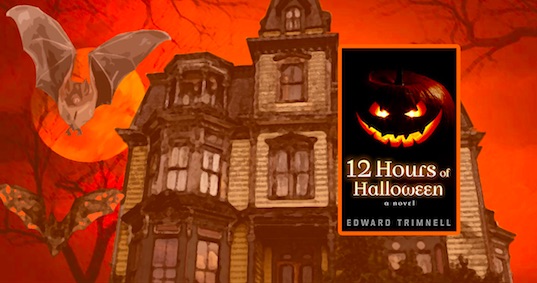
Horror fiction: fear in a Walmart

In the opening Prologue of 12 Hours of Halloween, Jeff Schaeffer experiences a frightful flashback in his local Walmart.

He sees…the Head Collector!

The creature is lurking in the rear area of the store.

Is the creature really there…or is it a mere hallucination?

It might be the season. Jeff knows that Halloween has always been a difficult time of year for him, ever since that frightful Halloween of 1980.

This prologue opens the novel 12 Hours of Halloween in the present day, as a prelude to Jeff’s recollections of that horrible night in 1980!

Read the preview chapters of 12 Hours of Halloween here on the site, or view the book on Amazon

FREE horror fiction from Edward Trimnell Books

Yes, I know—you’re only interested in the news right now.

COVID-19. Lockdowns, quarantines. Et cetera.

I get it–the news is on my mind, too.

But you need to take some breaks from CNN, Fox News, and MSNBC.

So why not read a FREE tale of supernatural terror, right here on Edward Trimnell Books?

“The Vampires of Wallachia” is a story about three corporate employees who stop to eat dinner at the wrong Chinese restaurant in central Ohio. Read it here.

(And just so you know: This story has nothing to do with COVID-19, aka the “Wuhan virus”. I promise!)

Generation X and helicopter parenting

Many of my forty- and fifty-something friends have been complaining of late…about their own young adult children.

With very few exceptions, their kids aren’t what would have been called (in more plainspoken times) “bad”. There are no drug addicts or delinquents among the group. Most of the ones whom I’ve met seem polite enough.

The problem, rather, is a lack of motive force—a lack of ambition. Some of these kids are now approaching twenty-five, and still very much dependent on Mom and Dad.

Many of them still live with Mom and Dad. And they don’t seem in any big hurry to change the status quo.

Anxiety and depression—but relatively little to actually worry about

And the young’uns are anything but well-adjusted. Today’s teens and young adults—Generation Z—suffer from chronic anxiety in record numbers.

This is borne out in various statistics, but I’ve also seen it anecdotally, in my own social circle. I know of at least four young people (all children of friends and acquaintances) who have dropped out of college because of nervous disorders.

In one case (a friend of a friend), the young woman is so overcome with anxiety, that her parents have applied for Social Security benefits for her. Yes, really. Her parents don’t believe that she will ever be able to function, even though there’s nothing clinically wrong with her.

This epidemic of youthful anxiety is baffling. Today’s young people live in a world that is (statistically, at least) much safer than the one in which their parents grew up. Violent crime rates are a fraction of what they were in the 1980s.

Today’s young adults should be carefree, bold, and ready to take on the world.

But they aren’t, as both statistics and observation attest. So what happened?

1990

Childhood changed, for one thing.

The timidity of today’s youth represents a marked contrast from my age cohort—so-called Generation X. I was born in 1968. I fall right in the middle of Generation X.

By the time we were in our early 20s, circa 1990, most of us were functional adults. We weren’t perfect, but we were independent.

We jumped into things, and we often made mistakes along the way. But we jumped in, nonetheless. We were aggressively risk-tolerant—sometimes to our own detriment.

At the age of twenty-two, I moved from suburban Cincinnati to Chicago, for my first “real job”. As it turned out, both the job and Chicago were mistakes for me. After three months, I got a different job—in Columbus, Ohio.

I wasn’t completely on my own. I had some help from my parents. The couch in my first apartment was a hand-me-down (from my grandparents, actually, I think). The first time I moved, my dad (then still in his forties) helped me. The second time I moved, my buddy and I rented a U-Haul.

I asked my dad’s opinions on things, from time to time. But no more than I had to. In fact, I solicited the opinions of my elders far less in my early twenties than I did later on, in my thirties and forties. In my early twenties, I was convinced that I could handle whatever or whoever came along.

Because that’s the way that I—and most Americans born before 1980—were raised.

Adulthood used to be something that you eased into gradually, from adolescence onward. When I was about twelve years old, my parents began decreasing their presence—and active involvement—in my life. Increasingly, they expected me to handle things.

By myself.

This wasn’t child abuse, mind you. I had a happy childhood. But from an early age, I was taught to think of childhood as a temporary state.

This meant solving most problems on my own. Or at least taking the initiative.

A few years ago, a survey revealed that two thirds of today’s young adults can’t change a tire. I distinctly remember how I acquired that skill. I was driving my car, fifty miles from home, when one of my tires blew out. I walked to a payphone and called for help. I was told that at the age of nineteen, I should be capable of changing a tire. Because that’s what nineteen-year-old men were expected to do when they had a flat.

I had never changed a tire before. I decided, though, that I could figure it out. Somehow. And besides—that was the only way I would be able to get home.

So I sat down on the side of the highway, and I figured it out, with the traffic whizzing by.

This experience isn’t unique, among adults of a certain age. Every person in my generation has a story like that. Everyone from the Baby Boom generation does, too.

2020

Fast-forward thirty years. Today’s affluent parents seem determined to shield their progeny from every possible disappointment, bruise, or major expenditure of effort.

Many parents today even write their children’s college application essays—much to the chagrin of college officials. I know multiple parents who have done this, as if it were a matter of course. I don’t have to wonder how either of my parents would have responded, had I asked them to write my college application essay. This would have been unthinkable for any of us.

If today’s young people have anxiety, it may be because their parents convey the message that the world around them is unspeakably dangerous, and impossible for them to cope with—in any capacity—by themselves. Fear and incompetence are now ingrained in children from an early age.

There is a school bus stop at the top of the cul-de-sac street where I live. Every morning during the school year, rain or shine, I see six or seven cars lined up along the street behind the bus stop. The kids are all waiting on the corner for the bus, and the parents are all watching the children from inside their cars.

Let me pose an obvious question: Does it take six sets of parents to monitor a single suburban bus stop for kidnappings or other calamities?

Child abductions are actually quite rare in the United States. During my childhood years in the 1970s, I regularly waited for the bus by myself, at the end of my driveway.

What can I say? I’m still here.

The costs of helicopter parenting

The style of parenting that Generation Z (and many of the younger Millennials) grew up with is referred to as helicopter parenting. The image here is of parents hovering over their children as they move through life; and that’s more or less what happens.

What’s wrong with that? you might reasonably ask.

When children know that they can always rely on an adult, they never develop any coping mechanisms of their own. They never develop the abilities needed to solve real-world problems.

Let me give you another example from the dark ages of my childhood. This would have been 1978, or thereabouts.

A very aggressive boy in my class had taken a disliking to me. I became the target of what could fairly be described as “bullying”. I was not a natural-born fighter. And all I wanted was to be left alone. But he had other ideas.

I appealed to several adults, including the boy’s mother. (She worked in the school’s cafeteria, as chance would have it, so I had access to her.)

The boy’s mother was dismissive of my appeals, as were the other adults I spoke to. I was told—in so many words—that two ten-year-old boys ought to be able to work out their disagreements between themselves.

My adult options exhausted, I started standing up to the kid. This eventually escalated to fisticuffs—which I lost. But I proved to the boy that if he picked on me, he would have a fight on his hands.

After that, he left me alone.

I know: This sounds downright brutal by today’s mollycoddling standards. But not when you look at the big picture.

Boys in the 1970s got into fights. It was a fact of life, and no one thought too much about it.  But as teenagers, we didn’t suddenly snap and and bring guns to school, with the intention of massacring our classmates. The fisticuffs and shoving matches that used to be part of childhood  performed a safety valve function of sorts. Conflicts came to a head before they could fester, and become homicidal rages.

Before helicopter parenting, children learned how to deal with allies, bullies, adversaries, turncoats, and “frenemies”. These lessons were often painful, and occasionally traumatic. But by the time you reached adulthood, you were generally capable of coping with the slings and arrows of life.

Which may have been why almost no young men in my generation became school shooters. Ironically, it may have been because we were allowed to fight on the playground as children.

Who’s to blame?

It has become fashionable of late to blame the Baby Boomers for every real and imagined wrong in the world. But the Baby Boomers—whatever their other faults—weren’t helicopter parents. They were too busy working on their careers, and self-fulfillment, and all that other Me Generation stuff.

Moreover, the Baby Boomers haven’t been in their childbearing years for decades. The parents of most present-day teens and twenty-somethings are members of Generation X—born after JFK but before Ronald Reagan.

Why did the Gen Xers—who grew up under the hands-off parenting style of the Boomers—turn into helicopter parents?

Well, the social engineers of the 1990s can certainly be blamed, to an extent. (Most of these pointy heads were, in fact, Baby Boomers.) These were the educational experts who taught us that dodgeball is “legalized bullying”, and other such nonsense.

But it was the Gen X parents who believed the pointy heads, and accepted their childrearing prescriptions.Why were they so gullible?

Many Gen X adults—especially those who came from divorced households (what we used to call “broken homes”)—believed that the Baby Boomers had been too hands-off as parents.

And maybe they had a point. Some Baby Boomers did practice laissez-faire parenting in the extreme, after all.

Some Gen Xers therefore decided to overcompensate in the opposite direction. They became parents who literally live for their children—hovering over their children like helicopters.

Adulthood is a process

Many of these same parents are now frustrated that their twenty-three-old children display none of the drive, independence, and emotional maturity that they did at a similar age. But what else should the helicopter parent expect?

First you raise a child in a perfectly sanitized, hyper-safe, hermetic environment. Then you follow the child around, and protect him from every setback—not only bullies, but also the adversity of puzzling his way through a college entrance essay.

Then you expect her—at the age of eighteen or twenty-one—to instantly become the adult that you were at the same age. And in doing so, you’re forgetting how different your childhood was. You forget how your Baby Boomer parents prepared you for adulthood—by leaving you alone.   

Adulthood is a process, not an event. That process often entails disappointments, setbacks, and yes—some inevitable risks. But those are all things that must be endured and overcome, if one is to become a functioning adult.

Helicopter parents can delay those trials. They can’t eliminate them, though, not unless they plan to live forever, and always take care of their children.

The Gen X parenting debacle

Collectively, Generation X has arguably been a disaster in the parenting realm. This was a disaster not of neglect, but of loving their children too much, of trying too hard to make their lives easy.

The problems of today’s young adults have demonstrated the false promise of the perfect childhood. The world is going to scar you, one way or another. That’s the way it is. A friction-free adolescence too often leads to an early adulthood in which one is incapable of meeting the demands of reality.

Just ask those young adults, who are perpetually struggling with depression and anxiety. Just ask their parents, who are waiting for the day when their long-coddled twentysomethings will magically grow up.

Oh…and move out.

-ET

Rush: You either got them or you didn’t

Given the passing of Neil Peart last week, I’ll probably have a few Rush-related posts in the upcoming days.

The above video contains a particularly insightful interview from the Canadian Broadcasting Corporation. Topics covered include: Neil Peart’s drumming, and (of particular interest to me) his song-writing.

The man interviewed is, like me, a lifelong Rush fan in his fifties. Unlike me, he’s also a musician.

At the 2:20 mark, he says that Rush was one of those bands that, “You either  got them or you didn’t; and if you did ‘get them’, you became a lifelong fan.”

Well put. I couldn’t agree more.