What happens when an idealistic young couple cross paths with a ruthless gangster at an Indiana casino?
VENETIAN SPRINGS is a standalone crime novel that you can read for FREE in Kindle Unlimited.
Welcome to the website of author Edward Trimnell!
VENETIAN SPRINGS is a standalone crime novel that you can read for FREE in Kindle Unlimited.
I last upgraded my Macs (I use an iMac and a MacBook Air) in June 2016. Which means that I was more than due for an upgrade, by any reasonable standard.
I take a conservative approach to upgrading computer equipment…just like I take a conservative approach to practically everything else. My criteria when contemplating a computer equipment upgrade are as follows:
a) Is the existing equipment starting to malfunction?
b.) Could the new equipment provide substantial benefits (as opposed to simply being “the latest thing”?)
My 2016 iMac, which actually rolled off the Apple assembly lines in 2015, was starting to have problems. The webcam had not worked for quite some time. This was preventing me from restarting my YouTube channel—something that has been on my to-do list for a while.
More recently, the mouse had gotten buggy. Last week, the mouse stopped moving laterally (in either the right or the left direction) at all.
Okay, it was time for an upgrade. So I took the plunge. And hey, Apple needs some more of my money, right?
***
I’m quite happy with the new iMac, which is shown in the photo at the top of this post. I won’t turn this into a sales pitch or a tech review, but I will elaborate on one feature that is near and dear to my heart: native dictation capabilities.
The Siri dictation functions on the Mac have improved greatly. Dictation is something that interests many writers concerned about repetitive stress injuries.
But dictation has been problematic for Mac users.
A few years ago, Nuance Communications stopped supporting its Dragon Dictate products on the Mac platform completely. That included support for people (like me) who had already bought it. Thanks, Nuance Communications!
***
Apple needed to make progress on its native dictation functionality. That seems to have happened.
I’ve been using the dictate function for composing several rough drafts. The Siri dictation is still not quite as accurate as Dragon Dictate is at its best. But Siri dictation is worlds better than it used to be.
Like I said, I’m conservative when it comes to upgrades. Not only is there the cost of the new equipment to consider, but also the hassles involved in moving everything over to the new machine(s). My 2015 MacBook Air, purchased in 2016, continues to function with relatively few problems. I’ll probably replace it by the end of the year, but I’m in no hurry just yet.
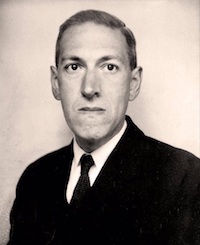
A small addendum to my earlier post on HP Lovecraft.
I have noticed that H.P. Lovecraft has a strong preference for first-person narration.
First-person narration is neither intrinsically good nor bad. I’ve used it myself in a handful of novels, including The Eavesdropper, Termination Man, Revolutionary Ghosts, and 12 Hours of Halloween.
I suspect, however, that Lovecraft’s excessive reliance on first-person narration traces to his generally weak sense of character and characterization. As I previously noted, every Lovecraft character is essentially the same person: a solitary male engaged in arcane pursuits, often with the assistance of an uncle who is a professor at Miskatonic University.
But all writers, I should note—me included—have their quirks and habitual crutches. This is not a condemnation of Lovecraft, but merely a literary observation.
***
The year is 1882. Twenty-one-year-old Ellen Sanders is beautiful but poor. She lives with her parents on a struggling farm in southern Indiana.
Ellen awakens one night to the sound of ghostly moaning, only to be confronted by a supernatural presence.
Days later, a wealthy older man makes Ellen an offer of marriage that she can’t refuse.
Ellen is immediately pulled into a world of witchcraft, necromancy, and the living dead!
I have had a lifelong fascination with—and dread of—sharks.
I have also been a lifelong resident of southern Ohio, a region that borders the Ohio River. As I type these words, the Ohio River is but a short drive from here. (I could walk there, in fact.)
A few years back, I started reading news reports about bull sharks turning up in the Mississippi River. The Ohio River, though far to the north, connects to the Mississippi.
I got to wondering: what if there were sharks in the Ohio River?
Hey, what if?
The result was the short story, “By the River”, which you can read for free here on Edward Trimnell Books.
“By the River” is one of the stories in my 2011 collection, Hay Moon & Other Stories.
I’ve been working my way through that body of H.P. Lovecraft’s fiction that is loosely based around the Necronomicon, or the Cthulhu Mythos cycle. (Actually, I am listening to the audiobook edition, mostly while I mow my lawn and work out at the gym.) This edition, read by various narrators and published by Blackstone Audio, is the edition authorized by the Lovecraft estate.
The readings are well done. The narrators take Lovecraft’s frequently purple prose seriously, without overdoing it. If you like audiobooks and you like Lovecraft, you’ll enjoy this audio collection.
Lovecraft’s body of work is partly nostalgia for me. I read most of Lovecraft’s stories during my college years. I discovered Lovecraft while browsing through the shelves of the University of Cincinnati bookstore in 1988. Also, Stephen King had mentioned him in several of his essays.
Reimmersing myself in Lovecraft after all these years, a few things stand out, both good and bad.
Let’s start with the good.
First of all, H.P. Lovecraft had an incredible imagination. When he wrote these stories, there were no horror movies. There wasn’t even much fantasy fiction as we know it today. Lovecraft died in 1937, the same year that The Hobbit was published. Yet Lovecraft created so many horror/dark fantasy tropes and conventions from thin air.
Working within the constraints of the pulp fiction era, Lovecraft did a fairly decent job of establishing continuity across his stories. The Cthulhu Mythos cycle isn’t technically a series. These stories were published individually, at different times, in various pulp magazines of the 1920s and 1930s. The marketplace more or less forced Lovecraft into the short story/novella form, and every story had to begin with a blank slate. The writer couldn’t assume that any given reader had read his previous works. Nevertheless, when Lovecraft’s stories are compiled, there is a discernible consistency running through all of them.
And yes, his purple prose. Lovecraft was hyper-literate. You can’t read, or listen to, Lovecraft’s stories without increasing your vocabulary.
Now for the not-so-good.
His narrative style. Lovecraft was a contemporary of Ernest Hemingway and F. Scott Fitzgerald. Read Hemingway’s “Hills Like White Elephants” or Fitzgerald’s “Winter Dreams”, and you’ll definitely see the differences.
Hemingway and Fitzgerald wrote in a style that we would recognize as modern. Hemingway, in particular, was well-known for his direct, economical prose. But both Hemingway and Fitzgerald thought in terms of showing, rather than telling.
Lovecraft, by contrast, writes more like Herman Melville or Thomas Hardy. Rather than creating scenes on the page, Lovecraft often simply tells you what happened. This makes his writing occasionally cumbersome to wade through, and less accessible to modern readers.
There isn’t much we can say about Lovecraft’s characters, because his characters are paper-thin. They exist only as observers of the supernatural phenomena in his stories.
There are notably few exceptions here. The two main characters in “Herbert West—Reanimator” stuck in my mind a bit longer than the characters in the other stories, who disappeared as soon as the stories were over.
The typical Lovecraft character is a scholarly male recluse who is drawn into arcane research and observations by chance, or by idle curiosity. Lovecraft has virtually no female characters. Not even any damsels in distress.
In some literary genres in recent years, there has been a tendency to depict every female main character as a tough-talking heroine who can whip every male villain she encounters, even if they’re twice her size. We often see this in television shows and movies, and no one believes it.
But Lovecraft errs in the opposite extreme: I don’t want to read female characters that were obviously crafted for the sole purpose of making a feminist statement. But I don’t want to read a fictional world that is entirely comprised of guys who can’t seem to find dates, either.
Lovecraft’s writing also reveals his prejudices, which were extreme and extensive even by the standards of his time. Lovecraft looked down on just about everyone who wasn’t an Anglo-Saxon New England brahmin. His stories are filled with savage Africans and “swarthy”, conniving Greeks and Italians.
Not that he cared much for white, native-born rural people, either. Multiple Lovecraft stories discuss the degraded hill people who live in the backwaters of Vermont, for example.
There has been much writing, and much posturing, in recent years, about “canceling” Lovecraft because of his attitudes on race. His name was removed from a prominent award, and some book bloggers have even declared that Lovecraft’s fiction is no longer suitable for people with the “correct” attitudes on social and political issues. The hand-wringers often forget that while Lovecraft certainly didn’t like African Americans, he didn’t like much of anyone else, either. Lovecraft was an equal-opportunity snob/bigot.
I am not going to make a show of being offended by a piece of pulp fiction that was written eighty or ninety years ago. But an undeniable fact remains: H.P. Lovecraft comes across as a rather narrow-minded person with a narrow range of experiences and interests.
That doesn’t mean that you shouldn’t read his fiction. As I said by way of disclaimer: I’ve already read all of these stories at least once. (I believe I’ve read “The Colour Out of Space” four or five times, the first time in 1988.) The scope of Lovecraft’s imagination was so broad, that these stories are worthwhile for any reader drawn to horror, dark fantasy, or so-called “weird fiction”. Lovecraft was a flawed man and a flawed writer; but he nevertheless produced some very engaging tales.
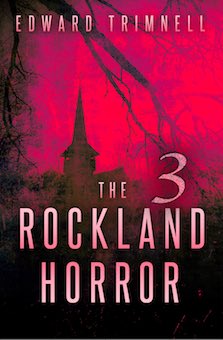
The big item here is The Rockland Horror 3, which is presently in the editing/final revision stage.
The Rockland Horror 3 will be somewhat longer than the previous two books in the series. Both The Rockland Horror and The Rockland Horror 2 were around 72K words. The third book will be closer to 90K words.
This is one reason why it’s taking a bit longer to complete. But I think you’ll like the final result.
I’m working on some other projects as well, including a World War II epic. More details to come.
After an early May that veered between March-like cold and constant rain, summer has come roaring into Southern Ohio. Afternoon temperatures in the Cincinnati area will flirt with the low 90s this weekend. (That’s 90 degrees Fahrenheit, for you readers in Canada and the UK.) No rain on the horizon for at least three or four days.
People in my neck of the woods are currently getting worked up about cicadas. Cicadas don’t bother me. Bring ‘em on! as they say. I survived the great cicada outbreak of ’87. I’ll make it through this one, too.
There is only one insect—only one creature, in fact— that I despise with implacable, murderous intent: the wasp. I have always hated them, and my market share of wasp spray is likely a line item on the balance sheets at both Raid and Spectracide.
There is an old German proverb, “God made the bee, but the Devil made the wasp.” It’s absolutely true. Wasps are pure evil. And they know when you’re about to come after them. I have the stings to prove it.
There is a group of wasps building a nest under the eaves on one side of my house. Armed with a good supply of chemical warfare agents, I intend to send as many of them as possible straight to Hell before the weekend is over.
I usually pimp my short horror story, The Wasp, in late May or early June. It’s like an annual rite of summer for me. But you can read it for free here on the site.
I hope you enjoy your Saturday, wherever you are. As for me, I’ll be cutting grass, trimming trees, oh…and killing wasps.
Photo credit: Maine.gov
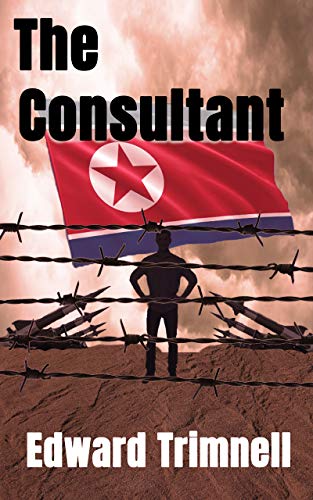
I’ve started a page for online readings of The Consultant.
Find out what happens when an ordinary American businessman is kidnapped and taken to North Korea.
The Rockland Horror 3, the third installment in the Rockland Horror series, is in the final editing stages.
The Rockland Horror 3 takes place thirty-five years after the first two books, in 1917.
For those of you who are interested, here is a sneak peek at Chapter 1. (Note: This has not yet been through the editing/proofing stage, and thee may be a few typos.)
It was a chilly, wet day in March 1917, and thirty-year-old Joe Cullen was overdue for a smoke break.
Joe shot a quick glance over his shoulder. He wanted to make sure that his foreman was nowhere in sight.
Joe was relieved to find himself completely alone on the tree-lined road. All around him there was nothing but the silent woods. And the light, cold moisture falling from the leaden sky.
Well, almost nothing. There was the Briggs House, too.
This thought made him smile self-consciously. Country people and their superstitions. Never mind that Joe was as country as they came. He also read books, dagnabbit.
He bent and laid his shovel down in the long, sallow, late-winter grass at the edge of the road. The road itself was muddy, owing to the wet weather. He did not want the handle of his shovel to get muddy, too. He still had a lot of work to do with that shovel before quitting time.
That done, he stood, removed his gloves, and slipped them into the lower left side pocket of his coat. From the lower right side pocket he removed a box of Lucky Strikes and a box of wooden matches.
Joe was wearing a broad-rimmed hat, a treated canvas raincoat, and heavy boots. The overhanging tree branches—though still bare of leaves—also caught some of the light rainfall. But when you were working outside in weather like this for an entire day, it was impossible to avoid either the dampness or the chill.
Today’s precipitation was not a hard, driving rain; but it was a steady, unrelenting spittle that varied between mist and drizzle. Fireplace weather, Joe’s mother would have said.
But there would be no fireplace for Joe today—not until quitting time, at least; and that was still several hours away.
***
Joe was currently employed by the Indiana Department of Transportation, a brand-new state agency created by the Indiana Highway Act of two years prior. Joe was part of a crew that had been charged with preparing Washington Hill Road for paving.
At present, the road was all packed earth and gravel. It was literally the same road that had been used in the pioneer days. Washington Hill Road turned to mud every springtime, or even during a midsummer thunderstorm. That might have been suitable for the age of the horse. It would not do for the age of the automobile.
As he paused to light his cigarette—cupping both the cigarette and the match in his hands to shield them against the moisture in the air—Joe allowed himself a look at the Victorian mansion that was impossible to miss at this point on Washington Hill Road.
The Briggs House rose above him in the distance. The decrepit monolith appeared old-fashioned and dark, even when silhouetted against today’s cloudy gray sky.
The Briggs House was on the left side of the road. It stood at the top end of a long, winding, overgrown private lane that rose to a promontory. When the trees were bare, the roofline of the mansion could be partially glimpsed far below Washington Hill, Joe knew. He was a lifelong resident of Rockland, Indiana.
He smiled to himself, and took a drag on his cigarette. Joe Cullen knew all about the Briggs House—the murders, the whispered stories of witchcraft and necromancy. Much of that was pure fabrication, and at least half of it was pure nonsense.
Joe Cullen had no way of knowing that within a matter of minutes, he would hold an entirely changed attitude about the Briggs House.
The next installment of The Rockland Horror series is set in 1917, early in the age of the automobile.
That, of course, means Henry Ford’s iconic Model T. The Ford Motor Company manufactured the Model T between 1908 and 1927.
The Model T was mass-produced with simple specifications. The car originally came only in black, though a few other color choices were added in later model years.
The Model T was also quite affordable. The base price for a 1916 Model T Runabout was just $345, or $8,324.76 in 2021 dollars. This was, obviously, much cheaper than just about any car manufactured for the U.S. market today.
But this simplicity came at a price. If the Model T was cheap (even by early 20th-century standards) it was also far more difficult to use than modern vehicles.
The Rockland Horror 3 (now in production) will be a horror novel, not a book about early automobiles. But the story does involve some car chase scenes, and I wanted to make these scenes reasonably authentic.
My maternal grandfather was born in 1921, and even he never owned a Model T. Driving the Model T is one of those experiences that has passed out of “living memory”, so to speak.
I therefore went to YouTube, where there were, indeed, a few videos about starting and driving the Model T. I’ve embedded two of them here.
You probably already know about the crank start. But even that isn’t the worst of it. To start a Model T, you had to arrange a series of switches and levers inside the car in the right combination. Then you had to “choke” the engine by priming it with gasoline, and then…
Let’s just say it’s complicated!
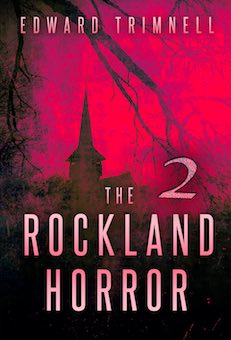
The Rockland Horror 2 is available on Amazon!
(But you’ll want to read the first book in the series, The Rockland Horror, first.)
Both books are filled with murder, betrayal, evil spirits, zombies, supernatural monsters, and characters you’ll never forget!
Here’s a sample chapter from The Rockland Horror 2:
August 1882
Ellen Briggs, née Ellen Sanders, was in her own house, and she was absolutely terrified.
Of course, this was not really her house, was it? It was her marital residence, where she now effectively lived in a state of captivity.
Not to mention…absolute terror.
She had married Theodore Briggs—railroad tycoon, necromancer, and murderer—only a few months ago.
In the early days of the marriage, Briggs had warned her: Stay out of unfamiliar rooms. Although the house was not old, it was home to many old secrets, Briggs had explained.
But she had forgotten his warning, in light of all that had happened since then…
Today Ellen had been wandering through the first floor of the massive house. Since her escape attempt earlier in the summer, Briggs seldom allowed her leave. But she could not sit still within these walls. If she remained in one place, she would go completely mad.
So today she had gone wandering, even though she had known better.
That was how she came across the undead child…
The door to the room containing the undead child was located adjacent to the first-floor ballroom. Ellen had opened the door, not realizing that the room connected to the basement via one of the home’s labyrinthine internal tunnels.
She reckoned that only later—after it was too late.
It was in the basement that her husband kept his worst secrets. Bodies were buried in the basement—and they didn’t always stay buried. Sometimes, they found their way to other parts of the house…
Nevertheless, this miscellaneous room had seemed harmless enough when she had first entered it. Heavy draperies were drawn on both of the room’s high windows, but some late afternoon sunlight filtered through.
The room seemed made for casual exploration. Various works of art had been stored within it. Paintings bound in frames, but not yet hung, stood stacked against all four walls.
Throughout the floor, in a random arrangement, were various statues: of nymphs, cherubs, and Greek deities. There was one life-size replica of the Venus de Milo. There were waist-high vases, and teak dividers carved in what looked like Turkish patterns.
The fortunes of Ellen’s husband were vast. He had no doubt purchased most of these items in bulk from a broker, with the intention of placing them around the house at a later date.
That work might have been left to Juba, the maidservant whom her husband had ordered killed, for her part in Ellen’s escape attempt. That same escape attempt had also resulted in her husband murdering Wilbur Craine, her former beau and would-be rescuer.
As she made her way through the cluttered room, Ellen endeavored to push those thoughts from her mind. She couldn’t think about Juba now. And certainly not about Wilbur.
She was kneeling down on the hardwood floor, admiring one of the paintings leant against the wall, when she heard something shift from a corner of the room.
Ellen immediately looked away from the landscape painting, toward the movement. She stood up. Something had stirred behind the teak screen in the room’s far corner, near one of the windows.
The teak screen was suspended above the floor on a set of wooden legs. In the gap between the screen and the floor, Ellen could see two small feet, clad in simple leather shoes. The shoes were caked with dried mud.
The feet moved toward the edge of the screen, but not in proper steps. One foot dragged behind the other.
A small figure stepped out from behind the screen. It was short, between four and five feet tall. The very sight of it was absolutely terrifying.
Ellen immediately recognized the figure as a child. And at the the same time, this was not a child at all.
There was an unholy, yellowish glow in the thing’s eyes. Ellen had seen this glow in the eyes of Ni’qua, Briggs’s undead first wife. Ni’qua lurked around the house, and appeared before Ellen when least expected.
But this child was even worse. Ni’qua had been dead for decades, after all. This victim had been taken only months ago.
“Come play with me!” the thing croaked hoarsely, through rotting lips.
Ellen didn’t speak. There was nothing to say to this thing; and that would only slow down her escape, anyway.
She needed to think.
No—she needed to get out of this room. Immediately.
Ellen turned and bolted for the door.
Behind her she could hear dragging footsteps. The child was giving chase, but Ellen moved much faster, owing to the damage Briggs and his valet had done to the child’s injured leg prior to burial.
The thing was now cursing at her—using the vocabulary of some ancient language that she did not understand.
A few more steps, and Ellen was at the threshold, then beyond it.
She had never moved faster in her life, she thought.
Then she was on the other side of the doorway.
She did not want to turn around, did not want to look back. She knew, however, that it would be necessary to close the door, lest the thing pursue her out into the hallway.
When Ellen turned around, the creature was within sprinting distance of the doorway, if not for the ruined leg.
As Ellen reached for and grasped the doorknob, an expression of bottomless rage contorted the already rotting and grimacing face. This evil before her was intelligent; it knew what she planned to do.
Ellen ignored her terror, for the time being, forced herself to focus.
She yanked on the doorknob, and slammed the door shut behind her.
Then she twisted the external catch on the doorknob. Another strange thing about this house: Her husband had designed it so that many of the rooms locked from the outside.
That done, the thing was effectively contained inside the room. A second later, there was a loud thud, as a creature that had once been a human child slammed into the closed door.
“Let me out!” it roared. The voice was ancient, booming. It echoed against the walls of the hallway.
Ellen stepped away from the closed door. She looked in one direction, and saw that the hallway terminated there in a bare wall.
In the other direction, from which she had arrived here, the hallway ended in another doorway.
With the thing still pounding on the door of the storage room, still cursing in that hideous language, Ellen made her escape through the high-ceilinged hallway. She fled toward the doorway.
There was a locking door here, too. Ellen closed it behind her and locked it.
The undead child was now locked behind two heavy doors. Was that enough to make her safe?
She shook her head at the very notion. There was no such thing as true safety in this house.
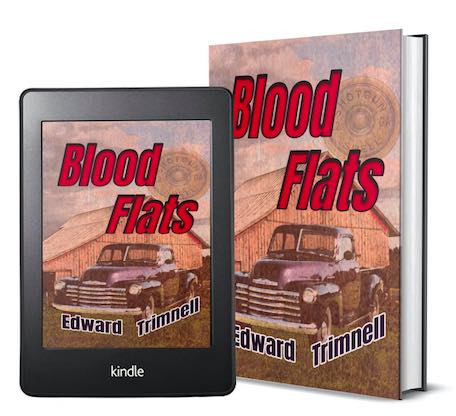
A number of readers have asked me if there will ever be a sequel to Blood Flats. Lee McCabe’s long, gun-blazing flight through the badlands of Kentucky remains one of my more popular stories, even though this was my first novel.
As it so happens, I have been giving this some thought. In fact, I am working on a new series based on the 2011 novel.
I began Blood Flats in 2009/2010; and that is the approximate timeframe in which the novel is set. In the original story, Lee McCabe is a twenty-something former marine, recently returned from Operation Iraqi Freedom. The action in Blood Flats begins when Lee is blamed for a drug-related double homicide that he did not commit. Lee faces deadly opponents on both sides of the law as he fights to clear his name.
The new series will fast-forward into the present. Lee will be working in law enforcement in Kentucky. (Of course, he will now be in his thirties, rather than his twenties.)
I have an outline, though I’m not ready to reveal too many details just yet. If you were a fan of the television series Justified, starring Timothy Olyphant, I think you’ll like the upcoming series based on Blood Flats, starring Lee McCabe.
The first book in the series should be out in the fall of 2021. More details to follow.
In the meantime, now would be a good time to read the original story, if you haven’t done so already.
Recommended for fans of:
And, of course, readers of the first book in the series (or my other horror novels).
In 1882, twenty-one-year-old Ellen Sanders finds herself trapped in a macabre marriage to Theodore Briggs, a semiretired railroad tycoon, Civil War hero, necromancer, and murderer.
She resides in a luxurious Victorian mansion filled with evil spirits, supernatural creatures, and the undead.
As Ellen begins a rebellious extramarital affair with the Italian laborer Silvio, she sets in motion a chain reaction that will end in murder and suicide.
With blood spilled, the full horrors of the haunted mansion are unleashed on the town of Rockland, Indiana.
Only three people know the truth: a local lawman, a young woman with psychic powers, and an agnostic Roman Catholic priest.
But can they solve the secrets of the Briggs House in time to prevent another wave of death and destruction?
(Or, if you haven’t read Book One, start with The Rockland Horror.)
Sometime later this week or early next week, The Rockland Horror 2 will hit the virtual bookshelves on Amazon.
The Rockland Horror series is for fans of:
This story will pick up where The Rockland Horror left off. In the summer of 1882, the town of Rockland, Indiana is reeling from the wave of murders and kidnappings that occurred in recent months.
One man, George Marston, has been tried, convicted, and executed for these crimes.
The people of Rockland believe that the terror is over.
But two young women, Ellen Sanders Briggs and Louisa Goodwin, know better.
Since marrying the reclusive railroad tycoon Theodore Briggs, Ellen (nee Sanders) Briggs has found herself living in a state of captivity and abject terror. She is trapped in a big mansion filled with evil spirits, the roaming undead, and her cruel, mercurial necromancer of a husband.
Louisa Goodwin was given psychic powers of insight following her near-death experience. Louisa is struggling to recover from the personal tragedies she suffered during the preceding spring: the deaths of her parents and younger brother.
Louisa’s visions tell her that the situation in Rockland, Indiana is about to get much, much worse.
I’ll be posting links for The Rockland Horror 2 here on the blog as soon as the book is available. If you haven’t read The Rockland Horror (published in February 2021) get it here, or via the link above. As these books are both parts of a series, you should really read them in order.
More updates to follow!