I was just turning 15 when Risky Business—the movie that launched Tom Cruise’s acting career—hit the theaters in August 1983. I was too young to get into an R-rated movie without an adult; and this wasn’t a film that either of my parents would have been interested in seeing with me.
I neglected to see Risky Business for more than 40 years, partly because I was put off by the much-played clip of Tom Cruise dancing in his underwear. Call me homophobic if you’d like; but that isn’t the way to get me to see a movie. And there were just so many other movies to see.
I finally got around to watching Risky Business a few days ago. (Better late than never!) The movie was quite well done for a film that was originally conceived as a throwaway flick for Reagan-era young adults. (Moreover, despite the ubiquity of that clip with Tom Cruise in his underwear, that scene is a minuscule portion of the 95-minute movie.) Continue reading “‘Risky Business’: an entertaining film that would never get made today”
The early 1980s gave us a famous song named after a phone number: “867-5309”. Even if you do not remember the early 1980s, you are probably familiar with the song.
The song was alternatively known as “Jenny”. Often the song was identified with both names: 867-5309/Jenny.
In the song, a male narrator describes his obsession with a woman named “Jenny”, whose phone number (867-5309) was written on a wall, presumably in a men’s room. (That was a common prank back in the 1970s and early 1980s—writing random women’s names and phone numbers on the walls of men’s rooms. Don’t ask me why.)
Tommy Tutone is the name of the musical act that performed 867-5309.
Tommy Tutone is not a single artist, but a California-based group. The original lineup of Tommy Tutone was formed in 1978. The band still exists today. Tommy Tutone released six studio albums between 1980 and 2019. But the band owes most of its name recognition to 867-5309.
867-5309/Jenny was released on November 16, 1981. By the end of the following year, everyone with an FM radio had heard it.
867-5309 was, and remains, a cultural phenomenon. Not everyone was pleased about the song’s fame, however. After the song became popular, homeowners who happened to have been assigned the number began receiving prank phone calls. Many changed their numbers. Some even unplugged their phones in desperation.
Still others went out of their way to acquire the suddenly famous seven digits. Now that the initial fervor over the song has long since died down, this is the more common trend. It would probably be difficult—if not impossible—for you to obtain 867-5309 as your personal phone number. But your odds will increase in less populated areas, and as the time between the heyday of the song and the present year continues to grow.
In late 1981, I was in the eighth grade in Cincinnati, Ohio. One morning—it must have been a few weeks before the Christmas holidays—I heard a girl in my homeroom say my name. When I turned around, she had a smile on her face. I sensed good things ahead. Continue reading “867-5309, and a lesson in the value of skepticism “
I don’t evangelize many 21st-century television shows. But I am unabashed in my enthusiasm for The Americans, the period spy drama that originally aired on FX from 2013 to 2018.
The Americans is about big events of the final decade of the Cold War. But it is also a family drama: about Philip and Elizabeth Jennings and their two children. The Jenningses are deep-cover Soviet KGB operatives. Philip and Elizabeth do all the bad things you would expect KGB agents to do. But they also cope with the pressures of maintaining their cover, and keeping their secret from their two children, who were born in the USA.
The series finale was set at the end of 1987/early 1988, just as Cold War tensions were easing. No spoilers here, except to say the series ended in a way that was satisfying, while simultaneously leaving the door open for sequels.
And it’s easy to imagine any number of sequels, based on a myriad of post-1988 plot lines. So much was yet to happen: the Soviet withdrawal from Afghanistan (1989), the fall of the Berlin Wall (1989), and the collapse of the USSR (1991).
And what about the post-Soviet, Yeltsin and Putin eras? The possibilities are endless.
In a March 11, 2023 interview on The Rich Eisen Show, series star Matthew Rhys hinted at the possibility of The Americans continuing in some form.
That was almost two years ago. I remain cautiously hopeful. But I am also realistic about these things. Despite the high quality of the show’s concept and execution, a revived version of The Americans would face certain obstacles.
To begin with, young audiences may have difficulty relating to the subject matter. I am in my 50s and I remember the 1980s as if that decade ended last year. Viewers under 40, who lack such a perspective (and who have suffered the intellectual depredations of American public education) may struggle to get a foothold as they begin a show that involves Cold War-era history.
The Americans premiered in a crowded 2010s TV arena, filled with more accessible shows involving dragons, superheroes, and teenagers performing magic. The Americans was always a critical success, but it never got the viewership it deserved.
That may also have been an issue of timing. Between 2013 and 2018, the US public was focused on economic recovery, ISIS, Islamic terrorism, and the 2016 presidential election. The Cold War and Russia seemed far, far away.
That faraway perception of Russia may have changed, however, with the Russian invasion of Ukraine in 2022, and talk of a Cold War II from all quarters.
Now may be the perfect time to revive The Americans, in fact. A post-Soviet storyline would make the most sense. But there is plenty of material surrounding the fall of the USSR, too.
Even if The Americans zoomed forward to the present era, it could be made to work. All of the main characters, though much older, could plausibly still be alive.
I’m crossing my fingers for a sequel to my all-time favorite television show. As the above interview with Matthew Rhys suggests, I’m not alone in hoping for more seasons of The Americans.
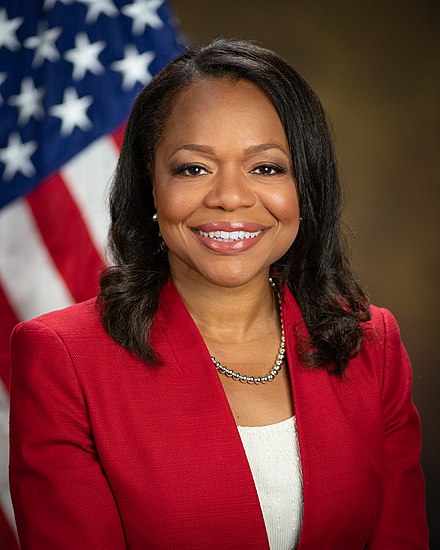
Kristen Clarke, Biden’s nominee to head the DOJ Civil Rights Division, penned a 1994 letter to the Harvard Crimson, stating that African Americans have “superior physical and mental abilities”.At the time, Clarke was an undergraduate at Harvard, and the president of the university’s Black Students Association.
Clarke based her letter on…race science.
Here are some excerpts from the letter:
“One: Dr Richard King reveals that the core of the human brain is the ‘locus coeruleus,’ which is a structure that is Black, because it contains large amounts of neuro-melanin, which is essential for its operation.
“Two: Black infants sit, crawl and walk sooner than whites [sic]. Three: Carol Barnes notes that human mental processes are controlled by melanin — that same chemical which gives Blacks their superior physical and mental abilities.
“Four: Some scientists have revealed that most whites [sic] are unable to produce melanin because their pineal glands are often calcified or non-functioning. Pineal calcification rates with Africans are five to 15 percent [sic], Asians 15 to 25 percent [sic] and Europeans 60 to 80 percent [sic]. This is the chemical basis for the cultural differences between blacks and whites [sic].
“Five: Melanin endows Blacks with greater mental, physical and spiritual abilities — something which cannot be measured based on Eurocentric standards.”
Obviously, this is complete hooey, dressed up in the sort of pseudo-scientific language that passes for erudition at places like Harvard.
Obviously, the mainstream media would be shrieking, Twitter would be exploding, if a white nominee to any senior federal government post had made similar claims about whites, based on “race science”.
Nevertheless, I’m of two minds on this one.
Clarke’s age is not available online, but her Wikipedia entry states that she graduated Harvard in 1997. Backing into the numbers, this would mean that she was about 19 years old when she wrote the above words.
Kristen Clarke
Most people don’t reach full adulthood until they are about halfway through their twenties. (This is why I would be in favor of raising the voting age, rather than lowering it, but that’s another discussion.)
This doesn’t mean you should get a blank check for everything you do when you’re young, of course. But there is a case to be made that all of us say and think things during our formative years that will make us cringe when we look back on them from a more mature perspective.
This is certainly true for me. I was 19 years old in 1987. I am not the same person now that I was then—both for better and for worse.
Secondly, let’s acknowledge environmental factors. Being a student at Harvard is likely to temporarily handicap any young person’s judgement and intellectual maturity. Even in 1994, Harvard University was a hotbed of pointy-headed progressivism and insular identity politics.
Clarke was also involved in the Black Students Association. There was a Black Students Association at the University of Cincinnati when I was an undergrad there during the late 1980s. Members of UC’s BSA were known to write whacko letters like the one above. Most of them, though, were nice enough people when you actually talked to them in person. They just got a little carried away when sniffing their own farts in the little office that the university had allocated for BSA use.
What I’m saying is: I’m willing to take into account that 1994 was a long time ago. A single letter from a 19-year-old, quoting pseudo-academic race claptrap, shouldn’t be a permanent blight on the record of a 47-year-old. And I would say the same if Kristen Clarke were white, and had taken a very different spin on “race science”.
We all need to stop being so touchy about racial issues, and so preoccupied with them. That goes for whites as well as blacks, and vice versa.
I’m willing to give Clarke a fair hearing, then. But I’m skeptical. Her 1994 Harvard letter isn’t an automatic disqualifier; but it’s a question that needs to be answered.
I’m also skeptical of Biden. Biden may be a feeble old man; he may be a crook. He is not particularly “woke” at a personal level. In fact, some of his former positions on busing and crime suggest that he’s anything but “woke” on matters of race.
Yet Biden is now head of a Democratic Party that is obsessed with race. This means that Biden may try to overcompensate, by filling his government with race radicals. This recent selection supports that concern.
Given the time that has elapsed between the present and 1994, given Kristen Clarke’s age at the time, I want to hear what she has to say in 2021 before I outright condemn her as a hater or a looney. But this recent personnel selection doesn’t make me optimistic about the ideological tilt of the incoming Biden administration.