Way back in 1973, a French writer named Jean Raspail penned a dystopian novel called Le Camp des Saints, or The Camp of the Saints in English.
The Camp of the Saints presented an overwhelmingly negative view of mass immigration. The thesis of the novel was that Western societies are being destroyed from without by mass immigration, and from within by those who are sympathetic toward the waves of immigrants from the developing world.
Whether you agree with that argument or not, it is not exactly an original idea. Perhaps it was in 1973. It is certainly not an original idea in 2026.
Jean Raspail’s more than 50-year-old novel had long ago passed into obscurity, at least within the English-speaking world. Then a group of busybodies on Reddit learned of the book’s existence, and decided that here, alas, was an opportunity to engage in some performative outrage.
Members of the subreddit r/bannedbooks worked themselves into a lather, then pooled their efforts to get the book temporarily removed from the virtual shelves at Amazon. (Demonstrating the lack of self-awareness that is typical of such folks, they failed to see the ironic connection between the name of their subreddit, and the fact that they were actively seeking a book ban. But I digress.)
The Amazon book removal was quickly overturned, of course. But the controversy generated interest in a book that no one would have heard of otherwise. As a result, The Camp of the Saints skyrocketed to best-seller status at Amazon, finally peaking at #6.
If we didn’t know better, we might suggest that this was a false-flag publicity stunt, perpetrated by the original publishers of The Camp of the Saints. But we do know better, because we’ve seen this before.
The 2010s were the high point of the “social justice book mob”. This is how it worked in those days: A member of the so-called “book community”, who was active on social media, would find a passage, theme, or character in a novel that could be broadly interpreted as “racist”.
They would then make some posts on social media decrying the evils of the book, and stir up an online mob. The online mob would do the rest.
Such mobs were particularly common in YA fantasy literature. Notable mob targets from a little less than a decade ago include: The Black Witch by Laurie Forest and Blood Heir by Amélie Wen Zhao.
Sometimes these mobs did real damage. Amélie Wen Zhao was so traumatized by the outcry against Blood Heir that she briefly delayed the publication of the book.
But patience with the social justice book mobs eventually ran thin for two reasons. The first was that, like most mobs, they overplayed their hand. Chinese American author Amélie Wen Zhao was no one’s idea of a white supremacist. The claims against her and her book were so ridiculous that almost no one could take them seriously.
Secondly, there was the “unintentional false flag” effect. Cancel mobs have repeatedly proven themselves effective at promoting the books, films, and artists that are their targets. The recent success of The Camp of the Saints is the most recent case in point.
I’m in my 50s. I haven’t read much YA fiction for many, many years. The last time I was in that market, Nancy Drew and The Hardy Boys were cutting edge. I heard about The Black Witch and Blood Heir, though—because the online morality patrol was loudly denouncing these books in public.
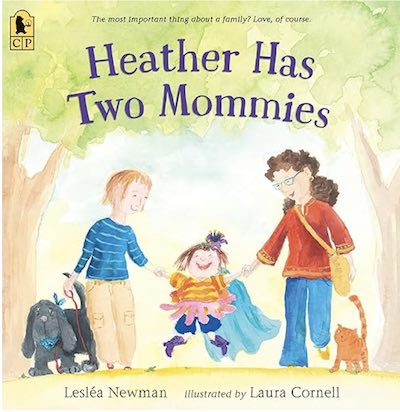
This works both ways, of course. Almost thirty years ago, I heard about Heather Has Two Mommies because conservatives were kvetching about a children’s book that portrayed LGBTQ families and parents in an approving manner.
None of the above is meant to imply that we shouldn’t debate controversial social issues. We should, however, not get too worked up about the impact of “message art”. This is true for you, too, regardless of where you stand on the political continuum.
Novels and films with political messages are most impactful early on, when no one has yet named the issue in public, often out of public reticence about a topic. Heather Has Two Mommies might have been able to make that claim when it was first published in 1989. Today, however, a book or film describing LGBTQ individuals in hagiographic terms is so commonplace that we merely shrug and move on. Likewise, it has been virtually impossible to write an original novel or screenplay about race in America for at least 30 years. The topic has literally been done to death.
Beyond the earliest stages, message films and novels usually devolve into repetitions of well-worn talking points. In this way, most message art is derivative, just like most political speech.
Outrage over such materials now also follows a predictable pattern, as the recent bestseller status of The Camp of the Saints demonstrates. Here is the takeaway: if you don’t like what a particular book or movie is saying (or seems to be saying), your best course of action is to ignore it. In this era of online cancel mobs and counter-cancel mobs, all your efforts to censor a work of art will be in vain. You will only contribute to its popularity, which may have been a long shot otherwise.
-ET